6 Types of Utah Homes That Aren't Selling Right Now (And What to Do About It)
6 Types of Utah Homes That Aren't Selling Right Now (And What to Do About It)
Right now there are more than 15,000 homes for sale along the Wasatch Front, and a lot of them are not going to sell this year. Not at that price, not in that condition, and not the way they're currently being presented.
On paper, everything looks fine. Prices in most of Utah are still technically up year over year. Single family homes in Salt Lake County are sitting around $640,000, and Utah County single family homes are around $613,000. But in Salt Lake County, nearly half of the homes on the market have already cut their price at least once since they listed, and a third of them cut in just the last 30 days. Homes that used to go under contract in a weekend are averaging 50 days. Attached homes are averaging 64. In Utah County, townhomes are sitting for 85 days.
So no, the market didn't crash. Something more specific happened. Inventory came back, and buyers got to be picky again for the first time in about five or six years. Here's how I think about it: we are not in a bad market. We're in an honest one. For about five years Utah was so short on inventory that almost anything would sell. That was not normal, and it's over. Now the market does what a market is supposed to do. It sorts.
And when buyers get picky, they don't reject homes randomly. They reject them in patterns. I spent years in construction before I ever sold a home, and three of these six patterns have nothing to do with the market and everything to do with what's behind the walls. If you're selling, one of these is probably why your phone isn't ringing. If you're buying, this is a map of exactly where your negotiating power is hiding.
1. Townhomes and Condos: The Biggest Oversupply in the State
Attached housing is the most oversupplied category in Utah right now. In Salt Lake County, townhome inventory is up about 40% year over year, and condo inventory is up about 18%. Single family homes in Salt Lake County are sitting at around 3 months of supply, which is still a seller's market. Attached product in that same county is at over seven, sometimes even 8 months.
In Utah County, attached product is averaging 85 days on market, up almost 30% from a year ago, and closings on attached homes there dropped 31% in a single month. In Davis County, townhome and condo values are down almost 8% year over year, while single family homes barely moved on price.
There are three reasons this category is getting hit harder than everything else:
The monthly payment math. With rates sitting around 6.95% on a 30-year at the time I recorded this, buyers are qualifying on total monthly cost, not purchase price. Add $300, $400, sometimes $600 a month in HOA dues on top of the mortgage and you've erased the price advantage of buying attached. A $435,000 townhome with $400 a month in dues costs the same every month as a much bigger single family home, and buyers run that math on their phones on every listing.
Insurance. Master policy premiums on shared buildings have gone up dramatically over the last couple of years, and those increases go straight into the monthly dues. Buyers feel that instantly when they compare two similar units with very different dues.
Financing. This is the quiet killer. If an HOA doesn't have enough in reserves, has ongoing litigation, has too many rentals or a pending special assessment, lenders can refuse to lend on the building. Then that unit is only competing for the small group of buyers who can pay cash or find a portfolio lender. Some units in this state sit for 150 days for no other reason, and the seller sometimes doesn't even know why.
If you're selling: know your building's financial story before you list. Get the reserve study. Get the last year of HOA minutes. Find out if you're lendable. If there's a problem, price for it on day one instead of discovering it in week seven when a buyer's loan falls apart.
If you're buying: this is one of the best opportunities in Utah right now, but only if you do the homework. Eight months of supply means you can negotiate like it's 2011. Just buy the building, not the unit.
2. Resale Homes in New Construction Corridors
This one is brutal because there's usually nothing wrong with the house. Utah has been permitting north of 20,000 residential units per year, and whole communities came out of the ground at once in places like Eagle Mountain, Saratoga Springs, Lehi, Vineyard, Herriman, Syracuse and Bluffdale.
Picture buying one of those homes in 2020 or 2021, putting in the landscaping, maybe finishing the basement, and going to sell at a completely fair price. Then 400 yards away there's a model home with a national builder behind it, and that builder has tools you don't have at the same scale. A builder can buy a buyer's interest rate down from 6.95% into the 5% range, sometimes lower for the first couple of years. A builder can throw in $20,000 or $30,000 in closing costs and upgrades, all without lowering the list price, because protecting their comps matters more to them than the incentive. The buyer drives down the street and gets shown a brand new home with a payment that can be $200 a month lower than yours. In my opinion, you're not even in the same fight on price.
If you're selling: stop competing where you'll lose and compete where the builder can't follow. A builder can't give a buyer a mature tree, grass that's already in, a fence, window coverings, a finished basement, a patio or a shed. Landscaping a quarter acre with a sprinkler system in Utah right now is easily $25,000 to $30,000, maybe even $40,000. A fence is another $8,000 to $12,000. Window coverings on a whole house run $3,000 to $6,000. A buyer walking into a new build is looking at a dirt lot and a bill they haven't thought about yet. Say that out loud in your marketing.
And consider a rate buydown of your own. If you were prepared to cut $20,000 off your price, you can put a portion of that toward buying down the buyer's rate instead. Same money out of your pocket, a much bigger effect on their monthly payment, and your list price stays intact.
If you're buying: you have two motivated sellers competing for you, the builder and the resale owner down the street. Very few buyers realize they're allowed to play them against each other.
3. Homes That Need Work
This one has gotten much harder in the last 18 months. In 2021, a buyer could get a mortgage around 3%, and if a house needed a new roof, plenty of buyers would just take it on. At 6.95%, that same buyer's payment on the same house went up by something like $900 to $1,000 a month, and most of their savings went into the down payment and closing costs. When the inspector finds an old roof, an original furnace and a failing sewer line, that buyer doesn't negotiate. They leave, because they can't write a $15,000 check after closing. Homes with deferred maintenance aren't getting lowball offers right now. They're getting silence.
Here's the short list of what kills deals in Utah right now:
Roofs. Intense sun at altitude and real freeze-thaw cycles are hard on shingles. If your roof is north of 20 years old, a buyer's insurance company may not even write a policy on it.
Sewer laterals. Many older neighborhoods along the Wasatch Front still have original clay sewer lines with decades of tree roots in them. A sewer scope is a $200 inspection that can find a $15,000 problem, and buyers are scoping everything right now.
Water lines. Some older homes still have galvanized supply lines, and some homes have polybutylene, which is a known failure point and an insurance issue.
Cooling. A surprising number of older Utah homes still have an evaporative cooler instead of central air. To a buyer moving from Texas or California, that reads as unfinished.
Foundations and grading. We have expansive soils in a lot of this valley and plenty of lots that slope toward the house. That shows up as a damp basement corner, and buyers treat that as a catastrophe.
Unpermitted work. Utah has a huge number of finished basements and additions that never saw a permit. Sometimes that means a bedroom without legal egress, which means the appraiser may knock real square footage off your value.
If you're selling: every one of these is discoverable before you list, and finding it yourself costs a fraction of what it costs to have a buyer's inspector find it in week six. This is what I do with my own listings: get a pre-listing inspection, and get a sewer scope if the house is older than about 1985. Then either fix what will scare a buyer off, or price for it openly and hand every buyer the report on day one. Buyers will forgive a problem they were told about. They don't always forgive one they found themselves.
If you're buying: the pool of buyers who can handle a project right now is tiny. If you have some cash, some patience or a contractor in the family, homes that need work are where the real discounts are. Just go in with your eyes open and get everything scoped.
4. Homes With a Location Compromise
I mean something specific here: roads, noise, elevation, sun and water. In a market with almost no inventory, location compromises kind of disappear, because the alternative is nothing. Give that same buyer 15,000 homes to choose from and time to think, and they stop compromising. They just keep driving to the next home.
Here's what I watch stall out along the Wasatch Front:
Homes backing an arterial road, a major surface street or the freeway, where the backyard is a place nobody wants to sit. Homes under or beside high-tension power line corridors, where some buyers won't even tour. Steep north-facing driveways that get very little winter sun and can hold ice for months, something out-of-state buyers rarely see coming. Homes on the valley floor during inversion season compared with homes up on the bench. The farthest-out commuter homes, where the money advantage has narrowed and the commute through the Point of the Mountain didn't get any faster. And water: secondary or irrigation water, canal company shares or well rights can confuse out-of-state buyers, and confusion slows deals down.
If you're selling: you can't fix any of this, but you can stop pricing as if it doesn't exist. The sellers who get hurt worst are the ones who sit for 90 days, cut three times and end up below where they would have landed if they'd priced it correctly on day one. The market always finds the discount. You only get to decide whether you take it up front with momentum or slowly with a stale listing.
If you're buying: this is some of the best value in Utah right now, as long as the compromise is one you don't care about. If you work from home, a long commute corridor costs you nothing. If you love the lot, find out what secondary water actually costs before you assume it's a problem.
5. Homes Priced at the Top of Their Own Market
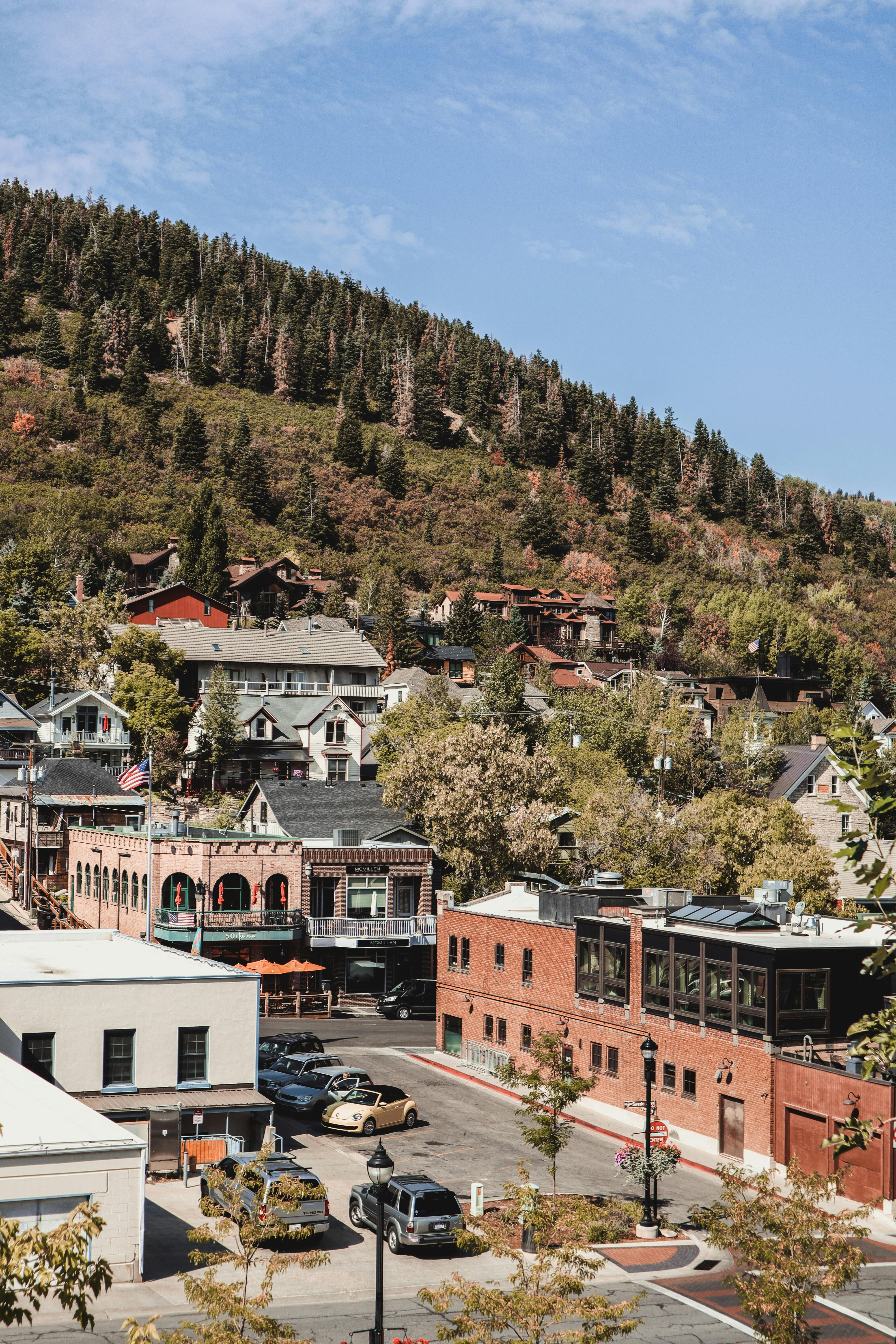
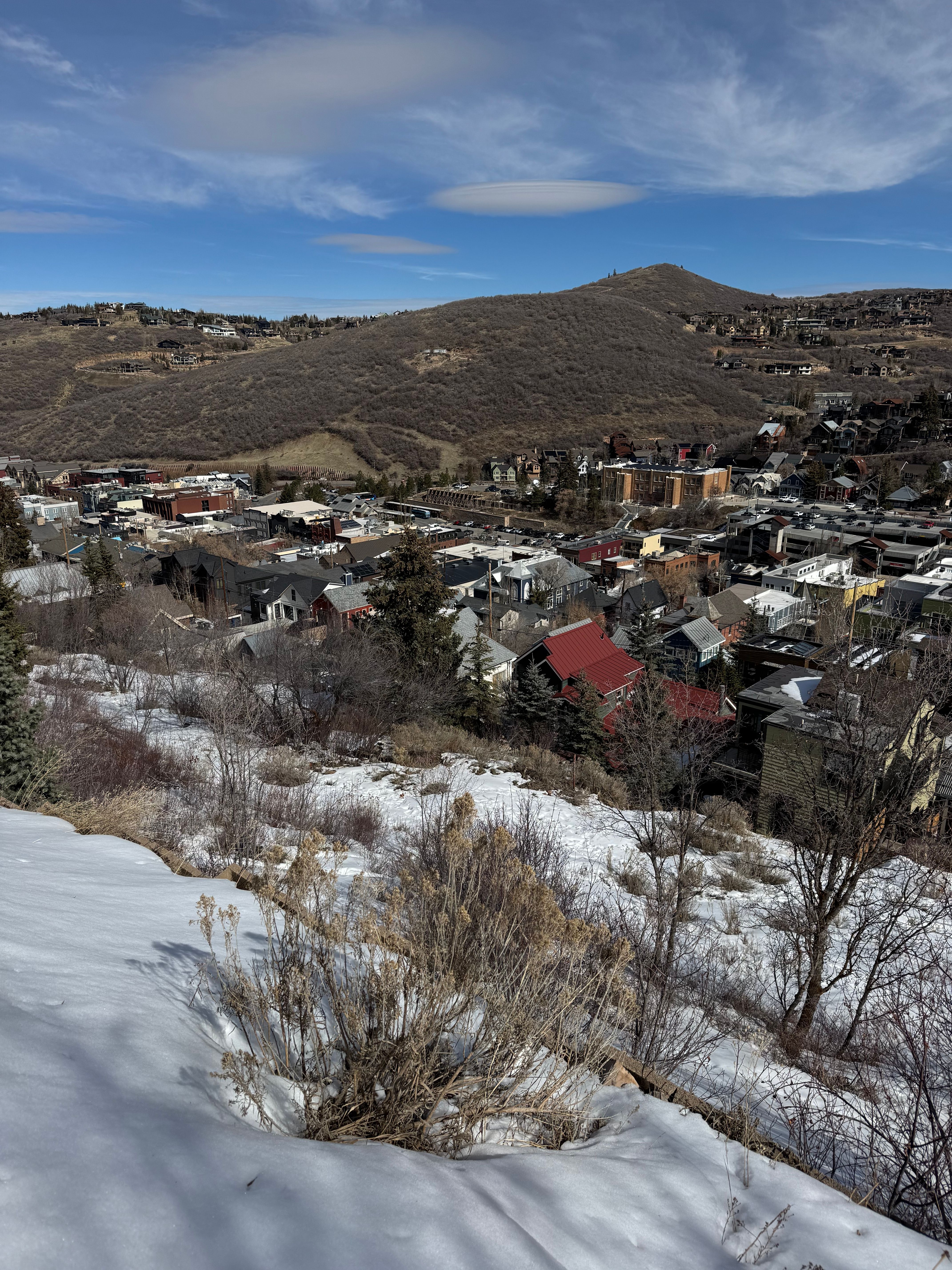
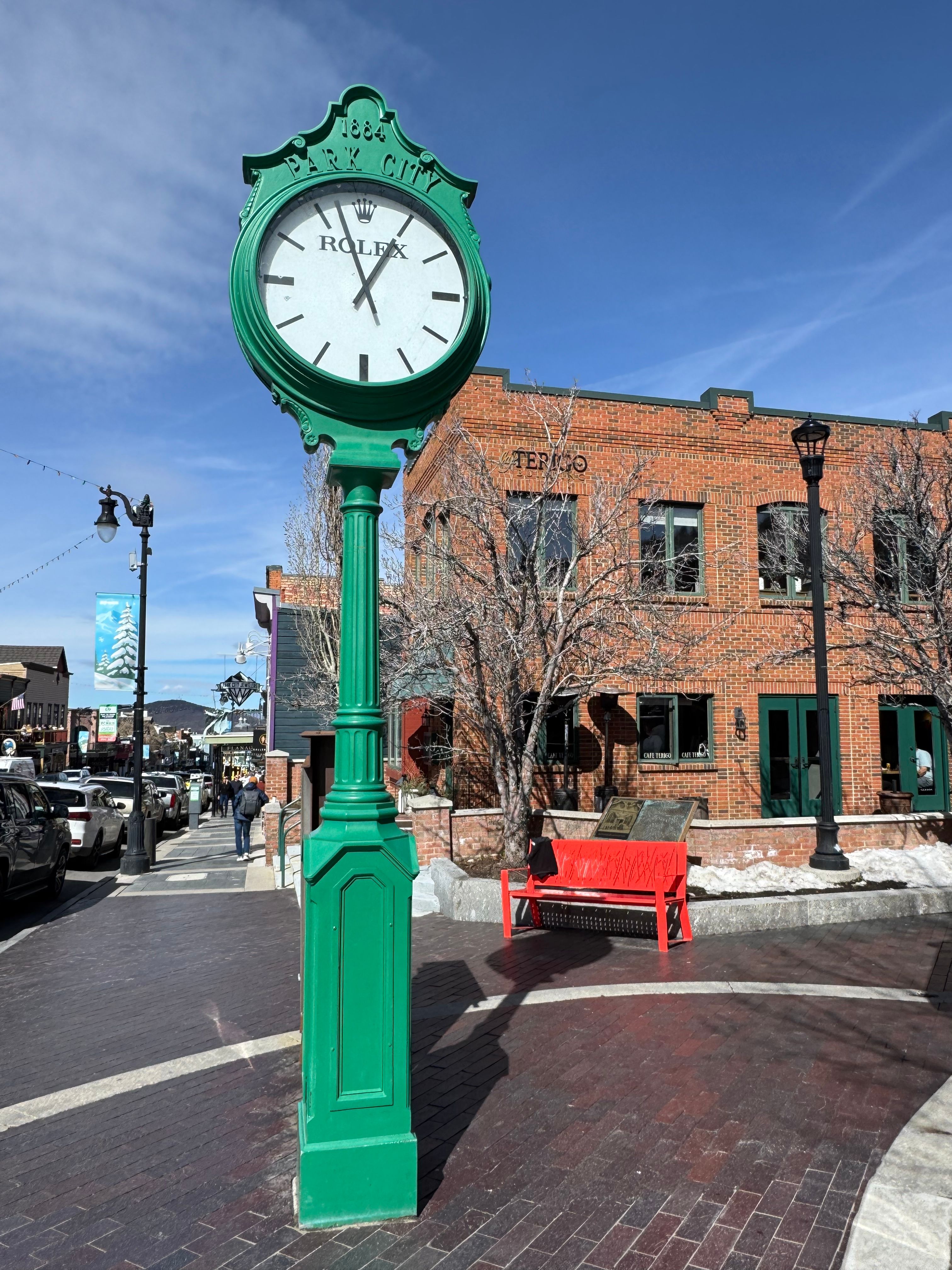
This happens in two ways. The first is the obvious one: the higher the price, the smaller the buyer pool. A buyer at 6.95% qualifies for meaningfully less house than a year ago, so every price band quietly lost some buyers to the band below it. You can see it in Park City. In August, 48 single family homes sold there with a median right around $3.1 million, and 35 condos and townhomes sold with a median around $1.3 million. Those are strong prices, but most segments there are in buyer's market territory, and the local read is that anything sitting past about three weeks to a month is handing leverage to the buyer. Park City's condo and townhome market is also feeling the same three pressures from point one: HOA dues, insurance premiums and the threat of special assessments. Different zeros, identical math.
The second version is sneakier. Being at the top of your market doesn't mean being expensive. It means being the most expensive home on your street. Picture a neighborhood where everything sells between about $520,000 and $580,000, and a seller who put $110,000 into a new kitchen, hardwood, a beautifully finished basement and a pool, and now wants well above anything the street has ever sold for. Even if a buyer loves it, the appraiser is pulling comps from that same street, and the deal can fall apart at appraisal. A neighborhood has a ceiling, and you don't get to raise it by yourself. A pool, with our four to five month season, can even work against you with buyers who see it as a maintenance bill.
If you're selling: either price inside the neighborhood ceiling and accept you won't get all of it back, or commit to finding the one buyer who specifically wants what you built and market directly to them. What doesn't work is pricing above the neighborhood and waiting.
If you're buying: over-improved homes are one of the best deals in Utah right now. Let the seller subsidize your kitchen.
6. Any Home That Missed Its First Two Weeks
This is the one that decides everything. Your house isn't really on the market for 90 days. It's on the market for about 14. The day you list, your home goes out to every buyer in your price range with an active search, every agent with a matching client and every portal, all at once. That's the largest audience your home will ever have, and it's almost entirely front-loaded. After roughly two weeks, that wave is gone.
Look at Salt Lake County right now: 34% of homes on the market cut their price in the last 30 days, and 49.3% have cut at least once since they listed. The way I read that, a lot of those homes were priced wrong on day one. And most of them are chasing the market down: list at $675,000, silence, cut to $650,000, silence, cut to $630,000, cut to $605,000, and eventually sell at $595,000, which is what it was worth the whole time. Except now it took 110 days instead of 12, and the buyer wrote a lower offer specifically because it had been sitting. Every public price cut tells the next buyer to wait for the next one.
Here's the whole thing in one sentence: what doesn't sell is a home with a problem priced like a home without one. An oversupplied townhome sells. A resale next to a builder sells. A house that needs a roof sells. A house on a busy road sells. An over-improved home sells. Every one of them will sell at the right number in the first couple of weeks.
Why the Timing Matters
We're heading into the slowest stretch of the Utah real estate year. Buyer activity typically drops through the holidays and doesn't really come back until February. A home sitting today, with inventory this high and rates at one-year highs, is looking at a long, quiet winter of price cuts unless something changes in the next few weeks. The good news is that every one of these is a pricing or presentation decision, not a life sentence.
And if you're on the buying side, flip every one of these around. This list isn't a warning for you. It's a road map. These six categories are exactly where your negotiating power lives in Utah right now, and there's more of it available today than at any point in the last five or six years.
Watch the full video here: These Utah Homes Are NOT Selling
Thinking About Moving to Utah? Let's Talk.
Utah is one of the fastest-growing states in the entire country, and navigating the cultural landscape alongside the real estate market takes genuine local expertise. Whether you're considering Salt Lake County, Utah County, Davis County, or further out — finding the right neighborhood for your lifestyle, budget, and long-term goals makes all the difference.
My team and I work exclusively with buyers and sellers navigating the Utah real estate market. We help you cut through the noise, match the right submarket to your specific lifestyle and priorities, and make sure you're buying from a position of clarity — not FOMO.
Book a call with us HERE — free 30-minute consultation
Check out our relocation guide HERE
Subscribe to our weekly newsletter HERE
Categories
Recent Posts