8 Fastest Growing Cities Near Salt Lake City: Where People Are Actually Moving in Utah Right Now (2026 Data)
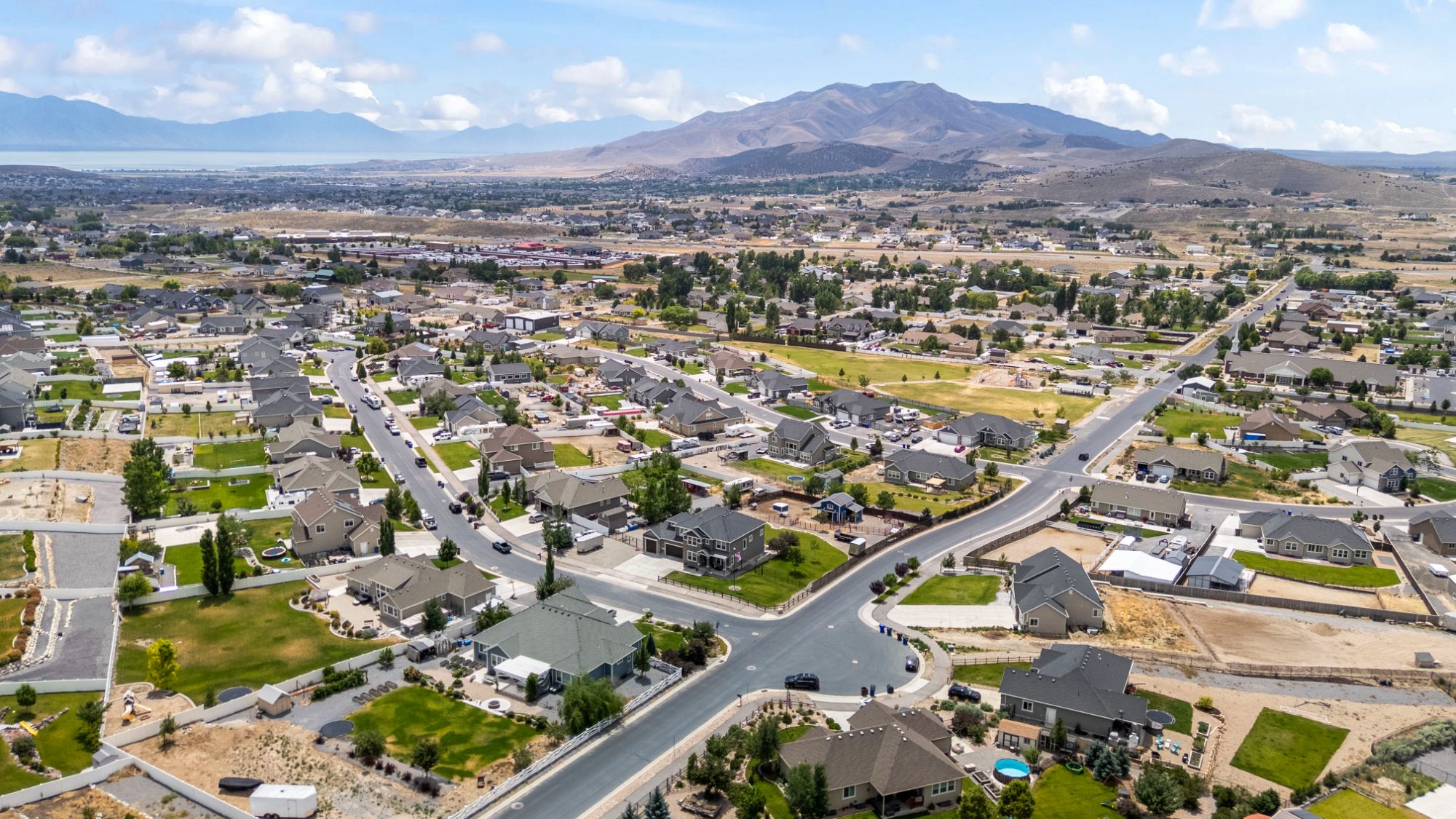
8 Fastest Growing Cities Near Salt Lake City: Where People Are Actually Moving in Utah Right Now (2026 Data)
The Utah Relocation Story Everyone Gets Wrong
Here's the conventional take on relocating to Utah: everyone wants Salt Lake City, the established Salt Lake County suburbs, and that's pretty much where all the demand is. And look — that's the version most people see in articles and relocation brochures. But it's not what the actual data shows.
According to the U.S. Census Bureau's most recent estimates, tracked by the Kem C. Gardner Policy Institute at the University of Utah, Utah is currently the fourth fastest growing state in the entire country. But the cities pulling the biggest share of those incoming movers right now are not the names you'd expect. In fact, only one city in Salt Lake County even makes the leaderboard. Most of the real action is happening in places that didn't exist on a typical out-of-state buyer's radar just five years ago.
Why does this matter to you? Because if you're moving to Utah, picking the wrong city — even by just a few miles — can be the difference between buying into a market with five or more years of appreciation runway ahead of it, or buying into one that has already topped out. It's the difference between a 25-minute commute to Silicon Slopes and a 70-minute grind. It's the difference between a brand-new home with a real yard at a fair price, or paying a 30% premium for less square footage one zip code away.
My name is Scott Steele. I'm a real estate broker and agent along the Wasatch Front and throughout the state of Utah. I help out-of-state buyers and relocators figure all of this out every single day. I'm pulling from current U.S. Census Bureau data, Salt Lake Board of Realtors monthly reports, the Kem C. Gardner Policy Institute, and frankly, a lot of hours on the road every week driving to every one of these cities and watching them change in real time.
Here's the plan: I'm walking you through eight cities and towns within roughly one hour of Salt Lake City that are seeing the biggest demand surges right now. For each one, I'll cover the actual growth numbers, who's moving there and why, current median home pricing, and — most importantly — which type of buyer each city actually fits. Because not every hot city is right for every buyer.
City #1: Eagle Mountain — The Tech Corridor Frontier
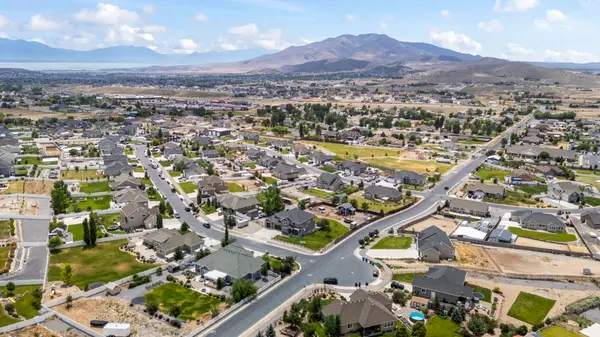
Eagle Mountain sits at the western edge of Utah County on the northern side, just south and west of Saratoga Springs. Five years ago, most people in Utah barely thought of it as part of the Wasatch Front conversation. Today, it's one of the fastest growing cities of its size in the entire country — with over 70,000 residents now calling it home.
The actual numbers: Per the U.S. Census Bureau, Eagle Mountain added almost 3,800 residents in 2024 alone. That's an annualized growth rate north of 6%. And the growth isn't just residential. This is rapidly turning into the next major Utah tech corridor. Major data centers from some of the largest tech companies in the world — including Meta and soon Google — have planted infrastructure here, pulling high-paying jobs into a town that until recently was almost entirely a bedroom community.
Eagle Mountain has done two things simultaneously that almost no other Utah city has pulled off. First, it still has large pockets of relatively affordable new construction and available land — price ranges that have completely disappeared in Lehi, Draper, or Sandy. Second, the local job base is being built right next door in Lehi and into Saratoga Springs. That combination is genuinely rare.
The catch: Infrastructure is playing catch-up. Schools, retail, restaurants, and services are still filling in. Depending on which neighborhood you're in, you might be driving 15 to 20 minutes to reach a major grocery store or commercial node. Some areas still have well and septic considerations. This is not a "polished suburb experience" play. This is an upside play.
Who fits Eagle Mountain: Younger families, first-time Utah buyers, dual-income tech-adjacent households, and anyone with a 5-to-10-year horizon who can be patient while the area finishes building out around them. Appreciation will follow — and with new freeways currently under construction, we're looking at an estimated 10-12% bump in appreciation above natural market conditions once that infrastructure is complete.
Who doesn't fit: If you want walkable, established, lots of restaurants, and polished suburb life today, you'll be frustrated here. This is the closest thing to a "get in before the wave" opportunity within driving distance of Salt Lake City and Silicon Slopes right now.
City #2: Daybreak & South Jordan — The Master-Planned Lifestyle Play
If Eagle Mountain is the early-stage frontier story, Daybreak is what happens when growth is executed at the highest possible level of planning. South Jordan is located in the southwest corner of Salt Lake County, sitting right between Lehi to the south and the heart of Salt Lake City to the north.
The centerpiece of South Jordan's growth story is Daybreak — the largest master-planned community in the entire state of Utah. We're talking thousands of acres, planned over decades, with its own town center, its own downtown district, its own beach and Oquirrh Lake, miles of trails, parks, pools, schools, retail, and restaurants. Daybreak isn't just one neighborhood. It's essentially a city within a city, and it's still building out.
The numbers: South Jordan added over 2,300 residents in 2024 according to the Census Bureau, with a meaningful portion of that absorbed by Daybreak. Median sale prices in Daybreak currently sit in the upper $500s to low $600s, with South Jordan as a whole running in the high $500s to mid-$600s depending on the product type.
South Jordan ranks among the more expensive zip codes along the Wasatch Front, but the trade-off is clear: you're not just buying a home, you're buying into a curated lifestyle and amenity package that almost nowhere else in Utah replicates.
Who fits Daybreak and South Jordan: Tech professionals working at Silicon Slopes who want a 20-minute commute but a real neighborhood to come home to. Retirees who want walkability, trails, and excellent medical access. Families who specifically want HOA-managed amenities, community pools, and planned activities without having to build that themselves. And relocators moving in cold from out of state — because there's so much built-in community to plug into that isolation is nearly impossible.
The trade-offs: HOA fees and CC&Rs are real. You don't have full creative control over your home's exterior. Lot sizes tend to be modest unless you're stepping into higher product tiers. And while supply is constant, true deal pricing is harder to find here than in growth-stage cities like Eagle Mountain or Saratoga Springs.
City #3: Lehi — The Established Silicon Slopes Anchor
If you've researched moving to Utah for more than 10 minutes, you've heard the phrase Silicon Slopes. Lehi is its capital. Lehi sits in northern Utah County, right on the I-15 corridor about 30 minutes south of downtown Salt Lake City. It's home to major offices and headquarters for Adobe, Podium, Qualtrics, and dozens of other tech firms.
The numbers: Lehi added over 4,100 residents in 2024 — a top-five number for raw population growth in the entire state. Its growth rate has slowed percentage-wise compared to a few years ago simply because it's getting full, but it's still pulling enormous numbers of incoming households every year.
Lehi gives you something almost no other Utah suburb offers: you can live, work, eat dinner, send your kids to school, see a movie, hike a trail, and visit Costco without ever leaving city limits. That is not normal in Utah suburbs, where most areas require driving 15-25 minutes for at least one of those activities.
The major neighborhoods to know: Traverse Mountain on the east side, sitting up against the foothills with mountain views and direct access to both I-15 and the FrontRunner commuter train; the heart of Lehi proper, with more established homes and tighter price ranges; and newer west-side developments like Holbrook Farms, closer to Saratoga Springs.
The trade-offs: Lehi is no longer cheap. You're paying a premium over Eagle Mountain and Saratoga Springs for comparable square footage. Traffic during commute hours around the tech corridor and Thanksgiving Point can be brutal. That said, the Mountain View Corridor expansion — along with the new 2100 North Expressway currently under construction connecting I-15 with the Mountain View Corridor to the west — is expected to add an additional 10-12% appreciation bump to this area as those freeways come online.
The bigger picture: Lehi is the safe play. The question isn't whether it will hold its value — it's how much of a premium you're willing to pay to be at the absolute center of everything. For relocating families, especially anyone in tech, that premium is often absolutely worth it. The schools are established. The retail is there. The job base is locked in.
City #4: Salem — Southern Utah County's Hidden Gem
Salem is in southern Utah County, about 50-55 minutes south of Salt Lake City, just south of Spanish Fork and right next to Salem Pond. Most out-of-state buyers have never heard of it. But last year, Salem made the top 10 fastest growing cities in Utah by percentage growth — a notable achievement for a city of its size.
The reason most people miss Salem isn't because nothing is happening there — it's because the city has intentionally maintained a small-town character. Here's what's actually happening: as northern Utah County (Lehi, Saratoga Springs, Pleasant Grove, American Fork, Eagle Mountain) fills out and gets more expensive, buyers who can't afford or don't want northern Utah County are sliding south. Spanish Fork, Mapleton, Salem, and Payson are all absorbing that demand.
Salem, in particular, delivers small-town feel without sacrificing access. It sits on direct I-15 access via Spanish Fork.
Who fits Salem: Buyers who want a slower pace, larger lots, custom home options, horse property, rural-edge living, and a tight-knit community feel. Buyers who work remotely, work in southern Utah County, or work in the Provo area. Median home prices here run noticeably below Lehi or Daybreak, and you get significantly more land per dollar. That land-to-price ratio is where the real Salem story lives.
The trade-offs: Commute and amenities. If your job is in downtown Salt Lake City, Salem is a genuine 50+ minute commitment in good traffic, longer in real conditions. If you work in southern Utah County or remotely, that pain disappears entirely. Major retail still requires a drive to Spanish Fork or Provo. But Salem is one of the cleanest examples on this list of a town still in the early innings of being discovered by relocators.
City #5: North Ogden — The Price Growth Value Play
If you've been thinking "everything is in Salt Lake County or Utah County" — North Ogden is your answer. North Ogden sits in Weber County at the base of Ben Lomond Peak, about 35-45 minutes north of Salt Lake City depending on traffic. It's part of the Ogden-Clearfield metropolitan area, and Ogden as a region has been undergoing one of the most interesting transformations on the entire Wasatch Front. Downtown Ogden has revitalized significantly. The area around Weber State University and Snowbasin Resort has become a magnet for outdoor recreation buyers.
The data signal: North Ogden has been consistently ranking as one of the fastest growing cities in Utah by sales price growth — not just population. That's a different signal. Population growth tells you where people are physically moving. Price growth tells you where demand is exceeding available supply. North Ogden has both, and the price growth side has been outpacing some far more well-known Salt Lake County zip codes.
Who fits North Ogden: Buyers who prioritize mountain access and outdoor recreation. Skiing at Powder Mountain, Snowbasin, or Nordic Valley is practically in your backyard — Snowbasin is a 25-minute drive on a good day. Trails and canyons are essentially out your back door. Buyers who want a more established small-city feel, who prefer the Ogden side of the Wasatch Front over the rapidly suburbanizing south, and who want their dollar to stretch further. Price points here for comparable homes can run 15-25% lower than equivalent product in central Salt Lake County.
The trade-offs: Commute and job market access. If you work in Silicon Slopes, it's a very long drive. If you work at Hill Air Force Base, somewhere in Weber County, in healthcare, financial services, or remotely, North Ogden is a genuinely clean fit. The appreciation has been quietly steady, the infrastructure is established, and the lifestyle for someone who actually uses the mountains is hard to beat.
City #6: Sandy — The Contrarian Quality Buyer Play
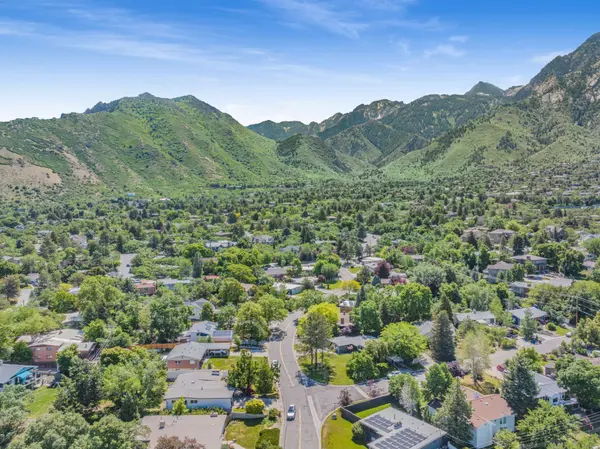
Here's the contrarian move on this entire list: Sandy actually lost population last year. Sandy sits in the southeast portion of Salt Lake County — an established, well-respected suburb right at the entrance to Little Cottonwood Canyon and Big Cottonwood Canyon. It has Real Salt Lake Stadium, the Shops at Southtowne Center, Lone Peak Hospital, and gorgeous foothill neighborhoods with incredible ski access. By every lifestyle measure on paper, it should be at the top of every relocator's list.
And yet, per the U.S. Census Bureau, Sandy lost roughly 710 residents in 2024. So why is it on this list?
Because the story is more nuanced than the raw number. Sandy is a built-out city — it simply doesn't have empty acreage to keep adding new construction at scale. So its population number will naturally lag behind younger sprawl-stage cities like Saratoga Springs or Eagle Mountain. That's almost mathematical, not demand-driven.
What's actually shifting is the type of buyer moving into Sandy. We're seeing real out-of-state relocation — specifically from California and the Pacific Northwest — into Sandy, because it hits a very specific profile: established neighborhoods with mature trees, world-class ski access, walkable pockets, strong school options, and a neighborhood character that's genuinely harder to find in newer suburbs.
Who fits Sandy: Buyers who want the established neighborhood feel. Buyers who prioritize ski access over tech corridor proximity. Buyers who want to be in Salt Lake County, close to downtown Salt Lake City. The housing stock here has real variety — ranch-style homes, luxury properties on the east bench, larger and more irregular lots, established trees, and neighborhoods with character that newer suburbs simply haven't had the time to build.
The bigger picture: Sandy's demand profile is now skewing toward more established buyers with more equity to bring to the table — not young families flooding in at growth-suburb pace, but out-of-state buyers moving with cash and selective taste. If you're a relocator who values "feels like a real city, not a brand-new development," Sandy is one of the most underrated buys on this entire list.
City #7: Draper — The "I Want It All" Foothill Move
If Lehi is the capital of Silicon Slopes, Draper is its older, slightly fancier cousin. Draper straddles the Salt Lake County/Utah County boundary, sitting right between Sandy to the north and Lehi to the south along I-15. From Draper, you're 25 minutes from downtown Salt Lake City and roughly 15 minutes from the heart of the Lehi tech corridor. That bidirectional access is rare — most Wasatch Front suburbs commit you to one direction. Draper genuinely doesn't.
Draper's secret weapon is geography. Corner Canyon is hands down one of the best networks of mountain biking, hiking, and equestrian trails of any suburb in the entire country. The Suncrest and Traverse Ridge foothill neighborhoods offer panoramic views across the entire valley that you have to see in person to believe. Add light rail access, top-rated schools, and while Draper is absolutely premium-priced, it tends to land slightly below the absolute peak of Sandy or premium Lehi for comparable product.
Who fits Draper: High-earning professionals who may commute either north or south on any given day. Executives who want established foothill neighborhoods. Families who rank schools above almost everything else. Outdoor enthusiasts who want trails literally out their back door. And a significant number of California relocators who specifically want a polished suburban feel without committing to Salt Lake County urban density or Utah County sprawl.
The trade-offs: Price. Draper is one of the more expensive Wasatch Front suburbs, and the hillside neighborhoods especially can escalate quickly. Inventory turns slowly here too — once people get into Draper, they tend not to leave, which is simultaneously a strong signal of desirability and a real challenge if you're the one trying to buy in.
The bigger picture: Draper is the "I want it all" play — location, schools, trails, foothill character, and suburban prestige in one package. If you genuinely cannot decide between Salt Lake County and Utah County, Draper is often the answer because it bridges both.
City #8: Saratoga Springs — The City That's Doubling in a Decade
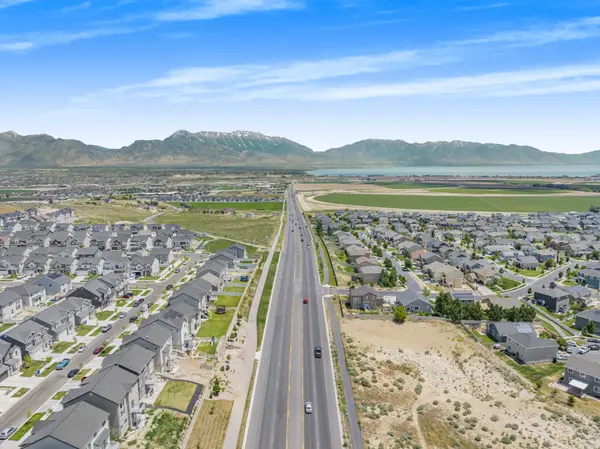
We saved the most jaw-dropping growth story for last: Saratoga Springs. Saratoga Springs sits on the northwest shore of Utah Lake, just west of Lehi, accessible via Pioneer Crossing, the Mountain View Corridor, and the new 2100 North Freeway Expressway currently under construction to connect I-15 with the Mountain View Corridor.
The numbers almost don't sound real. According to the U.S. Census Bureau, Saratoga Springs grew 9.3% in just one year — 2024 — making it the fastest growing large city in the entire state of Utah. The city's own population is currently around 71,000 residents, and city projections indicate it will essentially double in the next 10 years to over 120,000 residents at full buildout.
Read that again. This city is on track to double in a single decade. That doesn't happen in established American metros virtually anywhere else right now.
Saratoga Springs has everything Eagle Mountain has — newer homes, growth-stage pricing, and expanding tech corridor access — plus more retail already coming online, a beautiful lakefront, and slightly faster commuter access via Pioneer Crossing into Lehi. The median household income here is meaningfully above the Utah state median, and the average household size is over four people. That tells you exactly who's moving in: families, young professional couples planning families, people with real income who want newer construction in a community built specifically for them.
The trade-offs: Traffic during peak hours can be serious. Commercial nodes haven't fully matured yet. The constant sound of construction in many neighborhoods is real. If you want established quiet, Saratoga Springs isn't there yet — at least not in most areas. But the trajectory is as clear as it gets.
The bigger picture: Saratoga Springs is the cleanest example of a city where the demographic, infrastructure, geographic, and economic forces are all pulling in the same direction at the same moment. The road expansions are funded and planned. Schools are being built. Retail is filling in. The tech corridor next door is established and growing. And the mathematical population trajectory points to this city doubling within a decade.
If you're buying a home anywhere within 30 minutes of Saratoga Springs, what happens here will affect your home value as well — that's how dominant this growth story is right now. And if I had to pick one city on this entire list as the single highest-conviction call for a relocator who fits the profile, Saratoga Springs is it.
The Real Utah Relocation Picture: What the Data Actually Shows
Eight cities. All within roughly an hour of Salt Lake City. Each one telling you something different about where the demand is actually going in 2026:
Eagle Mountain — the tech corridor frontier with genuine appreciation runway still ahead of it. Daybreak and South Jordan — the master-planned lifestyle play that's complete from day one. Lehi — the established Silicon Slopes anchor where everything is already built in. Salem — the southern Utah County hidden gem for buyers who want space and value. North Ogden — the price-growth value play with mountain access that outprices more famous zip codes. Sandy — the contrarian, quality-buyer play where established neighborhoods and ski access draw serious equity buyers. Draper — the I-want-it-all foothill move for buyers who can't pick between north and south. And Saratoga Springs — the city doubling in a decade and arguably the strongest growth-trajectory story in the entire state.
The version of Utah relocation that gets sold in the articles — everyone moves to Salt Lake City — is not what's actually happening. The real story is more interesting, more nuanced, and more useful. Most people moving here right now are picking suburbs that didn't exist on most relocators' radar five years ago. And they're skipping suburbs that everyone assumed would be at the top of the list.
If you can match the city to your actual life — your job, your budget, your commute tolerance, your time horizon — you're not just buying a house. You're buying into the right wave at the right time.
Ready to Find Your City in Utah?
My team and I work exclusively with buyers making the move to Utah. We help out-of-state families cut through the noise, avoid wrong-neighborhood mistakes, and find the community that actually fits their life — not just their budget.
Reach out, book a video call, and let's map out the right city for you before you start touring homes. The conversation is free. Picking the wrong neighborhood is not.
Book a call with us HERE
Scott Steele | HOME@TheUtahReel.com | 801-680-8050 | www.TheUtahReel.com
Categories
Recent Posts