6 Things Nobody Tells You About Moving to Utah in 2026
6 Things Nobody Tells You About Moving to Utah in 2026
Here's the thing about Utah that nobody who's trying to sell you on it will ever say out loud: the state will either be the best move of your life — or the most expensive lesson you've ever learned. And the difference between those two outcomes has almost nothing to do with how much you like the mountains.
You've done your research. You've seen the YouTube videos, the real estate posts, the relocation guides. Beautiful landscapes. Lower cost of living than California. A booming tech economy in Silicon Slopes. Incredible outdoor access. And a lot of that is genuinely true. Utah is growing at a rate most of the country isn't. The job market here is one of the healthiest in the Mountain West. And if you pick your spot right, the long-term appreciation story is compelling.
But here is what I've watched happen over and over again to people who move to Utah without the full picture. They get blindsided — not by one big thing, but by six specific realities that almost nobody talks about publicly. Not in the glossy relocation guides. Not in the mainstream media coverage. And unfortunately, not by most real estate agents who would rather close a deal.
My name is Scott Steele. I'm a Utah-based real estate professional and I've spent years working with buyers and sellers across the Wasatch Front and throughout the entire state. I work with out-of-state relocators every single day — people moving from California, Texas, Florida, the Pacific Northwest, and all over the world. I make it a point to have the conversations most agents skip, because I'd rather you move here with your eyes wide open than feel like you got sold something on a sunny Saturday afternoon that was just a little too good to be true.
Here are six things about Utah in 2026 that nobody tells you until it's too late.
1. The Housing Payment Trap
When most people research what homes in Utah cost, they do one thing: they go to Zillow or Redfin, look at median home prices, and compare that number to wherever they're coming from. Salt Lake City metro median home prices sit around $500,000 to $550,000 right now, depending on the county and the data source. Coming from the Bay Area, that sounds like a steal. Coming from a midsize Texas market, it might sound about the same — or even higher than expected.
Here's the problem: the price tag is not the trap. The monthly payment is the trap.
Take a $500,000 home. You put 10% down ($50,000). You're financing $450,000. At a mortgage rate sitting in the 6.5% to 7% range — where we've been living for the better part of the last two years — your principal and interest payment alone is roughly $2,800 to $3,000 per month. Now add Utah's effective property tax rate (around 0.57%–0.63% depending on county), which runs about $240–$260/month on a $500,000 home. Add homeowners insurance at $100–$150/month. Add HOA fees if you're in a newer community — that's another $50–$200/month. You're now looking at an all-in monthly payment somewhere between $3,200 and $3,600 per month on a $500,000 home.
That same home three years ago at a 3% mortgage rate had a payment of roughly $1,900–$2,100/month. The home costs the same. The payment is 60%–80% higher. This is what I call rate lock paralysis in reverse — it's not just existing homeowners who are frozen, it's incoming buyers who look at a $500,000 price tag and think it's manageable without doing the monthly payment math at current rates.
The takeaway: This is not a reason not to move here. But it is absolutely a reason to go into this with a full stress-tested budget before you ever put in an offer — and a reason to seriously consider whether renting first makes more financial sense than buying on day one.
2. Utah's Air Quality Problem (That Gets Worse Every Winter)
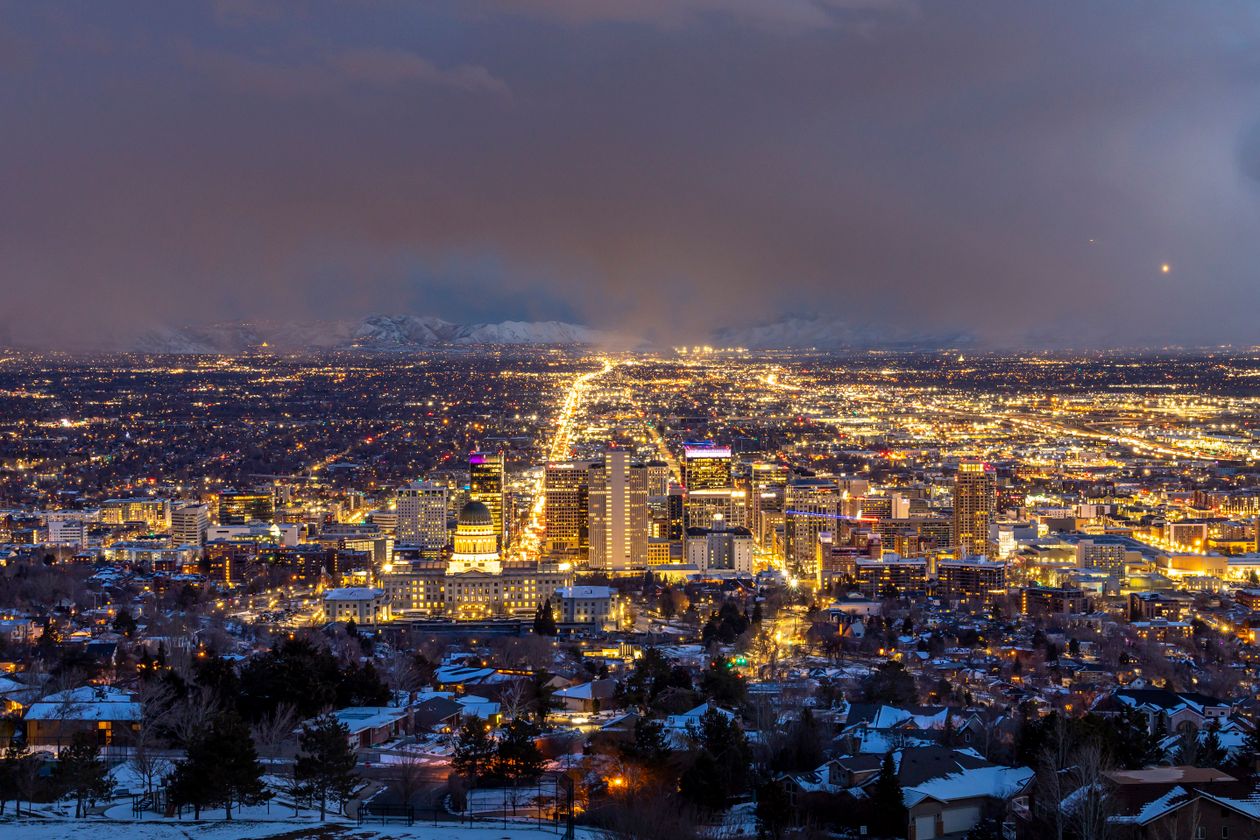
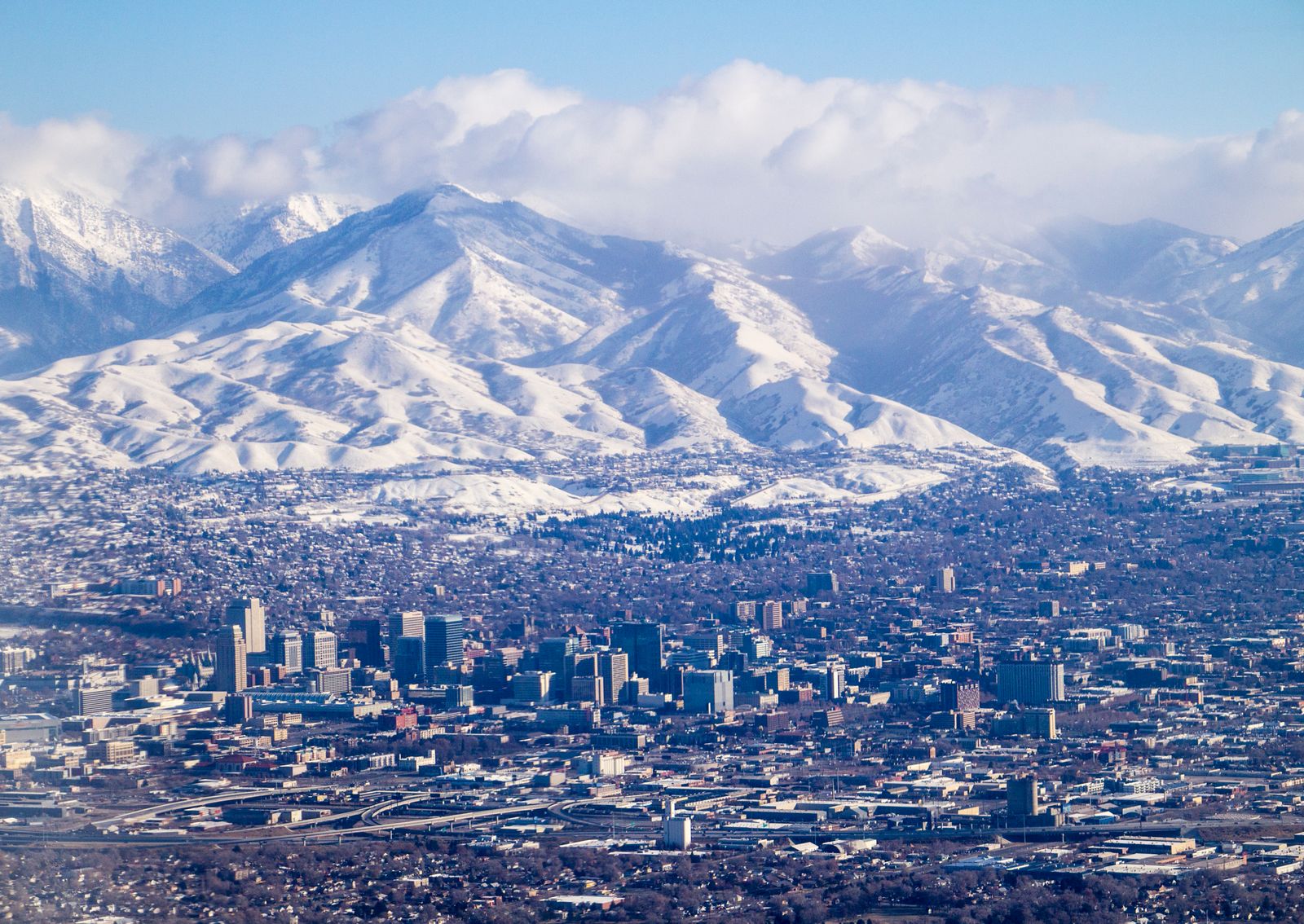
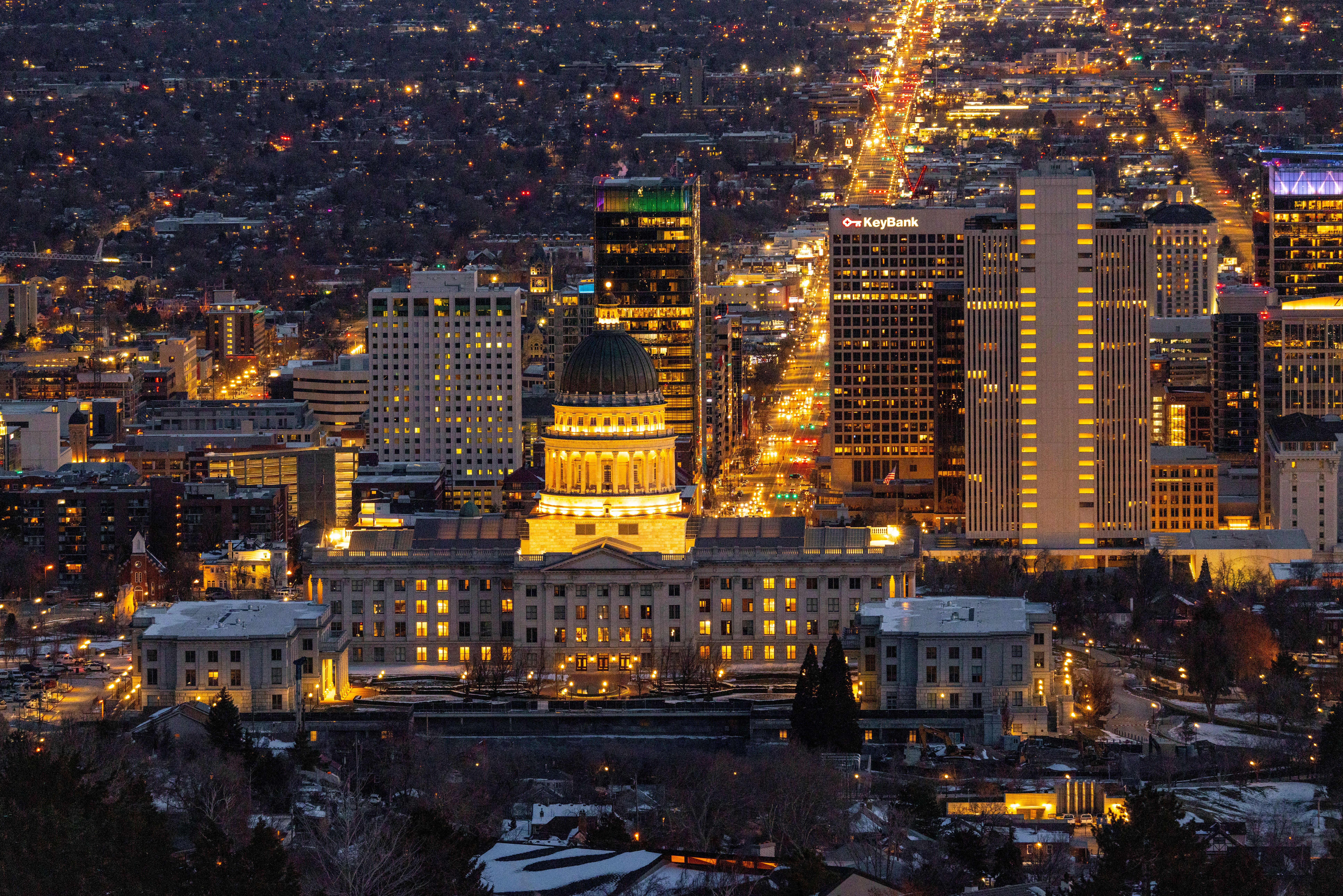
If you tell someone you're moving to Utah, they probably picture clear blue skies, red rock vistas, and mountain air. That is real — most of the year. But here is what almost nobody tells you before you sign a lease in the Salt Lake Valley: for roughly 6 to 10 weeks every winter, typically January through mid-February, the Salt Lake Valley experiences what meteorologists call a temperature inversion.
Cold air gets trapped in the valley beneath a layer of warmer air. The mountains that make Utah beautiful become literal walls that lock in everything the valley produces — car emissions, wood-burning stoves, industrial output. The air quality during an inversion event in Salt Lake City is regularly compared to, and sometimes worse than, Los Angeles. That is not hyperbole. That is AQI data.
What does this actually look like? You wake up and the mountains are gone. Not because of clouds — because there's a brown and gray layer of particulate matter sitting at roofline level across the valley. If you have asthma or respiratory problems, you modify your outdoor activity significantly. If you have kids who play outside, you make daily calls about whether they should be running around at recess.
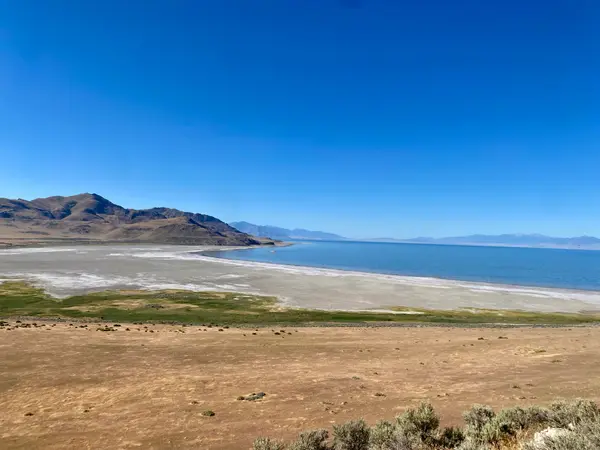
And here's what makes this significantly worse going forward: the Great Salt Lake has been shrinking at a rate environmental scientists describe as alarming. It's lost over half of its surface area over the last several decades. The dry lake bed now exposes millions of acres of sediment containing arsenic, mercury, and other heavy metals that get picked up by the wind and deposited across the Wasatch Front. Scientists have flagged this as one of the most significant long-term public health risks in the state.
The takeaway: Utah's air quality is genuinely good for most of the year. But if you have respiratory sensitivities, know about inversion season before you decide where to land. Higher-elevation communities on the Wasatch back — like Park City — experience far fewer inversion events because they sit above the cold air that settles in the valley floor. Geography matters when you're choosing where to buy.
3. The Culture and Social Dynamics
Utah has the highest percentage of members of the Church of Jesus Christ of Latter-day Saints of any state in the country — estimates put that at 55–60% of the population, with concentrations much higher in certain counties, particularly Utah County (which runs from Provo through American Fork and into Lehi).
This is not a criticism. The LDS culture in Utah produces tight-knit neighborhoods, high civic engagement, low crime rates in most areas, and a genuine emphasis on family and community that many people who move here find genuinely appealing. But here's what nobody tells you if you're not LDS: the social scaffolding of this state is built around a community structure that you are, by definition, on the outside of unless you are a part of it.
What does that look like in daily life? Social circles in many Utah communities form heavily through ward boundaries — the geographic congregation units of the LDS church. Neighbors who share a ward often have a built-in social infrastructure: regular gatherings, mutual aid networks, established relationships. If you move into a neighborhood and you're not LDS, you're not excluded. But organic social connection may take longer and require more intentional effort than it would elsewhere.
Alcohol is legal in Utah, but the regulations around purchasing and serving it are among the most restrictive in the country. Beer sold in grocery stores is limited in ABV. Many restaurants operate under limited service licenses. If that's part of your social life, you'll adjust — but it's a real adjustment.
The takeaway: This is not a dealbreaker. There are thriving, diverse non-LDS communities in Utah, particularly in Salt Lake City proper, the Millcreek and Sugar House areas, Park City, and increasingly in the tech corridor communities attracting out-of-state transplants. Where you land geographically within Utah will dramatically shape your social experience. Go in with an open mind and realistic expectations.
4. Water Scarcity and What It Means for Property Values
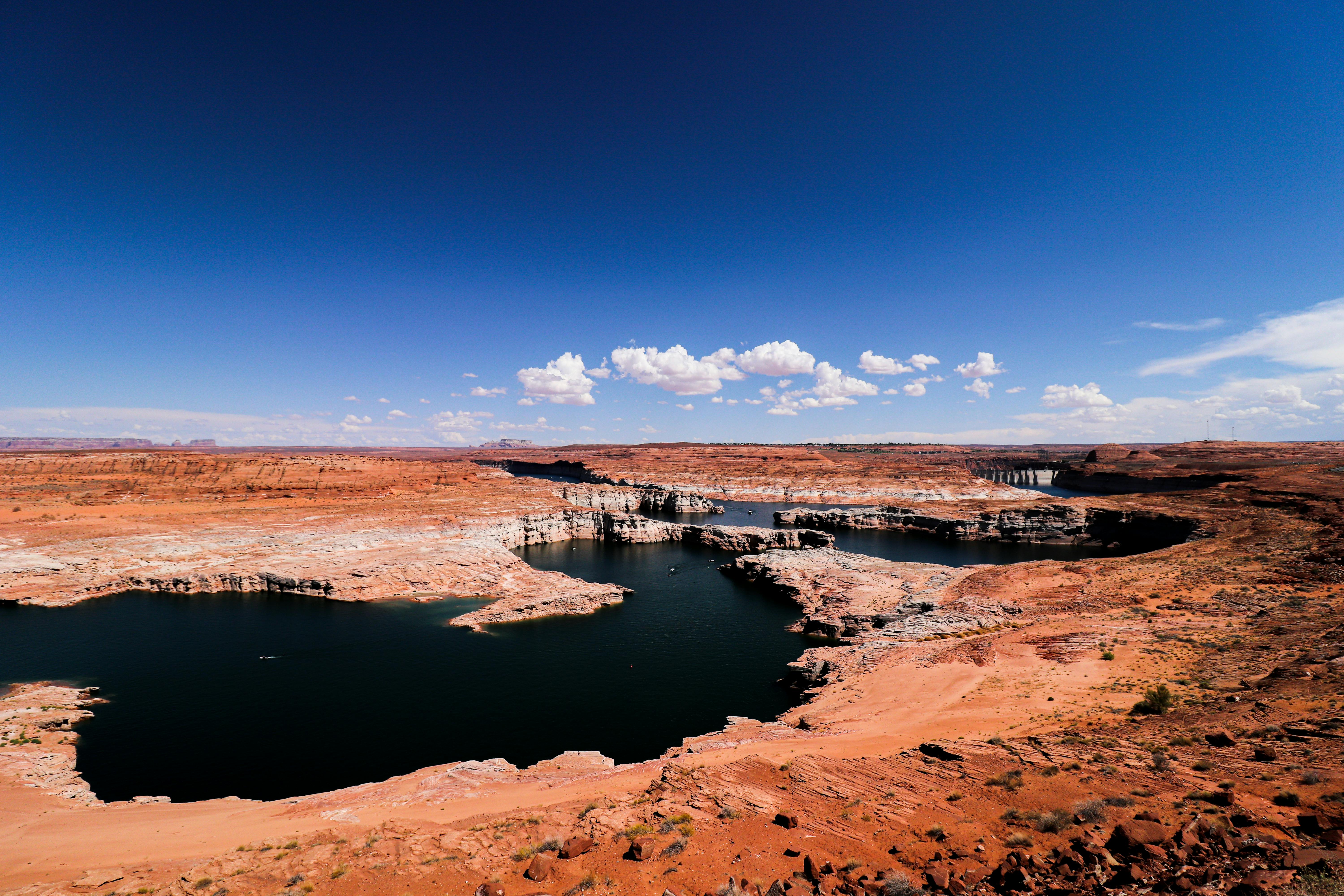
Utah is one of the fastest-growing states in the nation by population. The Colorado River, which supplies water to much of the American Southwest, has been at historically low levels. Lake Powell and Lake Mead, the two largest reservoir systems in America, have both spent recent years at critically low capacity. The Great Salt Lake has been receding for decades, partly because of upstream water diversion for agriculture and development.
In the near term, this probably doesn't affect your daily life. Utah has been proactive about water conservation policy compared to other western states, and there are meaningful infrastructure investments underway. But on a 10-, 15-, or 20-year horizon — which is the horizon you should be thinking about when you buy a home — water rights, water access, and water pricing in the American West are going to become increasingly significant factors in property values.
Communities served by reliable senior water rights (the legal framework the West uses for water allocation) are going to hold value differently than communities at the end of a junior water rights chain. This is not widely discussed in real estate marketing, but it is a real variable.
The takeaway: I'm not saying Utah is going to run out of water tomorrow. I'm saying that if you're buying a home you plan to own for a decade or more, water security is a due diligence question worth asking — especially if you're considering properties in outer growth corridors or areas with newer development where water infrastructure is still being built out.
5. Traffic and the Infrastructure Gap
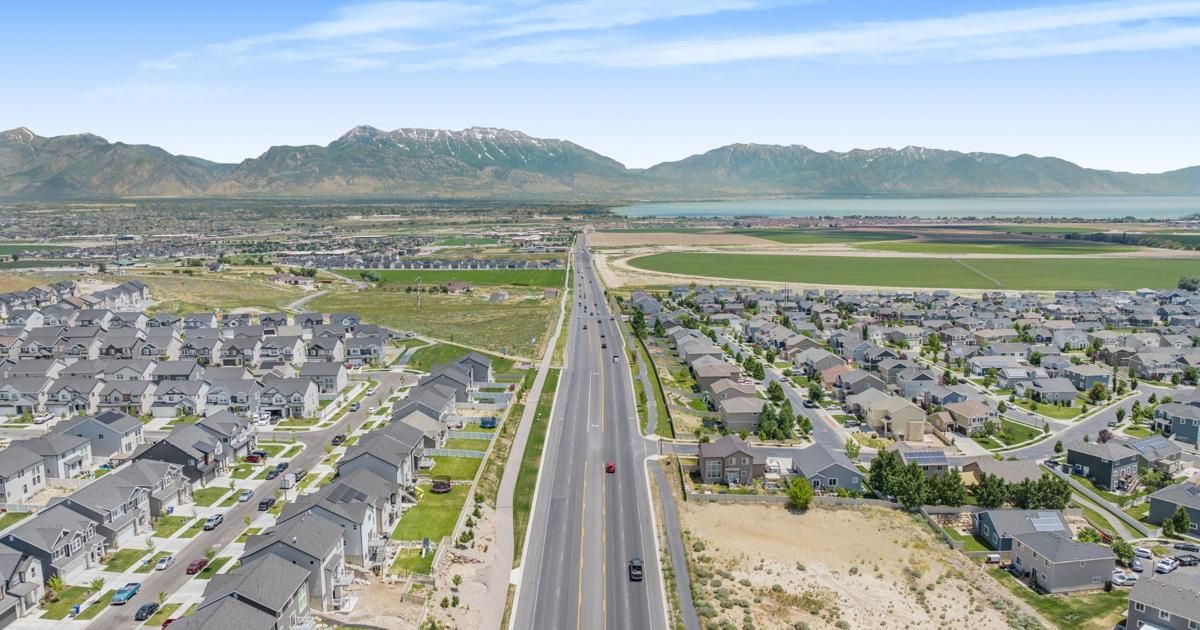
Silicon Slopes — the corridor running roughly from Salt Lake City south through Lehi, American Fork, and down to Provo — has attracted major employers including Adobe, Microsoft, Qualtrics, Domo, and dozens of fast-growing startups. The concentration of tech employment in this relatively narrow geographic corridor has been one of the key drivers of Utah's housing demand and population growth.
Here's the problem: the infrastructure that serves that corridor was not designed for the population density that now exists there. Interstate I-15 through the Point of the Mountain — the geographic pinch point between Salt Lake County and Utah County — is one of the most congested stretches of highway in the Mountain West. A commute that looks like 15 miles on a map can regularly take 30, 40, or even 45–60 minutes during peak hours.
There is significant infrastructure investment planned and underway, partly in anticipation of growth accelerating toward the 2034 Winter Olympics. The construction has kicked off in some key areas, and this corridor is going to look very different in 3 to 5 years. But the investment timeline and the current reality are two different things.
There is also a public transit gap. Salt Lake City has TRAX light rail covering key corridors, and a commuter rail (FrontRunner) running along the Wasatch Front. These are useful for certain commute patterns. But the majority of Utah's growth communities are car-dependent suburban layouts where walkability scores are quite low.
The takeaway: Plan your housing decision around where you actually work today, not the commute you hope a new highway lane will create in five years. If you're moving from a walkable urban environment, recalibrate your lifestyle expectations before you sign anything.
6. The Hidden Opportunity Window (Why Utah Is Still a Smart Long-Term Bet)
Here's the part most people moving to Utah without doing their homework completely miss — and it's the reason that people who do their homework and make a smart strategic decision in this market right now may look back in 10 years and call it one of the best financial moves they ever made.
Utah in 2026 is sitting in a very specific window of time. The 2034 Winter Olympics are coming to Utah — to Salt Lake City and Park City specifically. That is eight years away. The economic and real estate impact of an Olympic Games on a host city and its surrounding region is well-documented and consistently significant. We've seen it in Vancouver, in Munich, and in Salt Lake's own 2002 games. Infrastructure spending ramps up dramatically. International visibility creates a sustained tourism surge. Commercial investment accelerates. And real estate in and around the host region — particularly in the tier of markets just outside the most expensive urban core — tends to appreciate meaningfully in the lead-up window.
There is also a bifurcated market operating in Utah right now that most people don't recognize as an opportunity. The top end of the market is compressed by rate lock and high carrying costs. But the entry-to-mid segment in the growth corridors — communities like Eagle Mountain, Saratoga Springs, parts of Herriman and Lehi, and the developing southwestern areas of Utah County — is seeing more inventory and more seller flexibility than we've had in years. For a buyer moving in from out of state with equity from a higher-cost market, this is a meaningful positioning window.
The Silicon Slopes employment base is not going away. It's expanding. Companies that established Utah offices during COVID have doubled down on those offices as permanent hubs. The tech employment base here has created a durable floor under housing demand that other Sun Belt growth markets simply don't have in the same way.
If you buy strategically in the next 12 to 24 months, you are buying ahead of two major catalysts: continued tech sector expansion and the Olympic infrastructure buildout. The people who bought in the Wasatch back and in the Salt Lake County suburbs in 2000 and 2001 before the 2002 games saw appreciation that dramatically outpaced national averages throughout the decade.
The takeaway: The convergence of Silicon Slopes' maturation and the 2034 Winter Olympic cycle is a specific, time-limited window that doesn't stay open forever. Utah has real challenges — environmental, social, financial, and logistical. But for buyers who understand those challenges, choose the right neighborhood for their lifestyle, and make a deliberate and intentional decision, this state represents one of the most interesting long-term real estate bets in the country right now.
The Bottom Line on Moving to Utah in 2026
The people who thrive in Utah are not the ones who moved here because they saw a viral video about hiking trails. They are the ones who did the math, understood the trade-offs, chose the right neighborhood for their lifestyle, and made a deliberate, intentional decision.
That is who this guide was written for. Utah is genuinely complicated — and if you show up here without understanding that, the complications will find you. But if you come in with both eyes wide open and a plan that actually makes sense for your specific life and financial picture, this state can absolutely be the best move you've ever made.
That is the difference between a great move and an expensive lesson.
Ready to make the move to Utah the right way? Book a call with us HERE
Scott Steele | HOME@TheUtahReel.com | 801-680-8050 | www.TheUtahReel.com
Categories
Recent Posts