Salt Lake County vs. Utah County: Which One Is Right for You in 2026?
Salt Lake County vs. Utah County: Which One Is Right for You in 2026?
There is a line that runs straight through the middle of the Wasatch Front. You cannot see it on a map. There is no sign on the freeway that says you are now leaving one life and entering another. But it is real, and the side you choose to live on is going to shape your mortgage, your commute, your kids' schools, your weekends, and honestly, whether you feel like you belong here or not.
On one side is Salt Lake County: almost 1.3 million people, an international airport, a downtown skyline, breweries, a basketball team, a hockey team, and a culture that looks a little more like Denver every single year. On the other side is Utah County: faster growing, younger, cheaper to buy into, anchored by the second largest tech corridor in the Mountain West, and a community life that runs on a completely different operating system. Most Salt Lake versus Utah comparisons give you a postcard. I am going to give you the actual numbers, the trade-offs nobody mentions, and by the end of this you will know, not guess, which one is your county.
Two Different Bets on Daily Life
Before we compare anything, you need to understand that these two counties are not just north and south. They are two different bets on what you want your daily life to feel like.
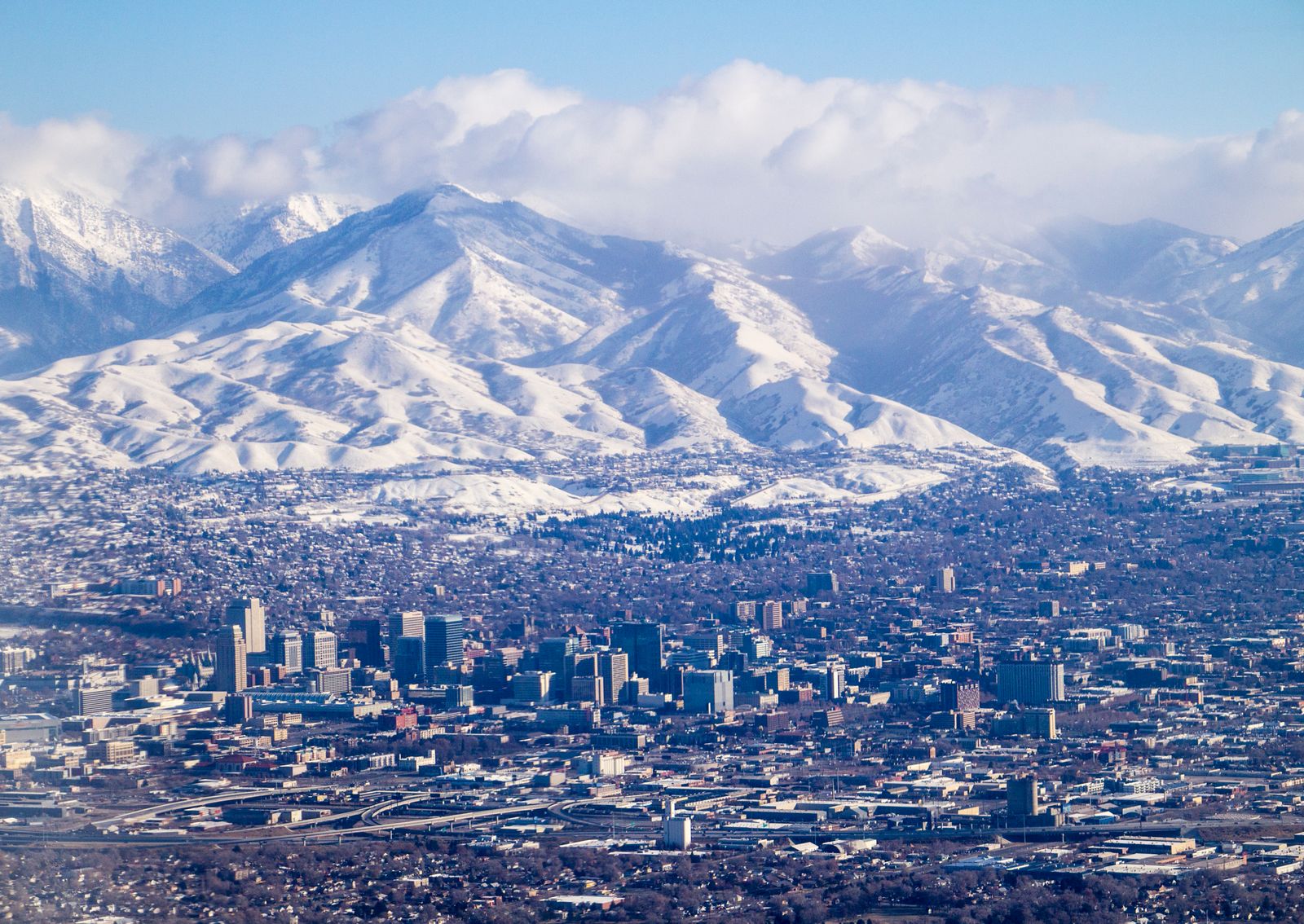
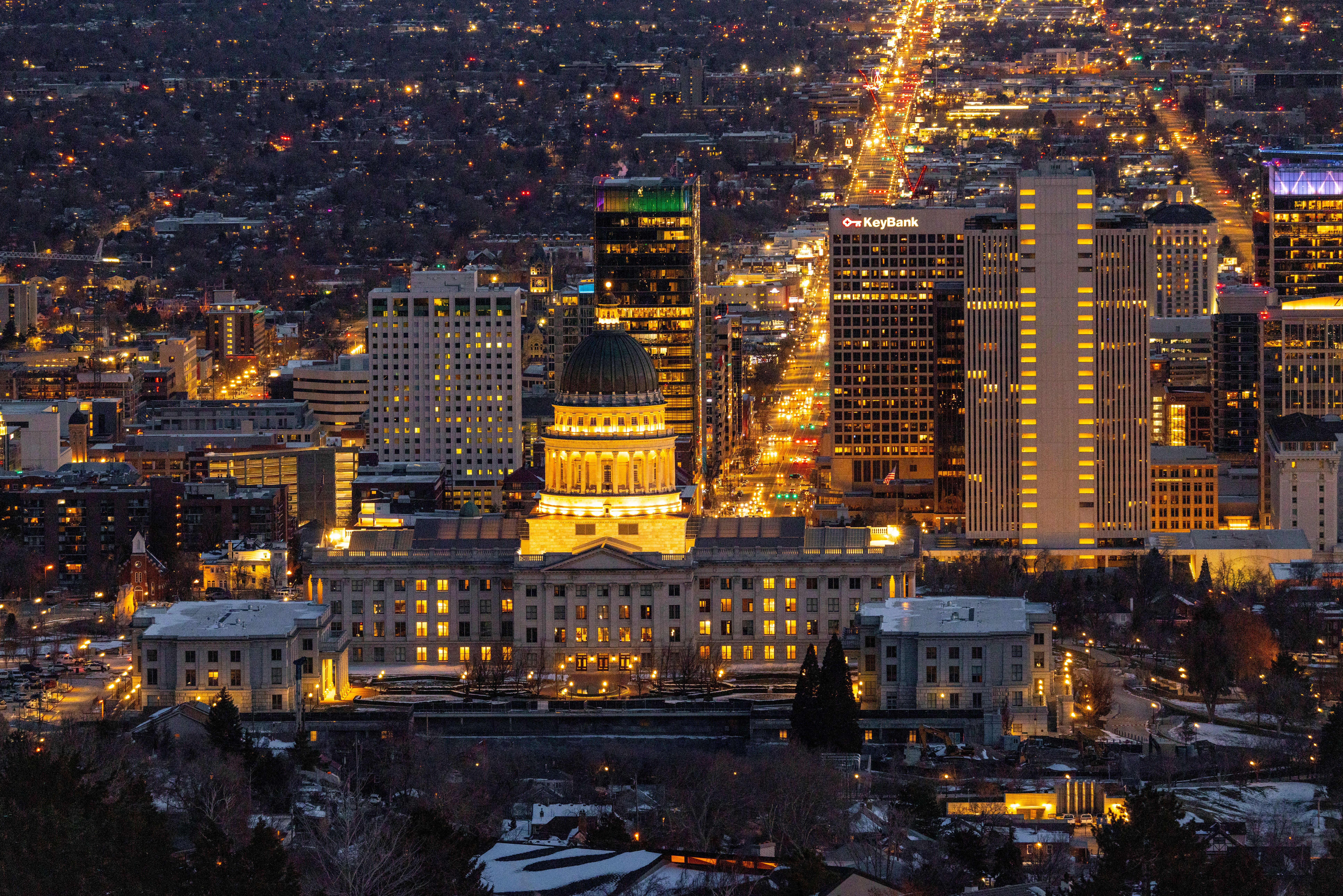
Salt Lake County is the big one, with over 1.25 million people. It is the most populous county in the state and the economic and cultural center of Utah. It is home to the state capital, the international airport, the headquarters of the LDS church, the University of Utah, major hospitals, and the bulk of the state's corporate jobs. If Utah has a city, this is it: Salt Lake City.
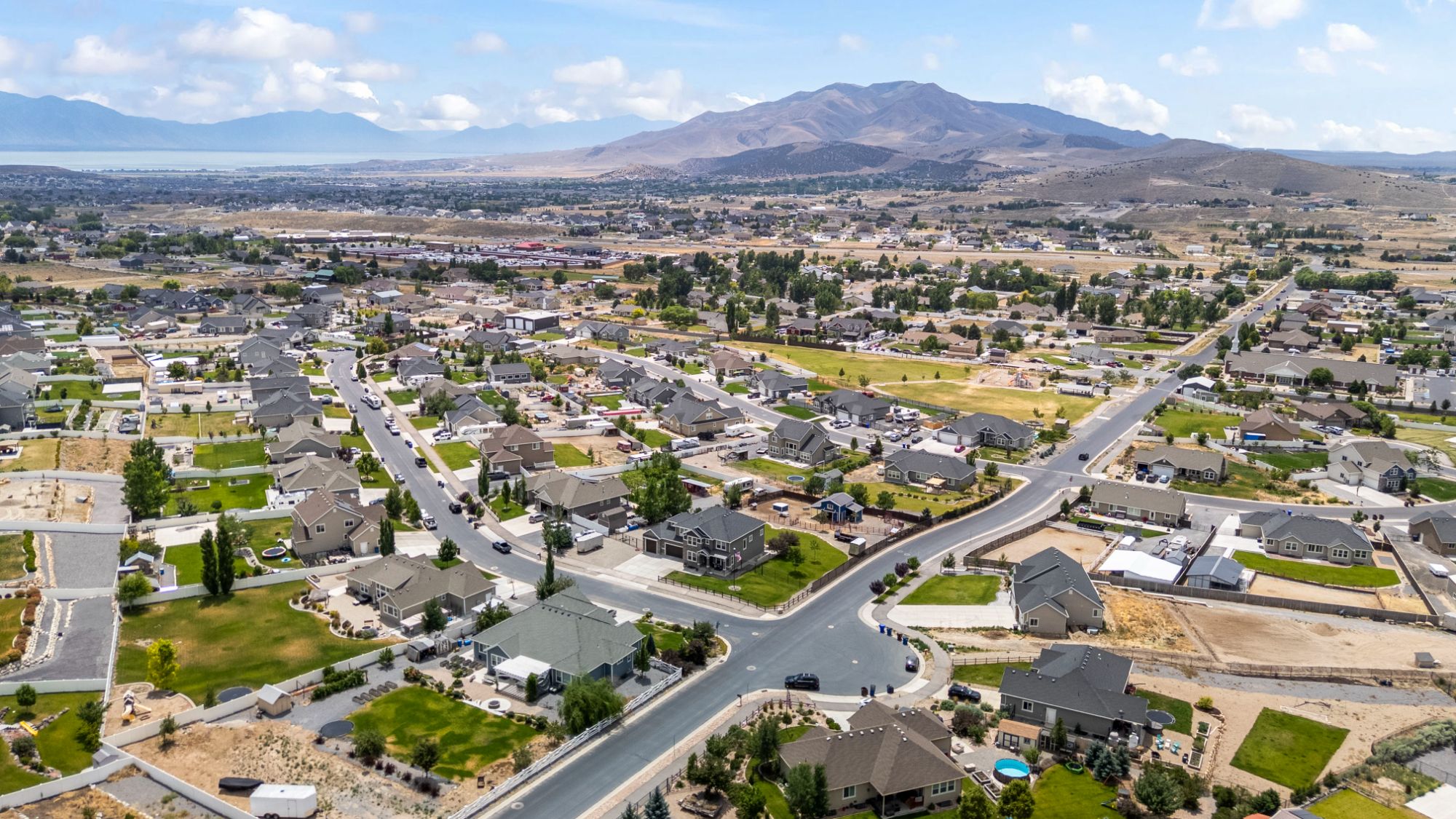
Utah County sits directly to the south, on the other side of the point of the mountain. It is anchored by Provo and Orem, home to BYU and Utah Valley University, and then an explosive ring of newer cities from Lehi to Saratoga Springs, Eagle Mountain, American Fork, Spanish Fork, Salem, and Payson. This is the heart of what people call Silicon Slopes, the tech corridor that has pulled in companies and transplants by the thousands.
Here is the stat that surprises people. Even though Salt Lake County has nearly twice the population, Utah County has in recent years actually added far more new residents per year than Salt Lake County, and it has been doing it for years. The smaller county is growing much faster. Why? Two reasons. First, housing: as it becomes harder for young families to afford a home close to downtown Salt Lake City, the pressure pushes people south where there is more open land and more new construction. Second, jobs: the tech corridor running right through the heart of Lehi means a lot of people no longer have to commute north into Salt Lake City at all. They live and work on the same side of the mountain, and the incomes in Utah County are increasingly better than we have ever seen.
So here is the first thing to understand. Salt Lake County is the established, urban, mature option. Utah County is the growing, suburban, family-engine option. Almost everything else we are about to talk about flows downstream from that one difference. And here is what nobody tells you in these comparisons: the cheaper county is not actually cheaper in every category. There is one major expense where Utah County can quietly cost you more, and it is the kind of thing that wrecks budgets after people have already moved here.
The Money: What You Actually Pay to Buy
For most of you, this is the decision maker. Everything else is a tiebreaker. Statewide, Utah is an expensive housing market. As of mid-2026, the median home price across Utah is sitting around $528,000. That is meaningfully higher than the national picture, and it is the backdrop for both counties.
In Salt Lake County, and especially Salt Lake City itself, you are paying a premium for location. Home prices in the city proper have been hovering above $700,000, with the broader county sitting high because of demand, limited land, and that downtown-adjacent convenience. The closer you want to be to the airport, the University of Utah, the hospitals, and the downtown jobs, the more you pay.
Now here is where it gets interesting, because Utah County is not the bargain bin people assume. It is a patchwork. As of mid-2026, here is roughly how it breaks down city by city:
- Lehi, the priciest of the high-volume cities, has a median single-family price around $700,000. That is right up there with Salt Lake City. Silicon Slopes money has pushed the core tech corridor way up.
- Saratoga Springs comes in around $645,000 and is one of the most active markets in the entire county.
- Eagle Mountain, one of the most affordable entry points for new construction, sits around $525,000.
- Provo, with BYU and an urban core, is around $514,000.
- Spanish Fork, further south, offers genuine value at about $535,000, with homes selling quite fast.
Look at what that tells you. If you want to live in the northern part of Utah County, in Lehi, Saratoga Springs, and the Silicon Slopes zone, you are paying almost Salt Lake City prices. The savings only show up when you are willing to go a little further south, into Spanish Fork, Payson, and Santaquin, or accept a townhome or condo instead of a single-family home.
The Hidden Cost: The Point of the Mountain
Here is that expense that can quietly cost you more in Utah County: the commute. If you buy in southern Utah County to save $60,000 or $80,000 on the house, but you work in Salt Lake County, you are signing up for a daily drive over the point of the mountain, one of the most congested choke points in the state. That is gas, that is wear on your vehicle, and that is one to two hours of your life every single day. People do the math on the mortgage and forget to do the math on the freeway.
Run the real scenarios, because this is where people get it wrong. In scenario one, you work in downtown Salt Lake City and buy a great deal in Spanish Fork or Payson. On paper, you saved money. In reality, you just signed up for a commute that can stretch well over an hour each way on a bad day, which over a year is hundreds of hours and thousands of dollars in gas. The house was cheaper; the life got more expensive. In scenario two, you work in the Silicon Slopes corridor along I-15 and live in northern Utah County. Now you have one of the best setups in the entire state: a short commute, big new homes, and you almost never have to cross the point of the mountain during peak hours. This is the sweet spot a lot of Silicon Slopes families have figured out, and it works for remote workers too. In scenario three, you work in Salt Lake County and live in Salt Lake County. Older homes, higher prices, smaller yards, but your commute is sane, you have TRAX, light rail, and FrontRunner as real options, and the airport is 15 minutes away.
The rule is simple: pick your county based on where your job is, not where the house is cheapest. The point of the mountain is the great equalizer, and it can erase every dollar you saved on your mortgage and then some. Luckily, another freeway is being built to the west of I-15 that will act as a release valve, allowing two corridors running north and south through both valleys. If your job is in the north, lean Salt Lake County or far north Utah County. If your job is in the tech corridor, Utah County wins on lifestyle and commute. If you work fully remote, congratulations, you have unlocked the whole map and should optimize for cost and culture instead.
The Rest of the Budget
Housing is not the only line item. Salt Lake City's overall cost of living runs a bit above the national average, call it 7 to 8 percent higher, and that is driven almost entirely by housing, which is more than 25 percent above the national average. But here is the good news that surprises people: a lot of the other categories are reasonable. Utilities in Salt Lake City actually run below the national average, and that holds throughout the county. Healthcare is notably cheaper, with doctor and dentist visits coming in around 10 percent under the national average. Groceries are roughly 2 percent below national average.
Utah County tracks similarly on most of these everyday costs. Utilities, groceries, and gas are all in the same statewide ballpark, and the Provo-Orem area's overall cost of living actually comes in right around or slightly below the national average, which makes the southern part of the county genuinely affordable if you can get the housing piece right. So here is your money takeaway, and write this one down: the cheapest path in this whole comparison is southern Utah County, places like Spanish Fork, Payson, and even Salem. The most expensive is Salt Lake City proper and the Lehi to Saratoga Springs tech corridor, which are roughly tied. The middle, Provo-Orem, Eagle Mountain, and the southern suburbs of Salt Lake County, is where most normal budgets actually land.
Culture: Two Counties Moving in Opposite Directions
This is the part no mortgage calculator will show you, and it determines whether you actually feel at home, because culturally these two counties are moving in opposite directions. And this is not opinion, it is measurable. Salt Lake County has been getting steadily more diverse for many years. The share of residents on LDS church membership rolls in Salt Lake County has dropped to right around 42 percent, and inside Salt Lake City itself the number is very different than it used to be. Utah County has gone the other direction. Many parts of the valley are very diverse, but the core in Provo and Orem remains much more homogeneous, with BYU sitting right in the middle of it all.
Why does that matter day after day? Because it shapes everything around the edges of your life. In Utah County's core, community life runs largely through church membership and involvement. Your neighborhood, your ward, is often your built-in social network: service, babysitting swaps, block parties, youth activities, and meals when you have a baby. A lot of that infrastructure is already there, and it is strong. For some people, this can be the greatest place on earth to plug in. You will not feel alone. But the honest part is that if you are not part of this culture, the core of Utah County can feel like a town where the main social operating system is not running on your device. People are genuinely kind here, but the default social fabric is built around something you may not be part of, and some transplants describe a quiet sense of being adjacent to the community rather than inside it. This changes in the high-growth areas like Lehi and Saratoga Springs, which are almost the opposite, but it depends greatly on which city and neighborhood you land in.
Salt Lake County, and especially Salt Lake City, is the opposite. It is the most religiously and politically diverse part of the state, and it is the one place in Utah that is a genuine political battleground, having elected Democratic and at times openly progressive leadership for decades, while the county overall is more of a true mix. You will find a bigger food scene, real nightlife, a thriving arts and music community, breweries and bars, and a much higher share of transplants from out of state. If you want the Utah lifestyle, the mountains and the outdoors, clean and safe, without the cultural homogeneity, Salt Lake County is where you go.
Here is the most useful way to frame it. Ask yourself one question: do you want your community handed to you, or do you want to build it yourself? In Utah County, for the right family, community is handed to you, ready-made, dense, and supportive, as long as you fit the dominant culture. In Salt Lake County, community is something you assemble from co-workers, neighbors, hobby groups, your gym, and your kids' activities, more like a big city anywhere else. Neither is better, but they are profoundly different, and knowing which one you want is worth more than any home-price comparison.
A Note on Air Quality
One geographic factor matters more than people expect: air quality. Both valleys sit in basins along the Wasatch Front, and in the winter they both get inversions, when cold air traps pollution down in the valley for days at a time. It affects both counties. On average we experience 14 to 17 days of inversion weather every year, so it is manageable, but you have to know what to expect. If anyone in your family has asthma or respiratory issues, research this by specific neighborhood and elevation, because bench areas higher up on the mountainside tend to sit above the worst of it. It is invisible until January, and then it is all you think about for about six weeks.
Schools and Family Life
If you are raising kids or planning to, this section might be the whole decision. Start with the demographic reality: Utah County is young. The median age there is dramatically lower than Salt Lake County's, roughly a quarter younger. Translation: it is absolutely overflowing with families. If you want your children growing up on a street where there are 20 other kids their age riding bikes until the streetlights come on, Utah County delivers that in a way very few places in America still do. That family density creates real infrastructure: tons of youth sports, dance studios, activity programs, splash pads, and family-friendly everything. The whole county is engineered around the assumption that you have children.
Salt Lake County has families too, obviously, but it is a more mixed population depending on the neighborhood, with more singles, young professionals, empty nesters, and people from out of state. Your kids' street might have fewer kids on it, but in exchange they grow up around more diversity, different backgrounds, and different beliefs. For a lot of parents, raising kids who can move comfortably through a world that does not look exactly like them is the priority.
On schools specifically, I want to be careful, because school quality varies far more neighborhood to neighborhood than county to county. Both counties have excellent schools and weaker ones. The honest advice is: do not pick a county for schools. Pick a specific school's boundary and buy a home inside it. Pull up the individual school ratings, visit, and talk to parents on the street. A great school and a struggling one can be 10 minutes apart in the same county. The county line tells you almost nothing here; the school boundary tells you everything. And one more family factor is higher education and what your teenagers grow up next to. Utah County is built around BYU and Utah Valley University, and if your family's path runs through BYU, living in that ecosystem is a genuine advantage. Salt Lake County has the University of Utah, a major research university and medical center, plus Salt Lake Community College. Different schools, different futures you are putting in front of your kids just by where they grow up.
Who Should Pick Which One
No fence-sitting. Choose Utah County if you are a younger family, especially a growing one; you work in the Silicon Slopes tech corridor; you want a ready-made, supportive community to plug into; you want a newer, bigger house with a yard for less money, as long as you go a little south of the premium Lehi zone; and you want your kids surrounded by other kids and do not need nightlife, a big-city food scene, or a lot of cultural diversity to feel at home.
Choose Salt Lake County if you work downtown, near the airport, near the University of Utah, or in the medical corridor; you want genuine restaurants, nightlife, arts, music, and culture without driving 45 minutes to an hour to get it; you are a transplant, a single professional, or anyone who values diversity and a more cosmopolitan feel; you travel often and want to be near the international airport; and you want walkable, established, mature neighborhoods with character, and you are willing to pay more and accept a smaller, older house to get them.
The Border Zone: The Move Almost Nobody Mentions
There are exceptions worth knowing, especially in the southwest quadrant of the Salt Lake Valley, which feels much more like northern Utah County, with larger families and larger neighborhoods. That area includes Herriman, Riverton, South Jordan (including Daybreak), and similar communities where you can find that same family-dense feel inside Salt Lake County.
And here is the answer for a huge slice of you that almost nobody says out loud: the smartest pick might be the border zone. The southern end of Salt Lake County, with Draper, Riverton, South Jordan, Daybreak, and Bluffdale, and the northern end of Utah County, with Lehi, Highland, Alpine, and Saratoga Springs, are growing into one continuous metro area. Live there and you get the best of both worlds: tech corridor jobs, access to both valleys, newer housing, and you are never more than a short drive from either Salt Lake City amenities or Utah County family life. You straddle the line on purpose, and for a lot of people that is not a compromise, it is the actual winning move. I find that a ton of my clients reaching out through YouTube are landing in exactly this zone.
The Real Decision, Stripped Down
This is not about which county is better. There is no better. It is about which trade you would rather make. Salt Lake County trades higher cost and smaller homes for diversity, convenience, and culture. Utah County trades nightlife and diversity for affordability, family density, and a ready-made community. Get honest about which of those two trades sounds like relief and which one sounds like sacrifice, and you will have your answer before you ever call me or anyone else. Both counties are clean, safe, surrounded by some of the best mountains in the country, and full of good people. You almost cannot lose. You can only choose the life that fits you best.
Thinking About Moving to Utah? Let's Talk.
Utah is one of the fastest-growing states in the entire country, and navigating the cultural landscape alongside the real estate market takes genuine local expertise. Whether you're considering Salt Lake County, Utah County, Davis County, or further out — finding the right neighborhood for your lifestyle, budget, and long-term goals makes all the difference.
My team and I work exclusively with buyers and sellers navigating the Utah real estate market. We help you cut through the noise, match the right submarket to your specific lifestyle and priorities, and make sure you're buying from a position of clarity — not FOMO.
Book a call with us HERE — free 30-minute consultation
Check out our relocation guide HERE
Subscribe to our weekly newsletter HERE
Scott Steele | HOME@TheUtahReel.com | 801-680-8050 | www.TheUtahReel.com
Categories
Recent Posts