Moving to Utah in 2027? 6 Things to Know Before You Buy
Moving to Utah in 2027? 6 Things to Know Before You Buy
If you're planning on moving to Utah in 2027, I'd bet you've got a Zillow tab open right now, maybe six of them. You've got a price range and a few cities you like the sound of, and you're thinking, "Okay, next year we're doing this." I want you to do it. But before you sign anything or send a single dollar of earnest money, here's what this market actually looks like heading into next year, because it's not the market you keep hearing about online.
Mortgage rates just climbed back over 7% for the first time since early 2025. There are more homes for sale along the Wasatch Front than we've seen in years. There's a new state wildfire law a lot of homeowners haven't heard of, the water rules are changing, and the way property taxes work here catches people off guard every year, especially on new construction. Here are the six things I'd want any friend of mine to understand before buying a home in Utah.
The hard part used to be winning the offer. In 2027, the hard part is getting the right house on the right terms without picking up a problem that doesn't show itself until your first winter, your first tax bill, or your first summer trying to keep the lawn alive. Before real estate, I spent years in construction and custom homes, so I tend to look at homes a little differently than most agents.
1. Use the Negotiating Window
Think back to 2021, when a three-bedroom rambler could draw 20 or 30 offers. That was then. The Freddie Mac weekly average for a 30-year fixed rate was 7.28% at the start of October, up from about 6.3% a year ago. Statewide inventory has stretched to around 4.5 months of supply, and the typical home sits in the mid-50 to 60-day range before going under contract.
But prices didn't fall. Salt Lake County's median single-family price hit $645,000 in the second quarter of this year, the highest quarterly median on record, and Utah County was up around 7% year over year in the spring. High prices, high rates, and homes that sit longer. Many buyers decide to wait, and maybe rates and prices do drop, but nobody can tell you when.
Here's what I'd focus on instead. When a home has sat for 50 or 60 days, the seller is often more open to helping with your payment than slashing the price. Say you're borrowing $550,000. Negotiating $20,000 off the price lowers your payment about $136 a month. Take that same $20,000 as a seller concession and use it to buy down your rate, and a full point lower on the same loan saves somewhere around $365 a month, depending on your lender's pricing that day. Same $20,000, very different result.
A permanent buydown lowers your rate for the life of the loan. A temporary 2-1 buydown drops it two points in year one and one point in year two, then it returns to the note rate, which only makes sense if you're confident you'll refinance. Leverage also isn't the same everywhere. A well-priced, move-in-ready home in Holladay or Cottonwood Heights can still get multiple offers in a weekend, while some new construction pockets in Utah County have builders offering incentives. Those builder incentives are usually tied to the builder's preferred lender, and sometimes the price was padded to pay for them, so always compare against a lender you choose yourself.
2. Plan for the Year-Two Property Tax Jump
There's good news here. If you're coming from Texas or parts of the East Coast, Utah property taxes on a primary residence will often feel like a relief. Utah's primary residential exemption means that if the home is your primary residence, you're only taxed on 55% of its market value.
Here's where new construction buyers get burned. Utah counties assess property based on what's there on January 1st, and if your home was a slab and some framing on that date, your first tax bill is tiny. Your lender sets your escrow off that tiny bill. Then year two arrives and the county is assessing a finished home. Say the first-year bill was $1,200 and the real bill is $3,600. Your lender has been collecting $100 a month, now needs $300 a month, and has to make up the shortage too. Your payment can jump around $400 a month, overnight, with a letter in the mail.
The fix is to do it on purpose. Ask your lender to estimate escrow on the completed value, or set the difference aside yourself every month. And make sure the primary residential exemption is actually on your property. Some counties require a residency declaration, and Summit County is a big one. If a Park City area home isn't your primary residence, there's no exemption and you're taxed on the full value, which is close to double what a full-time resident pays on the same home. Taxes aren't a reason to avoid new construction. They're a number you want to see coming.
3. Ask the Water Question on Every Property
A lot of Utah homes have two water systems. Culinary water is the treated, drinkable water at your kitchen faucet. In many areas there's also secondary water, or pressurized irrigation, which is untreated and goes only to sprinklers and gardens. Many newer subdivisions in places like Lehi, South Jordan, Herriman and Saratoga Springs run the yard on secondary water, other areas use culinary water outside, and some older properties come with irrigation company or canal water shares that can be worth real money.
For years secondary water was often a flat fee, so people watered like it was free. That's ending. State law now requires every pressurized secondary water connection in Utah to be metered by January 1, 2030, and as cities finish installing meters, many plan to move to usage-based pricing. Lehi, for example, said it would create a new irrigation rate based on how much each property actually uses. That big lot with the huge green lawn may cost you a lot more to keep green in a few years.
Your homework for every house you're serious about: ask whether the yard runs on culinary or secondary water, who the provider is and whether the connection is metered yet, and whether any water shares convey with the property. Ask the seller for 12 months of utility bills so you can see what July costs, not just January. From my construction background, I also look at the sprinkler system itself: the age of the lines and controller, the backflow preventer, and the zones. Most secondary systems shut off for the season around October, so if you're touring this winter, you'll have to wait until spring to see whether the sprinklers work.
4. Check the Wildfire Map Before You Fall in Love With the View
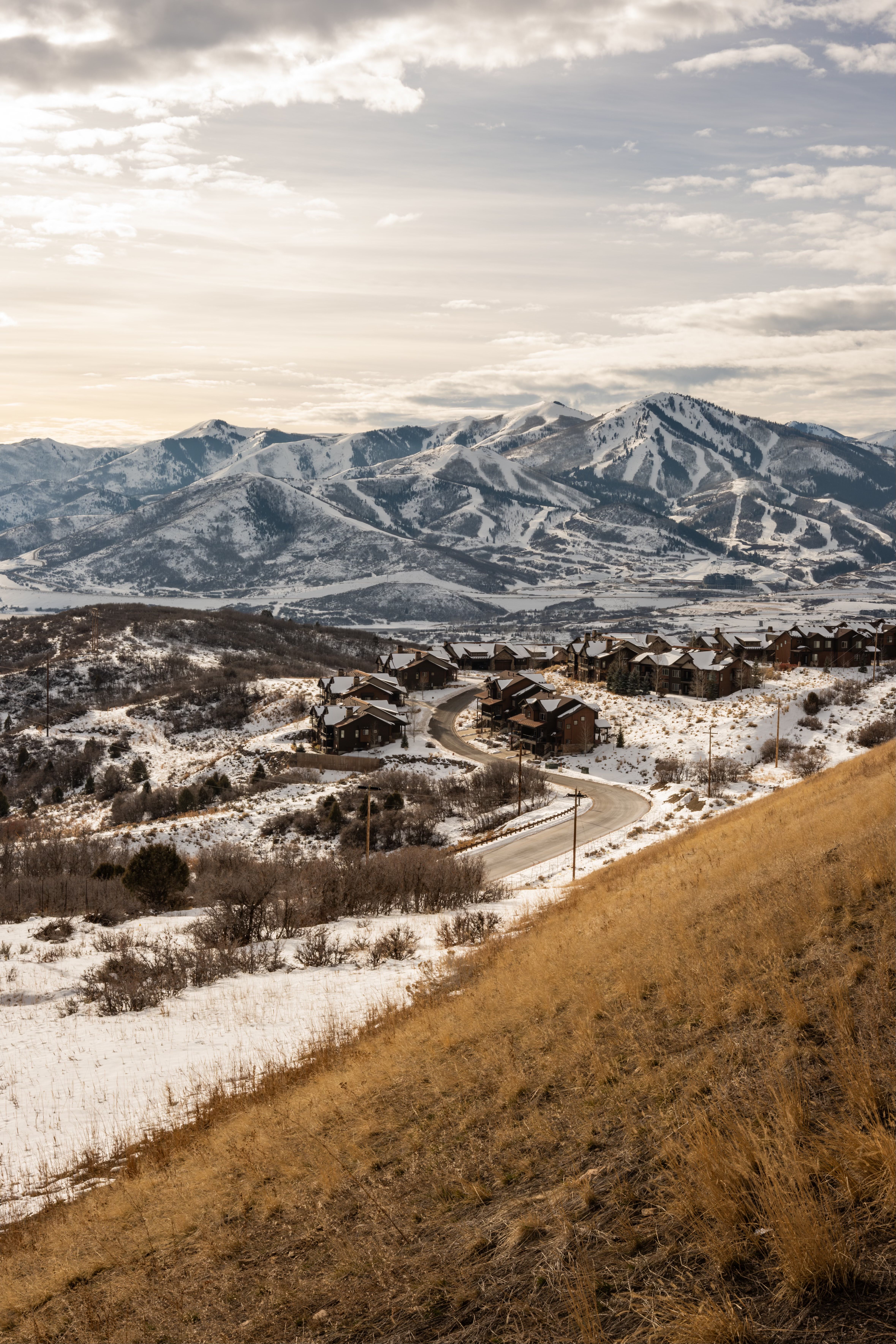
People move to Utah for the mountains, and the homes with the best views often sit where neighborhoods meet open hillside, like the east bench in Draper, Alpine, the canyon mouths in Cottonwood Heights, and all over Summit County. That edge has a name: the Wildland Urban Interface, or WUI. A state law, House Bill 48, took effect January 1, 2026. The state now maps the high-risk WUI, and homes inside that boundary pay an annual fee. For 2026 and 2027 it's a flat fee of roughly $20 to $100 depending on square footage. Starting in 2028, the fee is supposed to be tied to your specific property's risk score, and if you opt out of the free state assessment, you're charged at the highest level.
The fee isn't what worries me. Insurance is. Under the new law, insurers have to use that same state map to decide whether your property counts as high-risk WUI, and they can layer in their own fire data on top. By early August of this year, the season had already burned more than 455,000 acres across Utah. Before your due diligence deadline, search the address on the state's wildfire risk portal (wildfirerisk.utah.gov) and get a real insurance quote on that specific house from a real agent, not a ballpark.
When I walk a foothill home, I'm looking at it like a contractor: what the roof is made of, whether the vents are ember resistant, and whether there's a wood deck right up against dry scrub oak. Many of those fixes are cheap if you know before you buy. I'm not telling you not to buy on the bench. I'm telling you to buy it with your eyes open and your insurance quotes in hand.
5. Drive Your Commute in Winter Conditions
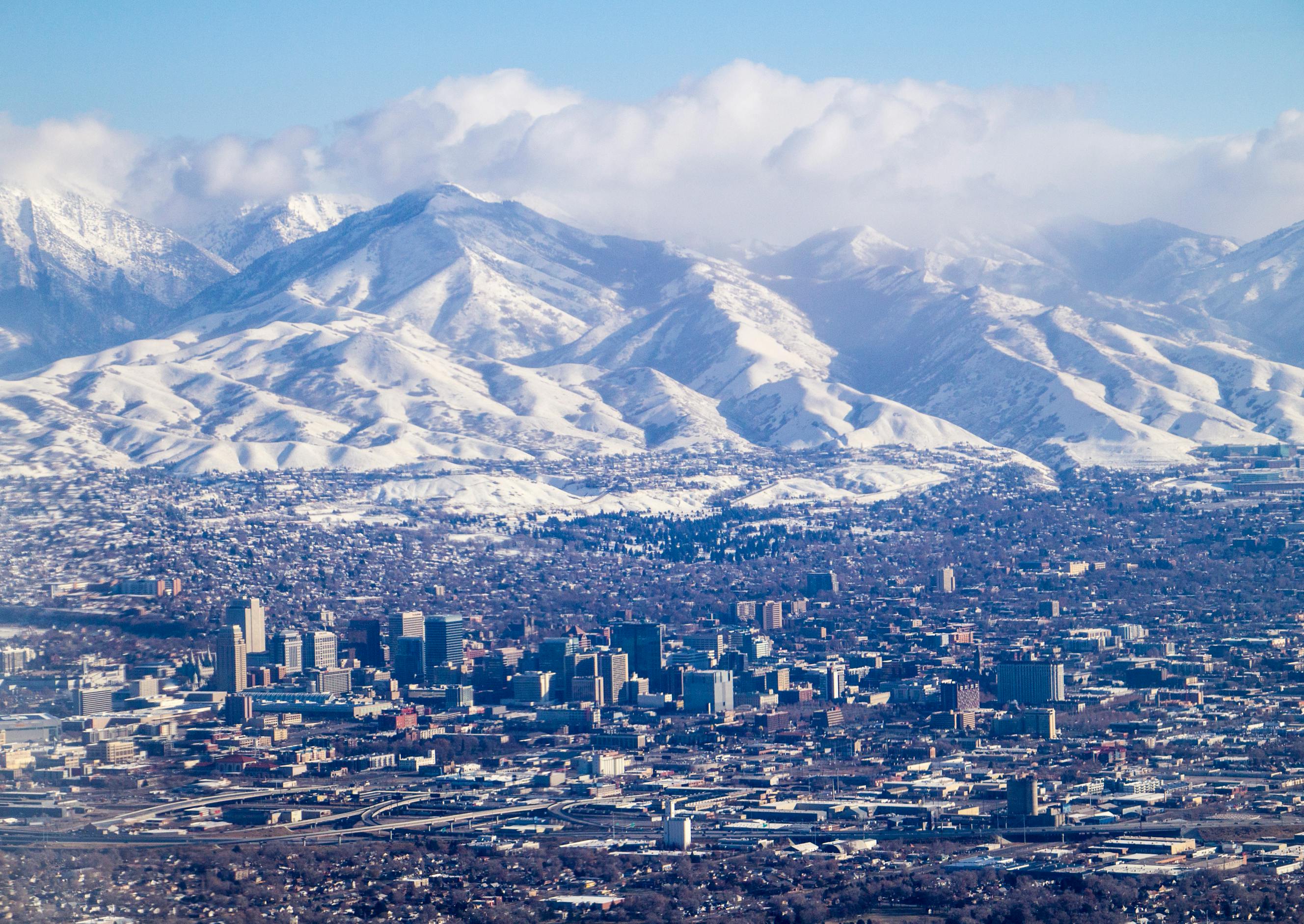
On a map, Lehi to downtown Salt Lake City looks like about a 35-minute commute. Then you move here and meet the Point of the Mountain at 7:40 on a Tuesday morning. That stretch where I-15 squeezes between Salt Lake and Utah counties is the pinch point for the whole Silicon Slopes corridor, and snow makes it a different commute altogether. If you're thinking about living in Salt Lake and working in Park City, or the other way around, Parleys Canyon in a January storm is its own thing.
Then there's winter air. During inversions, cold air gets trapped on the valley floor under warmer air and the pollution sits there like a bowl. Elevation matters, since higher homes on the benches are sometimes above the worst of it. And ask which way the driveway faces: a steep north-facing driveway in Traverse Mountain or Suncrest can stay icy for weeks while the south-facing one across the street melts off by afternoon. Suncrest in particular sits high enough to get a lot more snow than the valley floor below it.
The test I give my clients is to drive the commute on a weekday, both ways, leaving around 7:15 in the morning and coming home around 5:15 in the afternoon. If you can't be here in person, pull up live traffic at those exact times for a week straight. None of this is a dealbreaker on its own, and plenty of people happily commute the Point of the Mountain every day, myself included. You just want to choose it, not discover it.
6. Front-Load Your Inspections Before the Due Diligence Deadline
This is the one I care about most, because it can cost you your earnest money or leave you owning a house you'd love to hand back. Utah's standard real estate purchase contract has a due diligence deadline. Before that date you can generally cancel for just about any reason and get your earnest money back. After it passes, your earnest money is usually at risk except for specific protections like financing and appraisal. I'm not your attorney, and every contract is negotiated, so read your own deadlines. That window is often only 10 to 14 days, and if you're flying in from out of state, the clock moves quickly.
The standard inspection is a great start, but in Utah it's not the whole picture. Radon is first: the state estimates roughly one in three homes tested here come in above the EPA's action level, and a radon test takes at least 48 hours, so order it on day one. Second, basements and window wells. When I walk a house, I'm the guy outside looking at the window wells while everybody else is looking at the kitchen. Do they drain properly? Does the yard slope toward the foundation or away from it? Is there a water line on the basement drywall that somebody painted over? A hairline crack in a basement wall is usually normal concrete, while a stair-step crack in block or a horizontal crack is a different conversation.
Third, the age of the house tells you where to look. Some 1960s and early '70s homes common in Holladay, Millcreek and Cottonwood Heights have aluminum branch wiring. Late-1970s through mid-1990s homes may have polybutylene plumbing, the gray plastic water line known for failing. On almost any older home, I want a camera down the sewer line. A sewer scope is a couple hundred bucks, while replacing a cracked sewer line out to the street can run into the tens of thousands. And if you're buying new construction, don't skip the inspection because it's new. I've seen brand-new homes with grading that sends water straight at the foundation because the yard got rushed in November. Get a pre-drywall inspection if you can, and set a reminder for month 11 before your one-year builder warranty runs out.
The day you go under contract, schedule the inspection, the radon test, and the sewer scope, all inside the first 72 hours. That leaves time to get a specialist out and time to negotiate. And it ties back to point one: when homes are sitting longer, your inspection findings are leverage. A sewer line or radon system can become a repair, a credit, or money toward your rate buydown. An inspection report is just a list, and the job is knowing which items are a hundred bucks and which are $30,000.
Should You Even Buy in 2027?
One more honest thing: not everybody should buy in 2027. If you don't know yet which side of the Point of the Mountain your job will land on, or there's a real chance you'll move again in two or three years, renting for six months to a year might be the smartest move you can make. I'd rather tell you that now than sell you a house you'll want to sell in a year. And one bonus: if the house has an HOA, get the CC&Rs and the reserve study before your due diligence deadline. The reserve study tells you whether the HOA has saved enough for big repairs or whether a special assessment might be headed your way.
Thinking About Moving to Utah? Let's Talk.
Utah is one of the fastest-growing states in the entire country, and navigating the cultural landscape alongside the real estate market takes genuine local expertise. Whether you're considering Salt Lake County, Utah County, Davis County, or further out — finding the right neighborhood for your lifestyle, budget, and long-term goals makes all the difference.
My team and I work exclusively with buyers and sellers navigating the Utah real estate market. We help you cut through the noise, match the right submarket to your specific lifestyle and priorities, and make sure you're buying from a position of clarity — not FOMO.
Book a call with us HERE — free 30-minute consultation
Check out our relocation guide HERE
Subscribe to our weekly newsletter HERE
Categories
Recent Posts