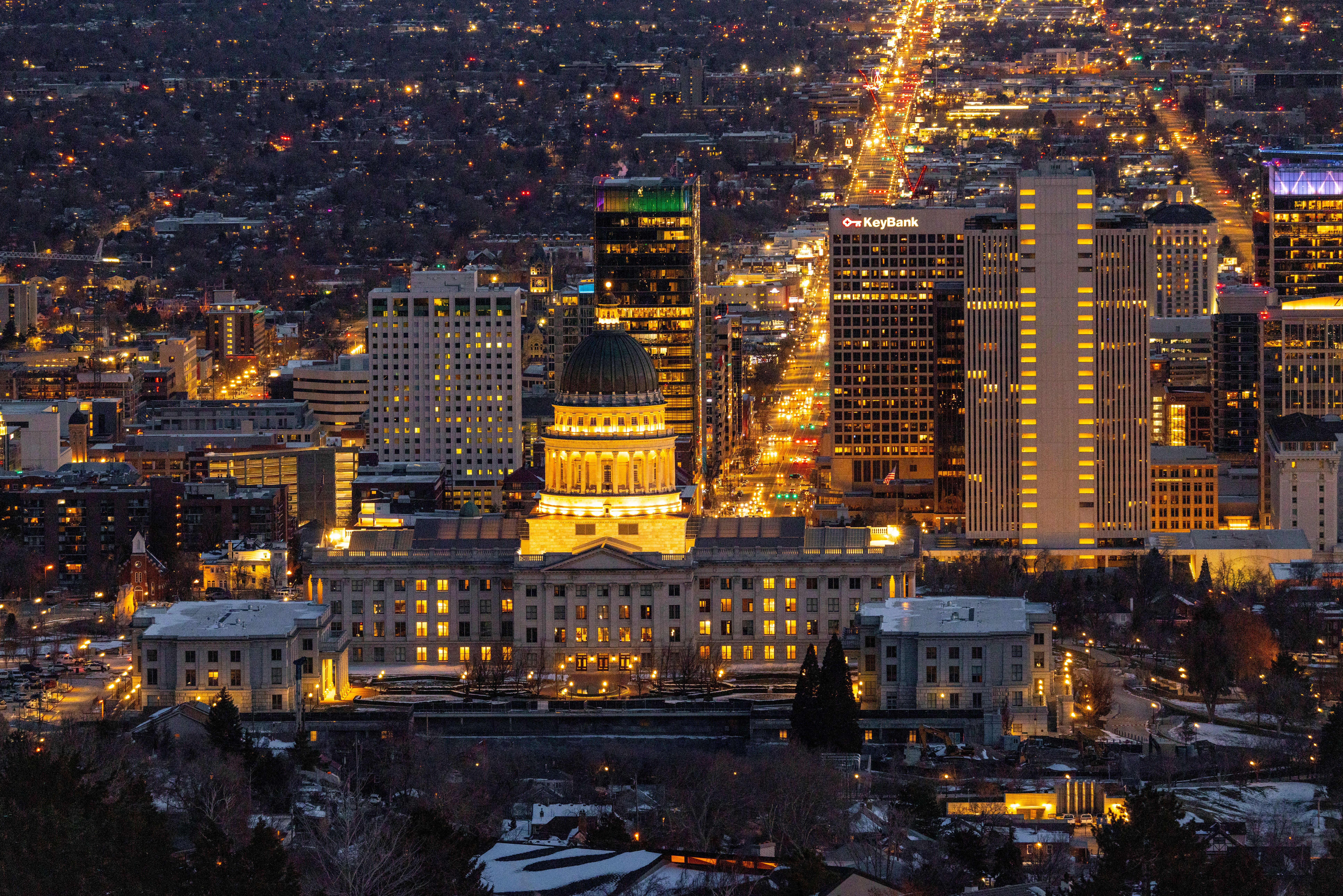
Utah Real Estate 2026: The Truth About the Economy, Housing Market, Great Salt Lake & the 2034 Olympics
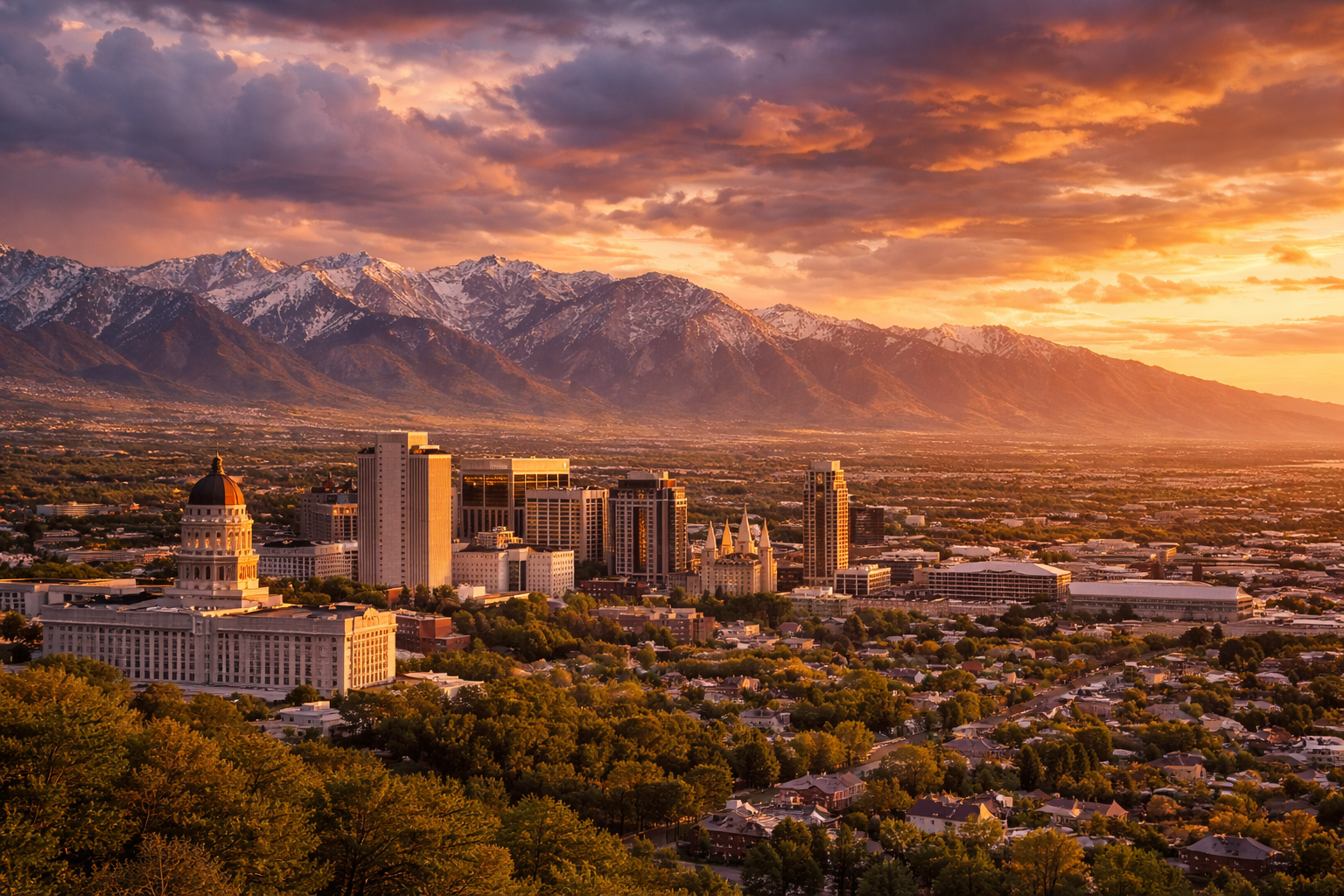
Utah Real Estate 2026: The Truth About the Economy, Housing Market, Great Salt Lake & the 2034 Olympics
What if the state you were considering moving to was simultaneously the best-run economy in the entire country and sitting on a ticking environmental time bomb? That is exactly what is happening in Utah right now. Whether you have lived here your whole life or you are flying in next month to scout neighborhoods, this guide will tell you things that most Utahns do not even know about their own state.
My name is Scott Steele. I am a Utah real estate agent and relocation expert, and this guide exists to give you the kind of honest, street-level perspective on Utah real estate that no algorithm, no relocation blog, and definitely no marketing brochure is going to give you.
What Most People Think About Utah Right Now
Most people hear Utah and think: booming tech economy, incredible outdoor lifestyle, rapidly growing population, and home prices that shot up like crazy during COVID and now feel stuck at a painful new high. They think Utah is predictable, dependable, and it just hums along. And honestly, that picture is not wrong. But it is only half of the frame.
The half that most people are not seeing is the part that directly affects whether Utah is a place you should buy property in right now, whether you should be worried about your long-term real estate investment here, and whether the things that make Utah so attractive today are going to hold up over the next decade.
Utah in 2026 is in the middle of one of the most complex, multi-layered market moments it has ever experienced. The housing market is not crashing, but it is not roaring either. The tech economy is not collapsing, but Silicon Slopes just went through a quiet, uncomfortable slowdown. The population is still booming, but net migration just hit its lowest share of growth in four years. And sitting over all of it, like a slow-burning fuse, is the Great Salt Lake crisis — which is now tied directly to the 2034 Winter Olympics, Utah's air quality, property values, and the long-term livability of the entire Wasatch Front.
Silicon Slopes and the Utah Job Market in 2026
If you follow Utah news at all, you have heard the Silicon Slopes story. Utah ranks number one in the nation for tech industry growth. The Salt Lake City metropolitan area employs 34% more tech professionals per capita than the national average. More than a thousand technology companies have set up along the Wasatch Front. Adobe in Lehi alone has 2,000 employees with room to scale up to 3,000.
But here is what has been quietly unfolding over the past 18 months. Silicon Slopes hit a wall. After years of aggressive growth, Utah's tech hub started slowing down in a way that the headlines have not fully captured. The state's senior economist described it plainly: there has been a genuine slump tied to a slowing economy and increased funding costs. The rollout of AI in late 2022 did not just change technology — it also coincided almost exactly with the moment that tech hiring in Utah started to freeze. Companies that had been hiring aggressively pulled back. Junior engineering roles started disappearing as AI began absorbing entry-level coding tasks.
So what does this mean for you, whether you are a local trying to understand the Utah job market or somebody relocating and planning to land a tech role?
The job market is more competitive than topline unemployment numbers suggest. Utah's overall unemployment rate sits around 3.6%, which looks great. But tech unemployment tells a different story. The sector is going through what Utah's business community is calling a reset toward sustainable growth. Companies that are hiring want experienced people — senior engineers, AI specialists, cybersecurity professionals, and data scientists. Junior roles are tight right now.
The next wave of tech growth in Utah will not look like the last wave. It will be bigger, but more AI-integrated, more capital-efficient, and more selective about talent. Data centers in the Salt Lake region are projected to grow by 700% by 2030, second only to Las Vegas and Reno nationally. That is infrastructure. That is jobs, but a specific kind of job.
The big picture: Silicon Slopes is not done. Not even close. Utah ranked fourth nationally in non-farm job growth last year, adding over 30,000 new jobs. The state's information sector wages run nearly 48% above the state average. But if you are planning your life or your Utah real estate decisions around tech industry growth, you need to be realistic about the timeline. The next serious run-up in Silicon Slopes hiring is probably 12 to 24 months out as the AI-driven reset stabilizes.
Utah Housing Market 2026: What the Data Actually Says
The Utah housing market right now is one of the most genuinely confusing markets in recent memory. Not because the data is bad, but because the data is pulling in different directions at once, and you have to understand all of it to understand any of it.
Here are the facts as of early 2026:
The median sales price in Utah is sitting just over $560,000, up roughly 2% year-over-year. Compared to the 40% run-up that happened between 2020 and 2022, that feels like almost nothing. Inventory is up — about 4 months of supply on the Wasatch Front, the highest since 2018. Median days on market climbed from 29 days last year to 74 days in some segments this year. Only about 20% of homes are selling above list price, down dramatically from the bidding war environment where almost everything was going over asking.
On the surface, it looks like a market that is cooling, becoming more balanced, and tilting toward buyers. But here is what that surface-level read misses.
The reason the market feels stuck has almost nothing to do with demand. People want to buy homes in Utah. The National Association of Realtors just named Salt Lake City one of the top 10 housing hotspots in the country for 2026, citing young demographics, strong job growth, and improving affordability. That is a very big deal.
The reason the market is slow is something called rate lock paralysis. Over 61% of Utah mortgage holders currently have a rate under 4%. Think about what that means. You bought a home in 2020 or 2021, and you have an interest rate of around 3%. Your current payment is maybe $1,800 to $2,000 per month. If you sell and buy a comparable home today at a 6.5% rate, your payment jumps to $2,600 to $3,000 per month for the same house. That math stops people cold.
What we have is a market with real latent demand, compressing inventory by keeping potential sellers sidelined while buyers wait for rates to come down enough to justify the payment shock. Over the past three months, however, the market has been heating up noticeably — multiple-offer scenarios are happening again across many different properties.
The 30-year fixed rate ended 2025 just over 6.15%. Most forecasts have it approaching 6%, possibly touching 5.5% sometime in 2026. The Utah Association of Realtors estimates that even a modest rate drop could qualify nearly 25,000 additional Utah households for a median-priced home. That is a massive pool of pent-up buyers waiting for the right moment.
What this means for Utah locals who have been waiting to move: If you bought a home in Utah prior to 2020, you are sitting on a significant equity position. Prices are still elevated relative to historic norms. You have negotiating leverage on the buy side right now because the market is slower and buyers are being selective. Sellers who price correctly and show well are still moving properties quickly. What is sitting is overpriced inventory and homes with deferred maintenance.
The Kem C. Gardner Policy Institute at the University of Utah has called it "running in place," and that is a fair description. Values are holding, supply is building, rates are easing, and the fundamental demand story — young population, job growth, in-migration — remains intact. We are in a fourth year of pandemic recovery in real estate, and researchers who track this say we probably have one more year before a truly normalized cycle returns. This is a good time to get off the fence and have a real strategy, because when rates come down and pent-up demand releases, the window for negotiation that buyers currently have will close fast.
The Great Salt Lake Crisis: The Most Underreported Story in Utah Real Estate
This is the story that most Utahns do not fully understand — and it is arguably the most important factor affecting Utah's long-term quality of life and property values.
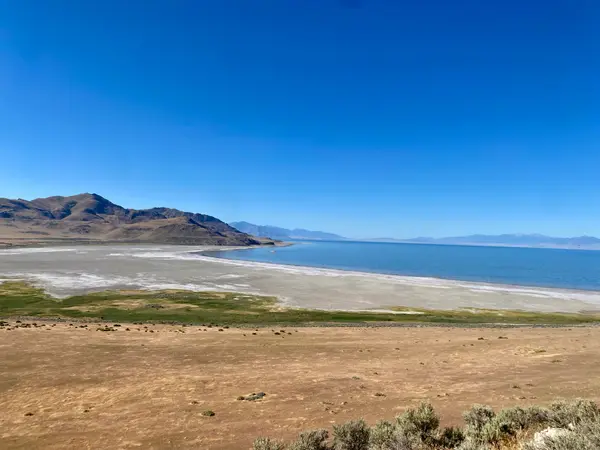
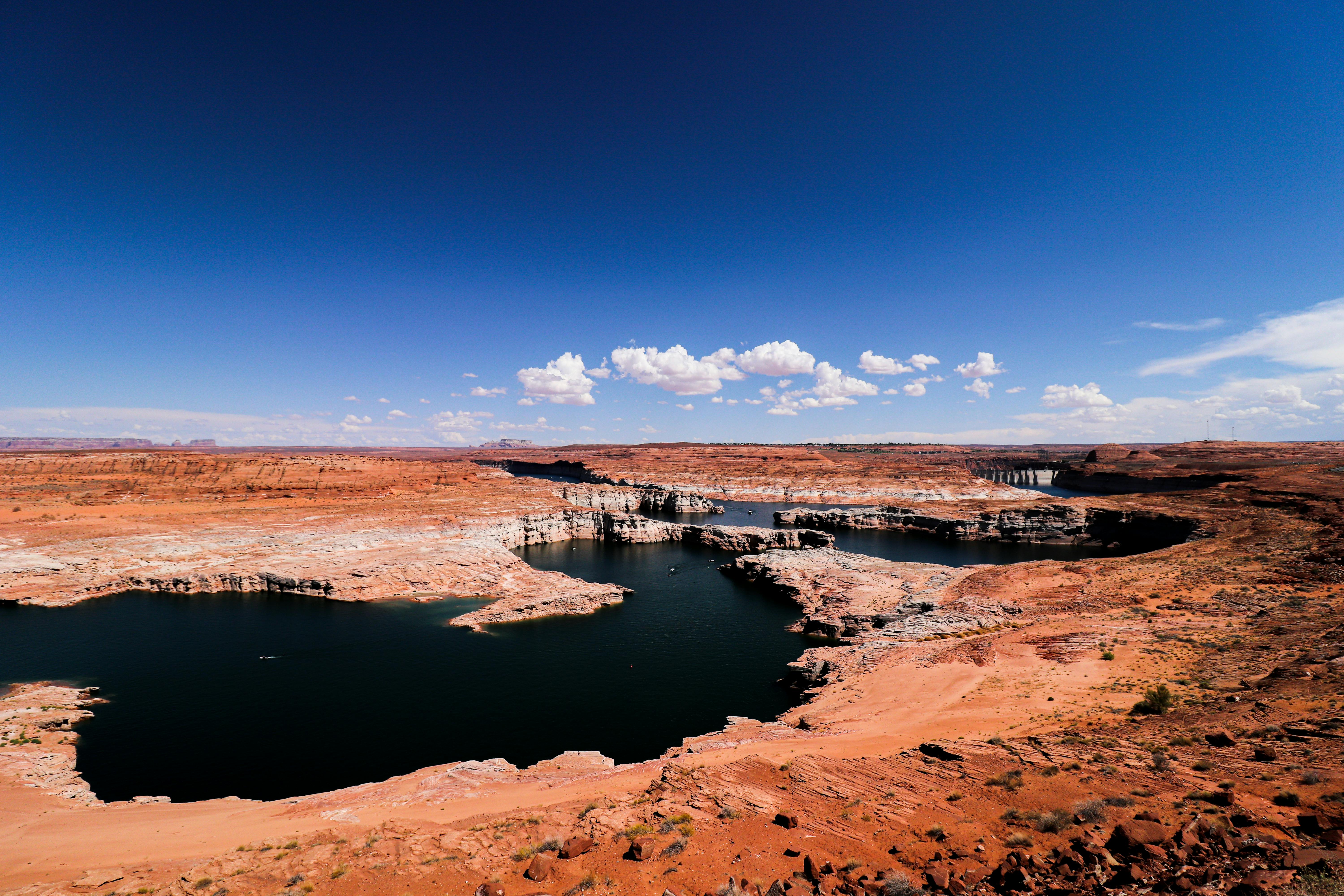
The Great Salt Lake is dying. Not metaphorically. The largest saltwater lake in the Western Hemisphere, the body of water that defines the ecology, air quality, and identity of the Salt Lake Valley, is sitting at the third lowest recorded elevation since 1903. It is about 6.5 to 7 feet below what scientists consider its minimum healthy level. And 30-year projections say that to get it back to healthy levels by 2050, the state needs to deliver an additional 800,000 acre-feet of water to the lake every single year.
Why this matters for every person living along the Wasatch Front:
As the lake recedes, hundreds of square miles of exposed lake bed are left behind. That lake bed is contaminated with arsenic and heavy metals — remnants of decades of industrial use and natural mineral deposits. When the wind blows across the exposed lake bed, and it does frequently, that toxic dust blankets Salt Lake City and every community along the corridor from Ogden to Provo. The air quality inversions Utahns already suffer through in winter are brutal. Adding chronic dust exposure from a shrinking lake is a public health risk that University of Utah researchers have described as most alarming in terms of economic and health impact.
What is actually being done about the Great Salt Lake?
Between 2021 and 2025, Utah dedicated and delivered nearly 400,000 acre-feet of water to the Great Salt Lake. The state purchased the US Magnesium property — 4,500 acres on the lake's southwest shore for $30 million — which will return nearly 17 billion gallons of water to the lake. The 2026 legislative session secured nearly $100 million in funding for lake restoration. There is a public-private charter called GSL 2034, backed by Ducks Unlimited, with a goal of raising $200 million for restoration efforts. Governor Spencer Cox has pledged to have the Great Salt Lake full by the 2034 Olympics.
That is a bold promise. The math behind it is extremely hard. The current research says you need to add 800,000 acre-feet of water every single year sustained to reach healthy levels. Utah delivered 400,000 acre-feet over four years. The gap between what is happening and what needs to happen is significant. And climate projections suggest that if temperatures rise, evaporation increases — meaning the target keeps moving as Utah tries to hit it.
Here is the part that connects directly to your property and your daily life. Outdoor watering accounts for 97% of all municipal and industrial water consumption in Utah. That is a lifestyle conversation, not just a policy conversation. Legislation is addressing it, with new bills requiring data centers to report water use, creating tiered pricing for high residential consumption, and reforming landscape standards. But the scale of the challenge means solutions must come at the residential and community level too.
Why the Great Salt Lake matters for Utah real estate: Air quality directly affects quality of life, and quality of life directly affects property demand. If the lake continues to shrink and dust events worsen, that is a real headwind on Wasatch Front property values. On the flip side, if the 2034 Olympics become the catalyst for aggressive restoration and the lake actually stabilizes and improves, that is a massive quality-of-life and property-value tailwind. The outcome is genuinely uncertain — and that uncertainty should absolutely be part of your decision-making calculus if you are buying real estate in Utah, investing here, or planning to stay long-term.
The 2034 Winter Olympics: The Biggest Economic Event on Utah's Horizon
The 2034 Winter Olympics are coming to Salt Lake City again. And if you think this is just a sports story, you are significantly underestimating what it means to Utah real estate and the state's future.
When Salt Lake City hosted the 2002 Winter Olympics, the state experienced a 72% increase in skier visits between 2002 and 2019. The games generated over $5 billion in economic impact. The legacy infrastructure — tracks, light rail, the airport expansion, the venues — is all still in use today. It was not a bubble. It was a catalyst for sustained growth, bringing people, businesses, and jobs to Utah for decades.
The 2034 games are projected to generate $6.6 billion in economic impact over the next decade, create 42,000 job-years of employment, and contribute nearly $4 billion to the state's gross domestic product. Unlike most Olympic host cities, Utah barely has to rebuild its venues — all 2002 facilities are still operational. The cost structure is dramatically different from a city starting from scratch.
By 2034, Utah's population is projected to reach 4.1 million — nearly double what it was when the state last hosted the Winter Games. The infrastructure investment is already beginning. The Delta Center remodel in downtown Salt Lake City is a $3 billion public-private venture anchoring a new entertainment and cultural district. Building height limits downtown have been lifted to 650 feet, enabling high-rise development that has been stalled for years. The Main Street promenade, Pioneer Park revamp, and the Green Loop are not Olympic-only projects — they are permanent investments in livability that will make Salt Lake City a gem of the western United States.
What the 2034 Olympics mean for Utah real estate investors and buyers right now:
If you are a buyer or investor thinking about the next 8 years, you are looking at a window. Property values near Olympic venues, along transportation corridors, in downtown Salt Lake City, and in Park City are already being shaped by the gravitational pull of 2034. That window is open right now, and it will be closing over the next few years.
Park City, in particular, is in a uniquely powerful position. All downhill and freestyle skiing venues are in the Park City area. The global spotlight of Olympic coverage — live broadcasts going into hundreds of millions of homes worldwide — is going to create an "I want to live there" moment for a very specific demographic of high-net-worth buyers that Utah has never had exposure to before. Park City real estate has always been premium. Post-2034, that market will become even more competitive and elevated.
For locals, there is also a practical transportation conversation. The FrontRunner double-track project is a direct product of Olympic planning and will be transformative for the entire Wasatch Front long after the games are gone. If you are deciding where to buy along the Wasatch Front corridor, proximity to the expanded FrontRunner is something that will matter more in five years than it does today.
The honest take on the Olympics: The 2034 Winter Olympics are not going to solve Utah's housing affordability problem on their own. They are not going to refill the Great Salt Lake by themselves. They will not make traffic disappear — in fact, the Kem C. Gardner Policy Institute has explicitly warned that housing and transportation challenges could intensify as 2034 approaches if not addressed proactively. What the Olympics represent is a forcing function — a deadline, a globally visible reason to accelerate investments Utah would have needed to make anyway. When you have that kind of deadline and economic weight behind it, the probability of those investments actually happening goes way up. The 2034 Olympics are, in my read of this market, the most significant medium-term tailwind Utah real estate has seen in a generation.
Putting It All Together: Utah Real Estate in 2026
Utah in 2026 is a state in the middle of a genuine transition — not a collapse, not a boom, but a real pivot moment. Here is the complete picture:
The housing market is running in place, with rate lock paralysis keeping sellers sidelined and buyers cautious, while underlying demand stays real and rates slowly improve. The median price sits just over $560,000, inventory is at its highest since 2018, and buyers currently have negotiating leverage that will disappear quickly once rates drop meaningfully.
Silicon Slopes is in a reset, not a failure — a recalibration with the next wave of growth likely 12 to 24 months out, heavily weighted toward AI-integrated, experienced talent. Utah still added 30,000+ new jobs last year and ranks fourth nationally in non-farm job growth.
The Great Salt Lake is in a genuine environmental crisis that intersects directly with air quality, water supply, and long-term livability along the Wasatch Front. The state is moving, but not yet at the speed the science demands.
The 2034 Winter Olympics represent a transformative economic event with real money, real infrastructure, and real global exposure — but only if Utah uses the deadline to solve its challenges rather than just host a party.
The people who look back at this moment in 10 years and say they made the right decision are not going to be the ones who waited for everything to be perfect and obvious. They are going to be the people who had enough information to make a confident move and acted on it.
Ready to Make Your Move in Utah? Let's Talk.
Whether you are buying your first home along the Wasatch Front before rate lock paralysis breaks and competition heats back up, finally pulling the trigger on a relocation you have been thinking about for two years, or you want to understand exactly what your equity position looks like and what the realistic timeline is for your situation — you do not have to figure this out alone.
I am Scott Steele, Utah's relocation expert. I help people buy, sell, and invest in real estate across the Salt Lake Valley, Utah County, Park City, and the entire Wasatch Front. My team and I are here to be your real estate resource of choice. Reach out to me using the contact information below, and let's get the conversation started. Informed people make better decisions, and better decisions lead to better outcomes.
HOME@TheUtahReel.com | 801.680.8050 | Make an appointment
Categories
Recent Posts