Park City Neighborhoods: The City Limits Line That Doubles What You Pay
Park City Neighborhoods: The City Limits Line That Doubles What You Pay
Almost every buyer I talk to starts the same way. They tell me they want to live in Park City. Then I ask which part, and the conversation gets quiet, because most people do not realize that Park City is really a collection of very different neighborhoods with very different price tags. And the single biggest variable is not the view or the square footage. It is which side of the city limits line you land on.
Here is what that line is worth right now. In the second quarter of 2026, the median condominium sold inside Park City limits went for $2,325,000. In the Snyderville Basin, the area just up the highway that most people still call Park City, the median condo sold for $1,130,000. Same MLS, same quarter, same ski town. Just over double, according to the Park City Board of REALTORS Q2 2026 market report.
Single family homes tell a similar story with a smaller gap. The Q2 2026 median inside Park City limits was $3,800,000. In the Snyderville Basin it was $2,250,000, which means the in town median runs about 69 percent higher.
None of that makes one side right and the other wrong. It just means the real question is not whether you should buy in Park City. It is which neighborhood matches how you actually plan to use the place. Let me walk you through the ones I show buyers most.
Is Old Town Park City Worth the Premium?
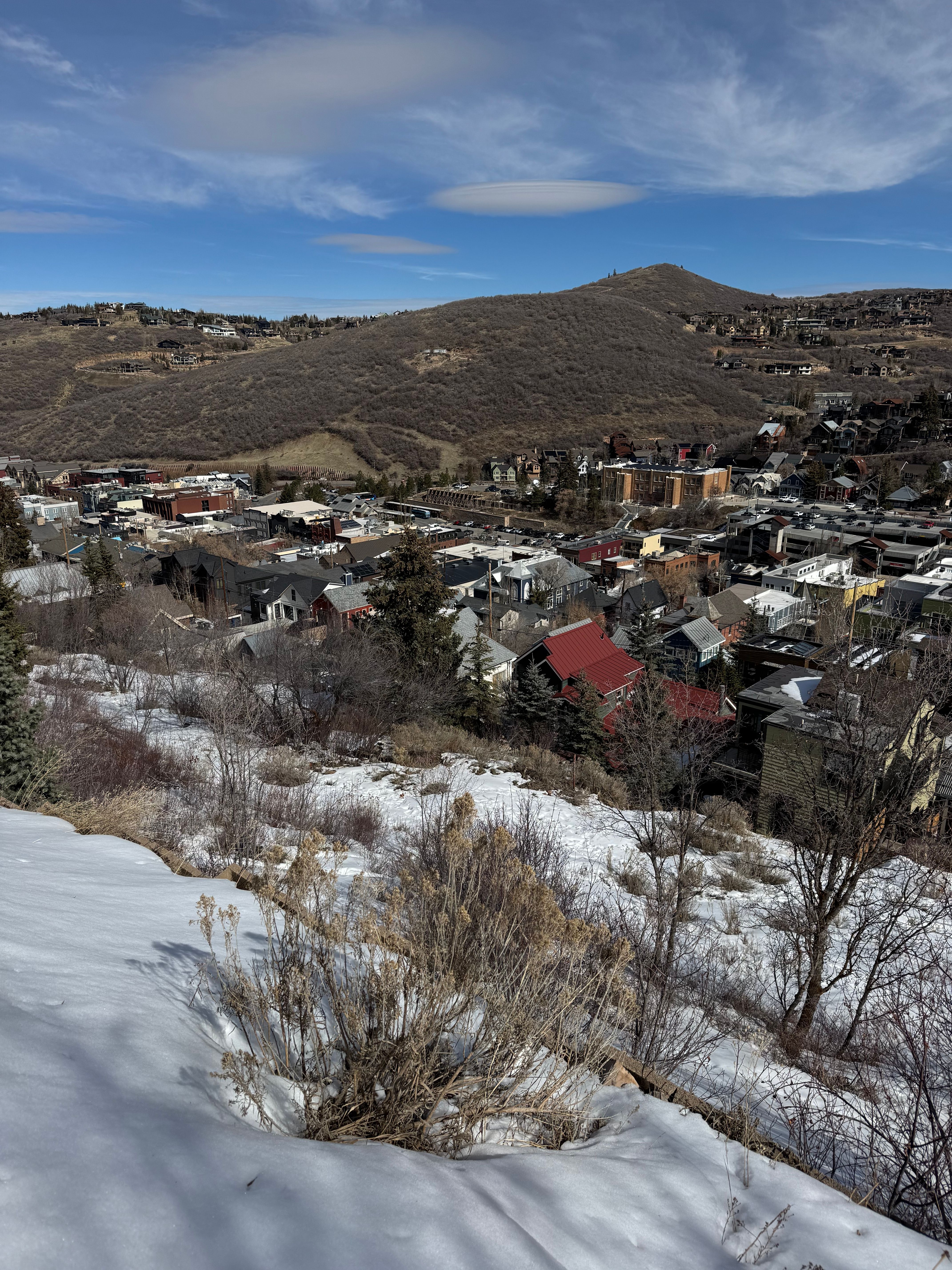
Old Town is the postcard. Historic Main Street, the mining era homes, the Town Lift dropping you onto Park City Mountain without ever touching a car. It is the one neighborhood in town where the walkability is real, and that is exactly what you are paying for.
In Q2 2026, Old Town recorded 7 single family sales at a median of $3.65 million, which was identical to the median a year earlier. Read that as a neighborhood with very little supply and very little price movement, simply because so little trades hands.
The tradeoffs are real, and I give every buyer the same three. Parking is tight. A lot of the homes are old, which means steep stairs, small footprints, and renovation budgets. And during Sundance and peak ski weeks, you are not watching the event, you are living inside it. If that energy is the reason you are buying, nothing else in Park City competes. If you want a quiet garage and a flat driveway, look elsewhere.
Who Actually Buys in Deer Valley and Empire Pass?
Deer Valley proper and Empire Pass are the top of the market. Ski in ski out, private clubs, staffed residences. The transaction counts up here are so small that the statistics get strange.
The clearest example from Q2 2026: Empire Pass recorded exactly one sale, at $25 million. One transaction for the entire quarter. The Board flagged it in their own report, because averaging a single sale does not describe a market.
Deer Crest tells a related story. Q2 2026 saw a single condo sale there, down from five a year earlier, and rolling 12 month sales fell to 24 from 36. That is not a price collapse. It is supply depletion after the Founders Place delivery wave finished. If Deer Valley is where you want to be, your practical constraint right now is not money. It is finding something to buy.
Lower Deer Valley Might Be the Best Balance in Park City
This is my honest pick for the buyer who wants Deer Valley access without the Empire Pass entry price. Lower Deer Valley sits between Old Town and the resort, so you get lift access, you are close to Main Street, and you are not perched near the top of a mountain during a February storm.
The numbers back up the demand. Over the trailing 12 months tracked in the Board's Q1 2026 report, Lower Deer Valley logged 53 sales totaling $168.2 million, with units up 56 percent and volume up 109 percent year over year. The median rose 30 percent to $2.85 million.
That is a lot of movement in one submarket, and it is worth saying plainly. Buying in after a 30 percent median jump means you are not getting the deal somebody got two years ago. What you are getting is a location with clearly demonstrated demand behind it.
Prospector: The Park City Neighborhood That Never Makes the Stats
Prospector is where locals point when they want to stay inside Park City limits without paying Old Town or Deer Valley money. It is flat, it is central, it is on the free bus route, and it holds a mix of condos, townhomes, and smaller single family homes. It is also where a lot of the people who actually work in this town live.
Here is the part I find genuinely useful, and it is a little counterintuitive. The Park City Board of REALTORS only publishes sub area statistics for areas that clear a minimum transaction threshold, and Prospector did not clear it in the Q2 2026 report. It does not produce dramatic quarters. It does not generate headlines.
What that means practically is that you cannot price Prospector off a published neighborhood median, because there is not one. You price it off comparable sales, and you need an agent to pull them. Do not let anyone use the Park City limits condo median of $2,325,000 to value a Prospector unit. That citywide number is not describing this neighborhood.
Kimball Junction and the Snyderville Basin: Where the Convenience Is
Head out of Old Town on SR 224 and you reach Kimball Junction, which is where Park City does its actual errands. Grocery stores, the hardware store, medical offices, the I-80 on ramp, and increasingly a lot of the area's newer housing.
Kimball Junction sits in the Snyderville Basin, which the Board groups together with Canyons Village, Pinebrook, Silver Creek, and Jeremy Ranch. The Basin ran a softer single family quarter in Q2 2026: 77 sales at $289.2 million, down 8 percent in units and 19 percent in volume, at a median of $2.25 million. Condos went the other way, with 58 sales generating $100.1 million, a 33 percent volume increase, at a median of $1.13 million.
If you have kids in school, a job with a commute, or any interest in not making a trip into town for milk, the Basin is where I send you. What you give up is the walk to Main Street fantasy. That is the whole trade.
Are Canyons Village Condos a Good Investment?
Canyons Village is the most investor shaped neighborhood in the Park City area. Ski in ski out on the Canyons side of Park City Mountain, hotel style buildings, managed nightly rental programs, and a development pipeline that keeps adding product.
Q2 2026 was a strong quarter there. Canyons Village condos posted 28 sales generating $68.5 million, with volume up 62 percent, and the average sale price reached $2.45 million, up 50 percent year over year. The Board specifically called this a real data point rather than a statistical artifact, because higher priced inventory is genuinely clearing.
Two honest caveats before you get excited. First, a nightly rental condo is a business, not just a home. HOA dues, management splits, and your occupancy assumptions decide whether it works, and those numbers deserve a spreadsheet before they deserve a contract. Second, the single family side of Canyons Village is so thin the data barely means anything: one sale at $13.8 million in Q2 2026, against four sales a year earlier averaging $21.8 million. Do not underwrite a purchase off a sample size of one.
Where Do Park City Families Actually Live?
Silver Creek and Trailside. That is the answer that never makes the glossy brochure, and it is the one I give most often to families relocating here.
Both sit in the Snyderville Basin, outside Park City limits, which is exactly why they work financially. Trailside has the elementary school, the trail network the name promises, and a real neighborhood feel. Silver Creek sits further out toward the Jordanelle side, with bigger lots and, in parts, room for horses.
Like Prospector, neither one gets its own line in the Board's quarterly sub area statistics, so the Snyderville Basin medians of $2.25 million for single family and $1.13 million for condos are the honest frame to work from. For comparison, nearby Silver Springs did clear the threshold in Q2 2026, with 8 sales, a 123 percent volume increase, and an average price of $3.06 million, up 39 percent. The Basin is not cheap. It is just less expensive than town.
So Which Park City Neighborhood Is Right for You?
Here is the short version I give buyers on the phone.
Want to walk to Main Street and live in the middle of everything: Old Town.
Want the best ski address and price is not the constraint: Deer Valley or Empire Pass.
Want Deer Valley access without the Empire Pass number: Lower Deer Valley.
Want a Park City address you might actually use full time: Prospector.
Want errands, schools, and a commute that works: Kimball Junction and the Snyderville Basin.
Want a property that helps pay for itself: Canyons Village.
Want space, trails, and a family neighborhood: Trailside or Silver Creek.
One more piece of context worth holding onto. The overall Park City market generated $1.358 billion in Q2 2026, up 7 percent from a year earlier on 10 percent more transactions. This is not a market that is falling apart. It is a market that has gotten very specific about which neighborhoods and which property types are moving, which is why picking the right one matters more now than it did three years ago.
Park City Neighborhood Questions I Get Every Week
What is the most affordable neighborhood in Park City?
It depends whether you mean inside the city limits or the greater Park City area. Inside the limits, Prospector is generally the most attainable entry point, though attainable is relative here. In the greater area, the numbers drop fast as you move out. The Q2 2026 single family medians were $3.8 million inside Park City limits, $2.25 million in the Snyderville Basin, $940,000 in Heber Valley, and $595,000 in Kamas Valley.
Can I short term rent in any Park City neighborhood?
No, and this is the most expensive mistake I watch buyers make. Nightly rental rights vary by zoning and by HOA, and two units on the same street can have completely different rules. Canyons Village and much of Old Town are built around nightly rental. Many Basin subdivisions are not. Verify it in writing before you go under contract, not after.
Is Park City real estate still appreciating in 2026?
Overall yes, but unevenly. Across the full MLS area the single family median rose 10 percent year over year to $1.7 million, and total market volume over the trailing 12 months reached $5.728 billion, up 9 percent. Condominiums were the soft spot, down 14 percent in units over the trailing year, which the Board attributes to supply depletion after the 2024 and 2025 new construction wave rather than a retreat in demand.
Should I buy in Park City proper or the Snyderville Basin?
Ask yourself how many nights a year you will really be here, and what you will be doing on those nights. If the answer is a handful of ski weeks and you want to walk to dinner, buy in town and accept the premium. If the answer is full time living, school runs, and groceries, the Basin gives you more house, more parking, and a condo median that sits at roughly half the in town number. Neither one is wrong. They are answers to two different questions.
Thinking About Moving to Utah? Let's Talk.
Utah is one of the fastest-growing states in the entire country, and navigating the cultural landscape alongside the real estate market takes genuine local expertise. Whether you're considering Salt Lake County, Utah County, Davis County, or further out — finding the right neighborhood for your lifestyle, budget, and long-term goals makes all the difference.
My team and I work exclusively with buyers and sellers navigating the Utah real estate market. We help you cut through the noise, match the right submarket to your specific lifestyle and priorities, and make sure you're buying from a position of clarity — not FOMO.
Book a call with us HERE — free 30-minute consultation
Check out our relocation guide HERE
Subscribe to our weekly newsletter HERE
Categories
Recent Posts