Park City Summer vs Winter: The Season You Fall for Is Not the Season That Pays
Park City Summer vs Winter: The Season You Fall for Is Not the Season That Pays
Almost everybody who ends up buying a home in Park City sees this town for the first time in winter. They come for a ski trip, they have four incredible days, they stand on Main Street at night with snow coming down under the string lights, and they think this is the place. Then they go home and they do not buy anything.
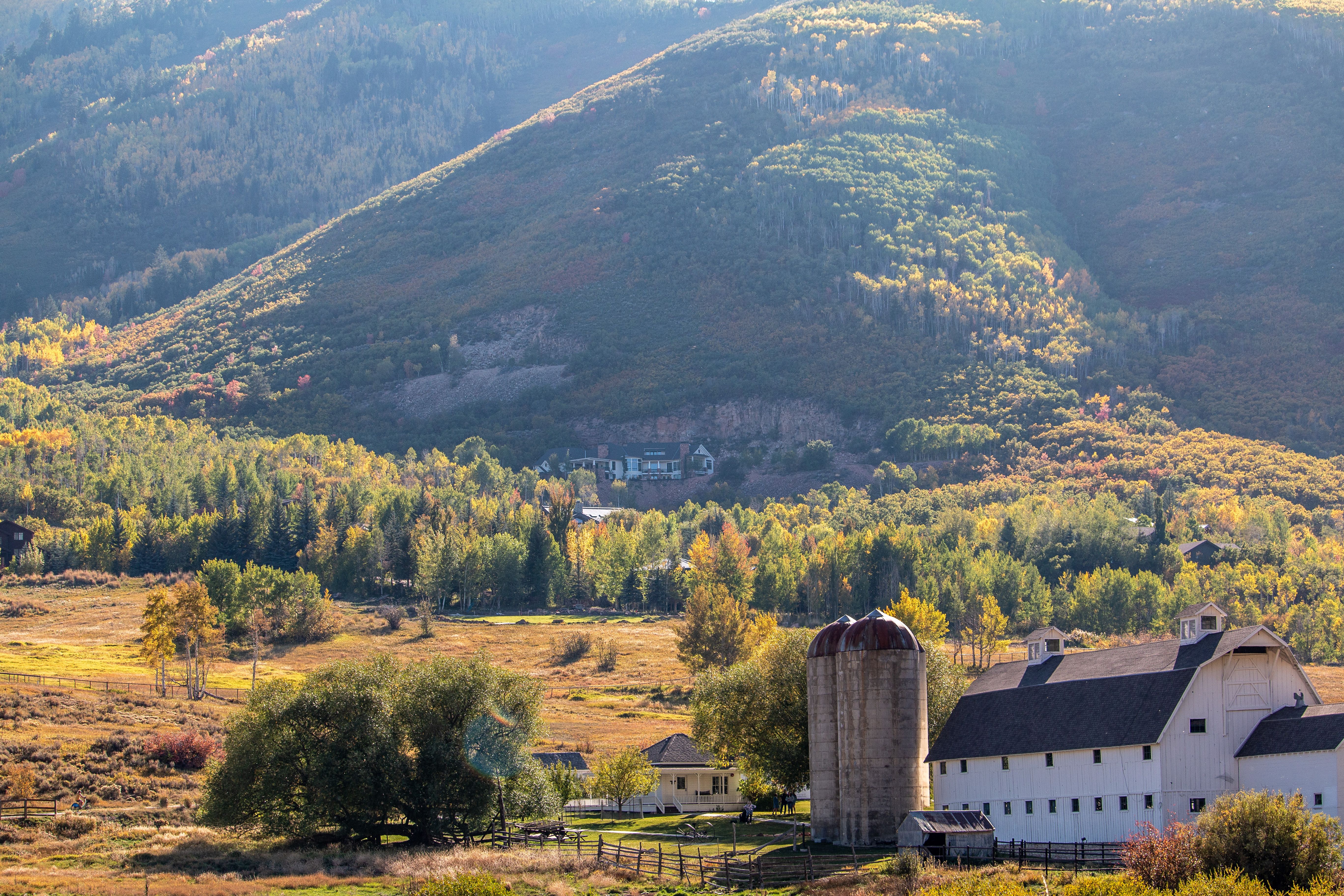
About six or seven months later they come back. It is July or August, the mountains are green, and they are riding bikes at seven in the evening because it is still light out. That is the trip where I get the call. I have watched that pattern play out over and over, and it points at something most people get backwards. Winter sells the fantasy. Summer sells the life. Here is what each season is hiding, and which one you should actually be underwriting your money against.
What Winter Is Really Selling You in Park City
Winter earns its reputation. Two major resorts within minutes of town in Park City Mountain and Deer Valley, roughly 40 minutes from a major international airport, and Main Street in a storm is one of the great evenings anywhere in the world. If you ski, four days here in February will rearrange your priorities.
What winter hides is that you are seeing this town at maximum performance. Every restaurant is open. Every lift is spinning. The whole place is dressed for company. That is not what a Tuesday in April looks like here.
What You Cannot See Under Two Feet of Snow
I spent years in construction before real estate, so when I walk a mountain property I am not looking at the staging. I am looking at the roof pitch, the drainage, and the grade of the driveway.
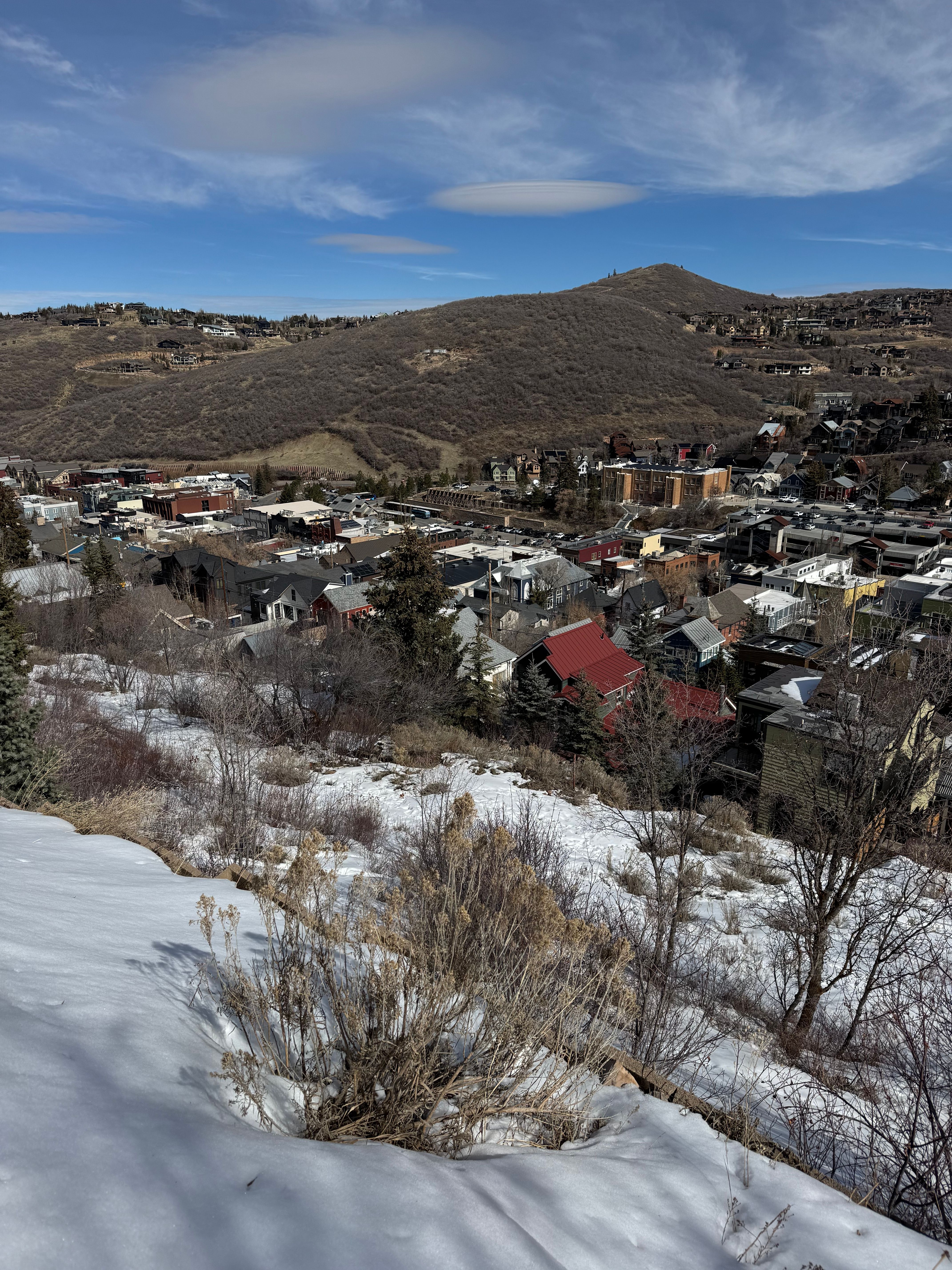
Under two or four feet of snow you cannot see the grade of the lot, how water moves off it in spring, or the driveway pitch, which up here is the difference between a house you love and a house you fight with every January. You cannot see the retaining walls, the deck condition, or the north-facing roof lines where ice will dam up.
Winter is a very flattering photographer. Come in winter, absolutely. Just do not confuse a great ski trip with due diligence. If you fall in love with a property in February, you need somebody standing in that yard mentally removing the snow and asking what is underneath. That is the difference between a great buy and a five figure surprise in your first spring.
What Park City Summer Is Actually Like
Nine out of ten people who visit in July tell me the same thing: they had no idea there was this much to do.
Park City sits on roughly 400 miles of connected, non-motorized trail and is an IMBA Gold Level Ride Center. The Mid Mountain Trail alone runs about 26 miles across the face of the mountain at roughly 8,000 feet. The mountain biking here is not good for a ski town. It is world class.
Then the calendar fills in around it. The Deer Valley Music Festival puts touring artists on the lawn at Snow Park. The Kimball Arts Festival takes over Main Street in early August. Park Silly Sunday Market runs most Sundays from June into September, Savor the Summit turns Main Street into one long table in late June, and Miners Day closes things out in early September. And then there is the weather. It is dry, it is not oppressive, and it cools off hard at night. For buyers coming out of hot markets, that alone is the whole pitch.
What Summer Hides About Owning a Home Here
Summer hides winter, and people still get burned by it. If your only exposure to this town is July, you have never thought about a storm cycle, a canyon commute in weather, a snow removal contract, a roof load, or resort traffic on a Saturday morning in January. You have never dealt with the reality that a mountain house is a maintenance relationship, not just a purchase.
I see this most with people buying purely off a summer trip. They buy a beautiful place on a steep lot with a gorgeous view and never consider that the view lot is the hard lot in winter. Steep driveway, north facing, wind loaded. It is a fantastic house eight months a year and a project the other four.
So the two seasons answer different questions. Winter answers, is the mountain worth it? Summer answers, could I actually live here? The second one is what leads to a purchase.
The Two Park City Seasons Nobody Puts in the Brochure
Park City has four seasons, and the two nobody shows you are the shoulder seasons: roughly mid-April into May, and mid-October into Thanksgiving. The lifts are closed. The mountain is brown and patchy. The trails are muddy and you should not be riding them anyway. A number of restaurants close for a few weeks while staff go travel.
I would rather lose you here than after you have closed. If you need a place to be busy every month of the year, these two windows will be a letdown twice a year. Some people do a couple of shoulder seasons and decide they would rather own here than live here full time. That is a legitimate conclusion, and it is a lot cheaper to reach now.
The flip side is that plenty of locals love these seasons most. No lines, a table anywhere, a tee time whenever you want. And if you own here, this is when contractors actually have availability. Those two quiet windows are your maintenance windows, and building your ownership calendar around them is one of the more useful things I can tell you.
When Is the Best Time to Buy in Park City?
Sellers here want to list when the property shows best, so a large share of inventory hits in late spring and early summer, with another wave in the fall to catch the ski season buyer. Buyers, meanwhile, get emotional in winter. They are here, they are skiing, and they want to buy the feeling they are having that week.
That creates a predictable mismatch. Winter is thin inventory and motivated, emotional buyers. Late summer through fall is more inventory, more choice, and less urgency in the room. If you shop in the middle of winter, you are shopping the smallest selection of the year against the most activated competition of the year, in the week you personally are the most activated you will ever be about this town. That is an expensive combination.
One more thing to watch is recycled inventory. Look for listings that sat through a whole season, came off the market, and reappeared with a fresh days-on-market count. The property did not change. The framing did. Ask how long it has really been available. That is often the best negotiating position in the entire search, and most buyers never think to ask.
Park City Single-Family vs Condo: Two Different Negotiations
Through the first half of 2026, the single-family median came in right around $3,160,000, up meaningfully year over year, while condos and townhomes came in around $1,300,000 and actually softened a bit. You can track the underlying numbers through the Park City Board of REALTORS quarterly statistics.
That gap matters. This is a segmented market, not one market. Single family is supply constrained. The condo side is where buyers have gotten picky, and they are picking apart HOA dues, rental restrictions, and building condition, which is exactly what they should be doing. A single-family buyer and a condo buyer are walking into two completely different negotiating environments right now.
Where Nightly Rentals Are Actually Allowed in Park City
Nightly rental zoning is the single most expensive assumption in this market, and it does not follow the logic you would expect. Parts of Old Town, the Deer Valley areas including Lower Deer Valley, Silver Lake and Empire Pass, Canyons Village, and certain pockets around Kimball Junction generally allow nightly rentals with the right license. Meanwhile many residential Snyderville Basin neighborhoods, places like Jeremy Ranch, Pinebrook, Silver Springs, Summit Park and Sun Peak, carry 30-day minimums or do not allow short-term rentals at all. On top of the zoning, the HOA can override everything.
I have seen buyers get all the way to an offer on a property they intended to rent in a neighborhood where that was never going to be allowed. Verify zoning, verify licensing, and verify the CC&Rs. All three, before you write the offer.
There is also something new to factor in. Sundance held its final Park City festival in January 2026 and moves to Boulder, Colorado beginning in 2027. If you are underwriting a nightly rental on historical numbers, some of those January figures include a Sundance week that is not coming back. I am not saying the sky is falling. This town has plenty of winter demand. But if a pro forma leans on that week, ask about it.
What Deer Valley East Village and the SR-224 Rebuild Change
Deer Valley is in the middle of one of the biggest expansions in North American skiing. For the 2026-27 season the new Hail Peak Express adds roughly 200 skiable acres and seven new runs, bringing the resort to about 4,500 skiable acres and 32 lifts, with major new lodges still to come.
The part that matters for a buyer is not the acreage. It is the door. East Village gives you an entirely different way onto the mountain from the Jordanelle side, which means world class terrain without funneling through Park City traffic at all. That quietly changes which addresses make sense.
At the same time, the SR-224 corridor between Kimball Junction and Old Town is being rebuilt with dedicated transit lanes as part of the Bobsled Express bus rapid transit project, with service expected to begin in 2028. Short term that means construction. Long term it means the drive that defines daily life on that side of town is being actively fixed.
So Which Season Actually Sells Park City?
My real answer is a split. Summer sells the person. Winter sells the asset.
Summer converts a visitor into an owner, because summer is when people stop imagining a vacation and start imagining a life. That is the emotional close. But winter is what your money actually performs against. Winter is when the revenue is, when the town is at capacity, and when a property either works logistically or fights you. If you buy on summer feelings and never stress test the winter reality, you have bought the half of this town that does not pay.
Buy for the season you will actually use the most. Underwrite for the season that pays. And pay close attention to which side of this valley you are standing on, because that map is changing faster than the prices are. The people who get this right come twice, once in each season on purpose, and then they buy.
Park City Summer vs Winter: Frequently Asked Questions
Is it better to buy a home in Park City in summer or winter?
Most buyers emotionally commit in summer, but the better time to shop is usually late summer through fall and into the holidays, when there is more inventory and less competition. Winter gives you the thinnest selection of the year against the most motivated buyers.
Can you properly evaluate a Park City mountain home in the winter?
Not fully. Snow cover hides lot grade, drainage, driveway pitch, retaining walls, deck condition and landscaping. You can tour and even go under contract in winter, but you want someone on your side who knows what those conditions look like in May.
What are the shoulder seasons in Park City like?
Mid-April into May and mid-October into Thanksgiving are quiet. Lifts are closed, trails are muddy, and some restaurants shut down for a few weeks. Owners tend to love them, because that is when contractors are available.
Can I rent my Park City home out nightly?
It depends on the zone, the license, and the HOA. Old Town, the Deer Valley areas and Canyons Village generally permit nightly rentals with the right license, while many residential Snyderville Basin neighborhoods carry 30-day minimums or prohibit them. Verify all three before you write an offer.
Thinking About Moving to Utah? Let's Talk.
Utah is one of the fastest-growing states in the entire country, and navigating the cultural landscape alongside the real estate market takes genuine local expertise. Whether you're considering Salt Lake County, Utah County, Davis County, or further out — finding the right neighborhood for your lifestyle, budget, and long-term goals makes all the difference.
My team and I work exclusively with buyers and sellers navigating the Utah real estate market. We help you cut through the noise, match the right submarket to your specific lifestyle and priorities, and make sure you're buying from a position of clarity — not FOMO.
Book a call with us HERE — free 30-minute consultation
Check out our relocation guide HERE
Subscribe to our weekly newsletter HERE
Categories
Recent Posts