The Single Most Important Thing to Know Before You Move to Utah
The Single Most Important Thing to Know Before You Move to Utah
If you are planning a move to Utah, you have probably already put in the hours. Videos, forums, cost-of-living calculators, a spreadsheet somebody's cousin made about the best places to live in Utah. And I would bet almost all of that research has been about the state: taxes in Utah, weather in Utah, cost of living in Utah.
Here is the problem. You are not moving to Utah. Nobody moves to Utah. You move to a specific neighborhood, on a specific bench, at a specific elevation, on a specific side of a specific water system. And in this state, the gap between two neighborhoods that sit fifteen minutes apart is bigger than the gap between most states.
You Don't Move to Utah. You Move to a Neighborhood.
This is the thing almost nobody tells you until you have already signed. I watch people get it backwards constantly. They research Utah for six months, they fly in for a weekend, they fall in love with a house, and then they find out what neighborhood they actually bought into somewhere around month four. Usually in February. Usually in a way that costs them.
State-level research is not wrong, it is just the wrong altitude. Utah's income tax rate is the same in every one of these neighborhoods. What is not the same is the air you breathe in January, how much snow lands on your driveway, what your commute looks like at 7:30am, and which water system you are on.
Fifteen Minutes Can Be a Completely Different Life
Two houses can be fifteen minutes apart on a map and belong to genuinely different places. Different elevation. Different snow load. Different schools and different school districts. Different commute. Different feel on a Tuesday night in the middle of winter.
That is not a Utah quirk to be annoyed about. It is actually the opportunity. It means the right neighborhood for your life almost certainly exists here. It also means you can miss it by fifteen minutes.
Why February Is When People Find Out
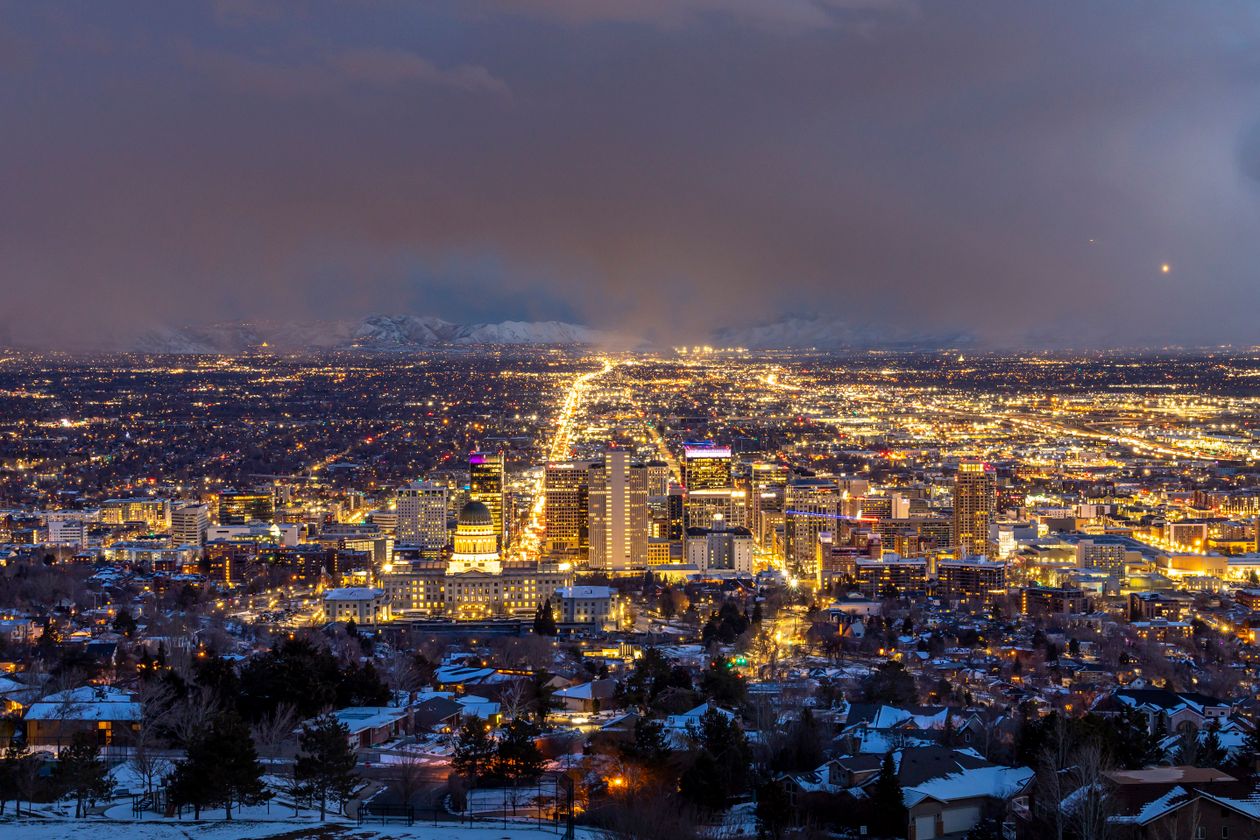
There is a reason the realization tends to land in winter. Along the Wasatch Front, cold air settles into the valleys and warmer air sits on top of it like a lid, trapping what is underneath. Utah's Department of Environmental Quality describes these inversions as strongest from December through February, with the Salt Lake, Utah and Cache valleys seeing the worst of it. Higher-elevation benches often sit above the worst of that trapped layer while lower valley floors sit inside it.
So a house you toured on a brilliant blue September afternoon can feel like a different property in January. Same house. Same price. Different air, different light, different driveway.
None of this makes any one neighborhood the wrong answer. Plenty of people happily live on the valley floor. It is simply something you want to know in September rather than discover in February.
What to Actually Look At Before You Buy
Elevation and bench position. Where does the property sit relative to the valley floor? This affects winter air, snow, temperature and views.
Which way the house faces. North-facing driveways in Utah hold snow and ice noticeably longer than south-facing ones. It sounds small in July. It is not small in January.
The water system. Which district serves the property, what the rates look like, and what the long-term supply picture is.
The commute, at the actual hour. Not the midday drive you did on your scouting trip. The 7:30am version.
The school boundary, not the school reputation. Boundaries do not always follow the lines people assume, and they can be redrawn.
Pick the Neighborhood First, Then the House
The buyers who end up happiest here almost always did it in that order. They narrowed to two or three neighborhoods that genuinely fit how they live, and then they shopped houses inside those boundaries. The ones who struggle usually fell for a house first and inherited a neighborhood by accident.
If you are flying in for a weekend to look, that is fine. Just spend part of it driving the areas rather than only touring listings. Ask what a given street is like in February. Ask what the drive is like at rush hour. Those two questions will tell you more than another month of state-level research.
Thinking About Moving to Utah? Let's Talk.
Utah is one of the fastest-growing states in the entire country, and navigating the cultural landscape alongside the real estate market takes genuine local expertise. Whether you're considering Salt Lake County, Utah County, Davis County, or further out — finding the right neighborhood for your lifestyle, budget, and long-term goals makes all the difference.
My team and I work exclusively with buyers and sellers navigating the Utah real estate market. We help you cut through the noise, match the right submarket to your specific lifestyle and priorities, and make sure you're buying from a position of clarity — not FOMO.
Book a call with us HERE — free 30-minute consultation
Check out our relocation guide HERE
Subscribe to our weekly newsletter HERE
Categories
Recent Posts