Should You Buy a Home in Utah in 2026? What the Data Actually Says
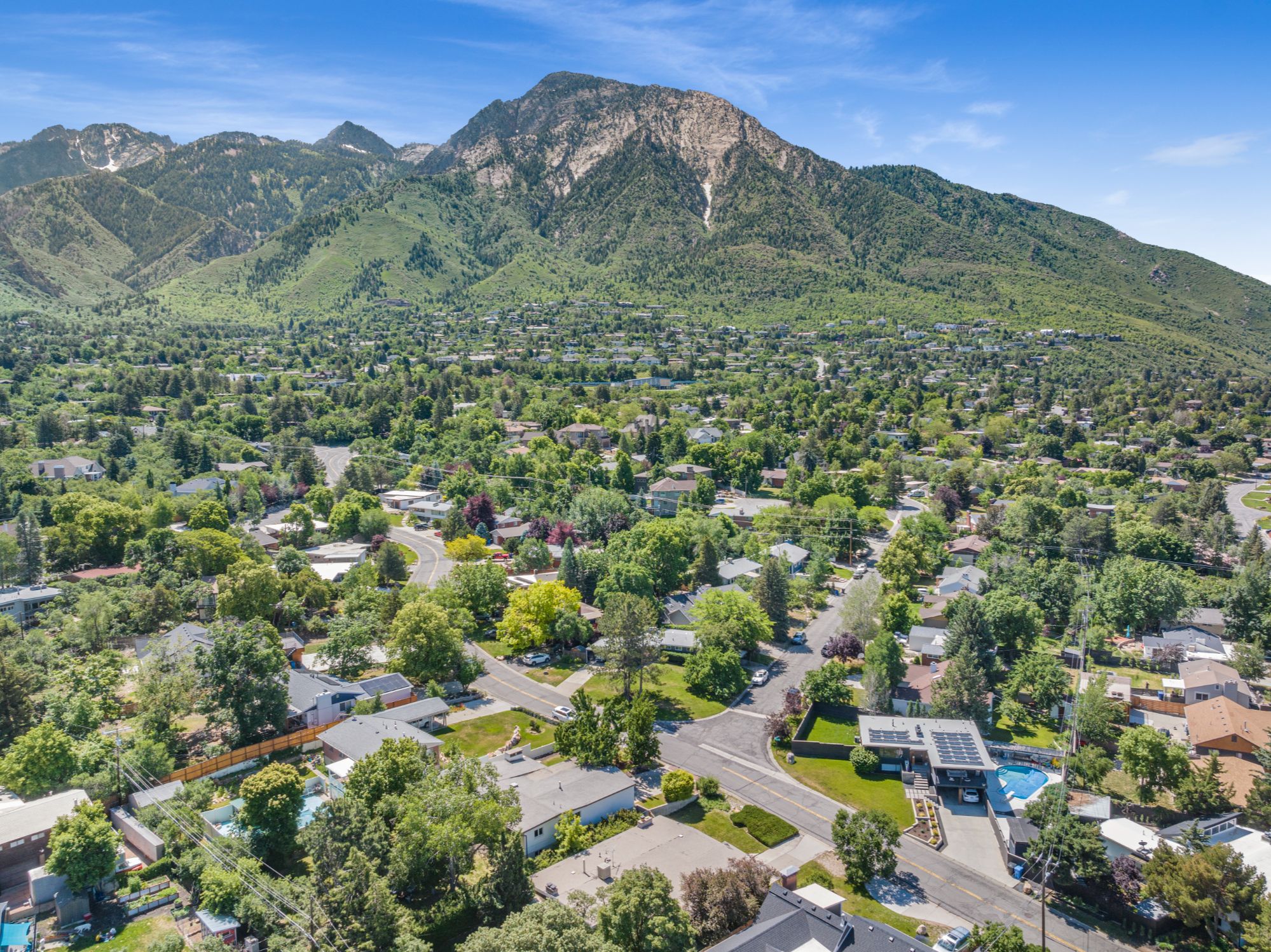
Should You Buy a Home in Utah in 2026? The Honest Answer Most Real Estate Agents Won't Give You
The Answer Isn't Simple — And That's the Point
Most real estate agents in Utah will tell you one of two things: it's always a great time to buy, or prices are about to crash and you should wait. Neither of those answers is honest. The real answer — the one that actually serves you — is that it depends on who you are, what your finances look like, and what your timeline is.
This post breaks down exactly what the Utah housing market looks like in 2026, what the data actually says about waiting versus buying, and — most importantly — which category you fall into. By the time you finish reading, you'll know whether 2026 is your year to buy or whether waiting is genuinely the smarter play for your specific situation.
The Conventional Wisdom Is Costing Buyers More Than They Realize
Here's what a lot of people are telling themselves right now: "I'm going to wait for rates to come down. In six months or a year, the market will be more favorable, and I'll get a better deal then." That logic sounds perfectly reasonable on the surface. It's all over the Utah home buying Facebook groups. It's in the national headlines.
But here's what the data actually shows: waiting is not a neutral decision. Waiting has a cost. And in a market like Utah — which is structurally different from most of the country — that cost is often significantly higher than people realize.
Buyers who sat on the sidelines waiting for the right moment, or for the market to correct, have watched themselves get priced out of neighborhoods they could have bought into 18 months earlier. That's not pressure. That's just what has played out over and over again in this market.
That said, there are absolutely people in 2026 who should not be buying right now. And we'll be just as specific about that as we are about who should buy.
1. The 2034 Olympics Factor: A Closing Window on a Real Opportunity
Salt Lake City is hosting the 2034 Winter Olympics for the second time. Most people have heard that — but what most people haven't done is connect the dots between that announcement and what it means for home values in specific Utah submarkets right now, while there's still time to position yourself ahead of it.
When Vancouver hosted the 2010 Winter Olympics, real estate prices in Olympic-adjacent neighborhoods appreciated significantly in the years leading up to the games — well above baseline market trends. The pattern holds across markets: large-scale international sporting events create sustained investment in infrastructure, transportation, hospitality, and housing. And the appreciation happens during the buildup period, not after the games end. By the time the Olympics actually arrive, much of the price appreciation has already occurred.
Apply that to Utah and we have eight years left until 2034 — and we are right now in the earliest phase of what will be a sustained, multi-year cycle of infrastructure investment, international tourism buildout, and development corridor expansion.
Where to pay attention specifically: Park City is the obvious play, but frankly parts of Park City are already priced at peak Olympic appreciation levels. The smarter look is in the corridors connecting Salt Lake City to the mountain venues — areas like Cottonwood Heights, Millcreek, and the western suburbs that sit along planned transit expansion routes. Eagle Mountain and Saratoga Springs aren't Olympic-adjacent in the same way, but they're capturing the workforce housing demand that gets displaced when closer-in neighborhoods appreciate.
The window for pre-Olympic pricing in the most directly affected submarkets is not infinite. This is the kind of market intelligence you don't get from a national real estate headline — you get it from being on the ground, watching where the permits are being pulled, where the infrastructure dollars are going, and which neighborhoods are seeing the first wave of investor activity.
2. The Real Math Behind Waiting for Rates to Drop
This is the argument that comes up constantly: "I'm going to wait until rates come down to 5.5% or 5%, then I'll buy." Let's actually run that math together, because the numbers change the conversation.
Take a $550,000 home — roughly the median price for a decent single-family home in many Salt Lake County submarkets right now. At today's rates of around 6.7% on a 30-year loan with 10% down, you're looking at a principal and interest payment of approximately $3,200 per month.
Now say you wait 18 months and rates drop to 5.8%. Your monthly payment on the same loan drops to about $2,920. That's a difference of roughly $260 per month. That sounds like a win, right?
Here's what that analysis leaves out:
Home price appreciation: Utah's appreciation rate has historically run 5–6% annually, though it's moderated in recent years. Even at a conservative 4%, that $550,000 home becomes $572,000 eighteen months from now. Your 10% down payment just went from $55,000 to $57,200 — that's an additional $2,200 out of pocket just to maintain the same loan-to-value ratio, before factoring in higher closing costs.
Rent payments in the meantime: Most buyers who are waiting to buy are still renting. If your rent is $2,000 per month — which is below the Utah median for comparable space — you've spent $36,000 over those 18 months on housing that built you zero equity, zero appreciation, and zero tax benefit.
The full picture: You waited 18 months, saved $260 per month on the payment (which takes 4–5 years to recapture just the higher purchase price), spent $36,000 on rent, needed more out of pocket at closing because the price went up, and gambled on rates actually dropping to where you needed them — which is not guaranteed.
Here's the thing: when rates drop, you can refinance. You cannot renegotiate what you paid for the home. The price you lock in today is the price you own forever. And if you bought in a market with structural appreciation drivers, that's a powerful thing.
3. Why Utah Home Prices Are Not Going to Crash
If you're thinking "what if prices come down significantly? What if 2008 happens all over again?" — that's a fair question. Let's address it directly.
The short answer: Utah has a structural supply deficit that makes a deep price correction extremely unlikely. The situation today is the complete opposite of what happened leading up to 2008.
According to research from the Kem C. Gardner Policy Institute at the University of Utah — one of the best sources for Utah-specific housing data — Utah has been underbuilding relative to its population growth for decades. We're not talking about a modest gap. This is a housing shortage that has been accumulating over time. You cannot have demand exceeding supply and also have a crash. Those two things don't coexist.
Utah's population has been growing faster than nearly every other state in the country. Net migration from California, the Pacific Northwest, and Texas — driven largely by Silicon Slopes tech corridor jobs — has been a consistent demand driver that isn't slowing down dramatically. The Silicon Slopes corridor running from Lehi through Orem and into Salt Lake City continues to attract employers and employees even as other tech markets have cooled.
Did Utah see a correction in late 2022 and into 2023? Yes — absolutely. Prices pulled back from their pandemic highs in some markets by roughly 11–14%. But that was a rate-driven correction, not a fundamentals-driven one. Foreclosures didn't spike the way they did in 2008 because 2008 was a lending crisis — people were buying homes they could never actually afford. That wasn't what happened in the Utah market in 2022. Most of those buyers genuinely qualified for what they purchased.
What you're left with is a market that corrected somewhat from an unsustainable peak, found a floor, and is now appreciating again at a normalized pace. That's a market that breathes — not one that crashes.
4. The Bifurcated Market: Not All of Utah Is the Same Right Now
Here's something the national headlines completely miss about Utah in 2026: the Utah real estate market is not one market — it's two markets happening simultaneously. Knowing which one you're shopping in changes your entire strategy.
Market #1 — The Stagnant Upper Tier: Homes priced roughly above $800,000–$850,000, particularly in established legacy neighborhoods like parts of Holiday, Sugar House, and the higher-end Eastbench, have been sitting for more days than the market is accustomed to. Price reductions are happening. Sellers are more negotiable than they've been since the post-pandemic correction. If you're a move-up buyer with a budget in this range, you have leverage right now that hasn't existed for years.
Market #2 — The Compressed Entry-Level Tier: Homes priced between roughly $380,000 and $550,000 in growth suburbs like Eagle Mountain, Saratoga Springs, and parts of West Valley are still moving fast. Sub-30-day sales on well-priced homes, and in some cases still generating multiple offers. That's where demand is most concentrated — where first-time buyers land, where workforce housing demand is most acute, and where supply constraints are tightest because builders have been focused on move-up product for years.
The buyer who goes into this market treating it as a uniform environment is going to have a frustrating experience. They'll write offers on lower-priced homes and lose repeatedly. Then they'll look at higher-priced homes and think the market is soft. It's actually both — just in different price bands.
The smart move: Understand which segment you're in and calibrate accordingly. If you're in the entry-level market, you need to be pre-approved, move fast, and submit competitive offers. If you're in the upper tier, you have more time, more negotiating power — ask for concessions, rate buydowns, and negotiate on inspection items. Sellers at that price point are more motivated than they'll let on.
A third pocket worth knowing about: New construction. Some Utah builders right now are offering significant incentives — rate buydowns into the mid-fives, fours, and even threes through preferred lenders, closing cost credits, and upgraded finishes at no additional cost. These deals aren't being advertised loudly because builders don't want to signal softness. But if you know where to look and you have an agent with builder relationships, there are legitimate deals available every day. New construction may be the best buy in Utah real estate right now.
5. The Honest Answer: Who Should Buy in 2026 and Who Should Wait
Here's where most real estate content lets buyers down. The honest answer to "should you buy a home in Utah in 2026?" is not the same for every person. If anyone is giving you a blanket yes or blanket no without knowing your situation, they're doing you a disservice.
You should probably be buying in 2026 if:
Your time horizon is 5 years or longer. This is the number one factor. Real estate is not a one-year play and it was never supposed to be. Short-term rate fluctuations and modest price movements are almost irrelevant when you're buying with a 5-plus year view. Historical Utah appreciation over a 5-year window has almost always been positive.
Your monthly rent is close to or above what a mortgage payment would be on a comparable home. That gap has narrowed considerably in many Utah markets. When your mortgage payment is in the same ballpark as rent for a similar space, there's no financial logic to continuing to pay rent.
You have 10–20% down, stable income that can genuinely service that payment, and cash left over after closing. That last part is non-negotiable. Buying a house and having zero liquidity is a recipe for a very stressful ownership experience. If you can close and still have 3–6 months of expenses in savings, you're in a position to buy.
You're a move-up seller sitting on significant equity in your current Utah home. Yes, you're giving up a low rate when you sell. But the move-up math still often works, especially if you're targeting that upper-tier market where prices have softened and sellers are motivated. You sell into solid lower-tier demand and buy into a negotiable upper-tier. That's a real opportunity right now.
You should genuinely wait if:
You're planning to move, change jobs, or significantly alter your life circumstances within the next 2–4 years. Real estate is a long-term commitment. Buying a house you'll need to sell in a couple of years is expensive when you factor in closing costs, transaction costs, and the limited appreciation window. If your life is in flux, get stable first.
You're stretching your budget to make it work at today's rates. If you can technically qualify for the loan but the payment is going to be uncomfortable month-to-month, and you're counting on rates dropping so you can refinance into something more manageable — that's a dangerous position to buy from. Rates could stay elevated longer than you expect. Buy from stability, not hope.
You don't have enough saved after your down payment to have a real financial cushion. Homes need maintenance. Roofs get replaced. HVAC systems fail. If you buy a house and deplete your savings to close, the first surprise repair becomes a genuine crisis.
You're buying emotionally. Falling in love with a neighborhood, feeling social pressure because everyone around you is buying, or making decisions with your gut instead of your spreadsheet — emotion is a terrible underwriter. The market does not care about your feelings. Buy when the numbers work for you, not when you're frustrated. The market will still be here when you're ready.
Putting It All Together
You came into this looking for a simple answer, and the honest answer is layered. There is a real closing window in Olympic corridor submarkets that most buyers haven't fully processed. The math on waiting for rates to drop usually works against you more than people realize — rates can be refinanced, but purchase prices cannot. Utah's supply deficit and population dynamics make a crash scenario incredibly unlikely. The market is bifurcated right now, and knowing which segment you're in changes everything about your strategy. And whether you personally should buy depends on your finances, your timeline, and your specific situation.
Generic advice — from anyone — isn't good enough for a decision this significant. You need to know your numbers, know your timeline, and know your specific targets.
Ready to Figure Out If 2026 Is Your Year to Buy in Utah?
My team and I work exclusively with buyers navigating the Utah market. We help you cut through the noise, understand which neighborhoods and price points fit your goals, and make sure you're buying from a position of clarity — not confusion.
Reach out, book a video call, and let's map out whether buying in 2026 makes sense for your specific situation. The conversation is free. Getting the wrong answer on a home purchase is not.
Book a call with us HERE
Scott Steele | HOME@TheUtahReel.com | 801-680-8050 | www.TheUtahReel.com
Categories
Recent Posts