Utah Housing Market 2026: The 4 Real Fights Deciding Whether You Can Afford to Live Here
Utah Housing Market 2026: The 4 Real Fights Deciding Whether You Can Afford to Live Here
Everybody in Utah is arguing about the same number: the price of a house. And almost everybody is wrong about why it's so high. The most heated housing fights in Utah right now — the ones blowing up city council meetings, the ones turning neighbors against each other, the ones flooding your feed — they are not really about money. Not at the core. They're about a much more uncomfortable question: Who is Utah actually for anymore?
If you understand that question — really understand it — you'll see the 2026 market more clearly than the vast majority of buyers, sellers, and even agents out there. I've sat across the kitchen table from longtime owners furious about the town homes going up behind them. And I've sat across from 29-year-old couples who just want one shot at a single-family home with a yard. Same county. Same week. Both of them think the other one is the problem. They're both wrong.
Here's the truth: Utah is expensive because we spent two decades building fewer homes than we need while adding people faster than almost any other state in the country. That's it. That's the engine. Everything else — the resentment, the zoning fights, the water panic, the Californians, the mega-projects — is people fighting over how to ration a shortage that was created slowly, one no-vote at a time.
My name is Scott Steele, a real estate broker here in Utah. I work in this market full-time with real people and real numbers every single day. In this guide, I'm walking you through the four fights that are actually deciding Utah's housing future in 2026 — and, more importantly, deciding whether you can afford to live here or not.
Fight #1: The Density War — Who Gets to Live Here Next
You've probably heard the phrase "missing middle housing" even if nobody explained it. Here's the simplest version: for roughly 50 years, most of Utah only legally allowed two things to get built in most places — big single-family houses on their own lots, or large apartment complexes. That's it. The entire middle — town homes, duplexes, fourplexes, casitas in the backyard, cottage courts — was quietly illegal to build in the neighborhoods where most people actually wanted to live. Not because the market didn't want it. Because the zoning code said no.
The missing middle isn't a style of house. It's a category of home that got erased by paperwork.
Over the last few years, the state legislature looked at the shortage, looked at cities saying no to basically everything, and started doing something about it that makes a lot of Utahns furious: they started overriding local control. The state is increasingly telling cities, "You will allow accessory dwelling units. You will allow more density near transit. You will stop using zoning to wall everyone out." And cities that pride themselves on running their own affairs are pushing back hard.
Now you've got a genuine city-versus-state brawl. Longtime residents show up to city council meetings terrified the neighborhood they bought into is about to change shape. And legislators, builders, and young buyers are basically saying: "You had your chance. You said no for 30 or 40 years, and look where it got us."
How to apply this if you're a buyer or owner right now: If you own a single-family home in a close-in neighborhood — Murray, Millcreek, parts of South Jordan, the older parts of Salt Lake County — pay attention. A lot of that land is about to be allowed to do more than it ever could before. That can mean a backyard ADU for rental income or aging parents. It can also mean the lot next to you gets town homes. Both of these are true simultaneously. And if you're a buyer priced out of a detached house, the missing middle is quietly becoming your best friend. A town home in Lehi, Saratoga Springs, or Herriman is often the difference between owning and renting forever.
Here's the zoom-out that matters for everything else: this density fight feels like it's about character and traffic and neighborhood feel. Those feelings are real. But underneath it, it's a fight about who gets to live here next. Every no to a town home project is mathematically a no to somebody's kid being able to stay in the state they grew up in. That's the uncomfortable trade. And whether you love or hate the density, if you understand that, you stop getting played by both sides.
Fight #2: Out-of-State Buyers — Winning the Shortage, Not Causing It
This is the most emotionally satisfying villain in Utah real estate. And I totally get why. You're a local. You make a good Utah income. And you keep losing houses to someone who sold a place in San Jose or Los Angeles, walked in with a mountain of equity, and bid at a price you couldn't touch — in Summit County, in Park City, in fast-growing parts of Utah County. That experience is real. It happens. I've watched it happen to my own clients.
But here's where I push back on my own audience a little: when you look at the actual share of the market, out-of-state buyers are a real factor in specific high-end and resort pockets — Park City, parts of Summit County, certain luxury tiers — but they are nowhere near the whole story statewide. Californians only make up about 18% of people who have moved here anyway. The deeper driver isn't who's buying. It's how little we build.
The out-of-state buyer with equity is so powerful precisely because there are five other local buyers fighting over the same scarce house. Drop that same buyer into a market with enough homes and they're just another offer. The equity gap only becomes a wrecking ball when supply is starved. The Californian didn't create the shortage. The Californian is winning the shortage. Those are very different problems with very different solutions.
How to apply this as a local buyer right now: First, stop competing where out-of-state money is thickest if you don't have to. If you're chasing the same Draper or Park City inventory that relocating tech equity is chasing, you're fighting on their turf. There are submarkets — Ogden, parts of Tooele, pockets of Utah County and Salt Lake County further out — where the buyer pool is much more local and your normal Utah offer actually wins. Second, get your financing fully buttoned up before you start shopping. The reason cash and big down payments win isn't magic — it's certainty. A local buyer who's fully underwritten, flexible on closing, and clean on contingencies beats a sloppy out-of-state offer more often than people think.
As long as Utahns believe the only problem is outsiders, the pressure goes toward keeping people out instead of building homes. That's exactly backwards. You can't wall off a state that everybody wants to move to — and a lot of the people moving here are coming for jobs that fund this whole economy. When you see an out-of-state buyer headline, mentally translate it to: we didn't build enough, so the people with the most equity are winning. That's the real sentence.
Fight #3: Water and the Great Salt Lake — The Quiet Brake Nobody Is Pricing In
I know some people tune out the moment they hear "the lake." It's gotten political and exhausting. Stay with me, because this one has real teeth for housing.
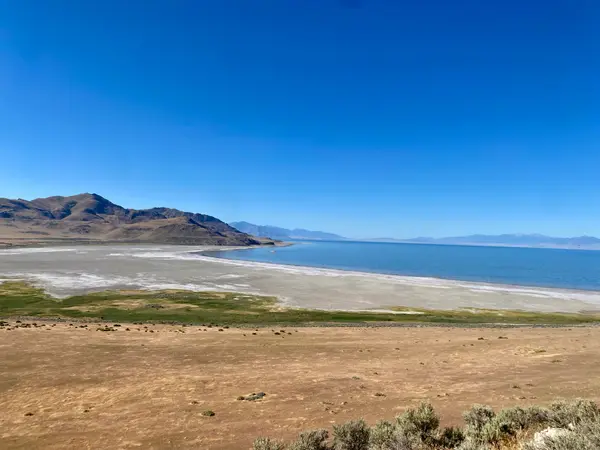
The Great Salt Lake has been shrinking for decades, hitting a record low just a few years ago — a level not seen since pioneers started recording it in 1847. It has recovered somewhat thanks to big snow years and genuine state effort. But as of early 2026, it's still well below healthy levels. The governor has publicly pledged to have the lake full by the 2034 Olympics. The legislature is spending real money — buying up water rights, leasing water from farmers, even acquiring thousands of acres of water from a bankrupt mining operation on the lake bed. This is one of the most aggressive saline lake recovery efforts anywhere in the world.
Here's where it touches your house. The old story everyone got taught was: it's the farmers. Agriculture uses most of the water. But the newest state data quietly dropped a bombshell: the share of water depletion coming from cities and industry jumped from under 17% to almost 27% in just one year's worth of revised estimates. As the population grows and we build more homes, our share of the problem grows with it. And it's not your shower or dishwasher — indoor use has stayed basically flat for decades. It's outdoor water. It's lawns. Big green grass on a desert lot.
How to apply this if you're buying new construction: Water is no longer a boring afterthought. Ask about secondary water. Ask about landscaping requirements. Communities and builders moving toward water-wise landscaping, smaller turf footprints, and drip systems aren't just doing a feel-good thing — they're protecting you from future restrictions and rate hikes, and they're far less likely to get tangled up in a growth-versus-water fight that delays your closing or your community's buildout. A xeriscaped front yard in Eagle Mountain in 2026 isn't a compromise. It might be the smart hedge.
Here's the divide that matters politically: one camp says growth itself is the threat and we should slow building down to save the lake. The other says smart development and conservation can coexist with growth — and the state's own numbers (falling per-person water use even as population climbs) back that up. If the slow-down-all-building side wins the political fight, the shortage we already have gets worse and prices go up, not down. The lake and your affordability are not actual enemies — but there are people who will tell you that they are. Watch that one closely.
Fight #4: The Point of the Mountain — Utah's $2 Billion Bet on Who This Place Is For
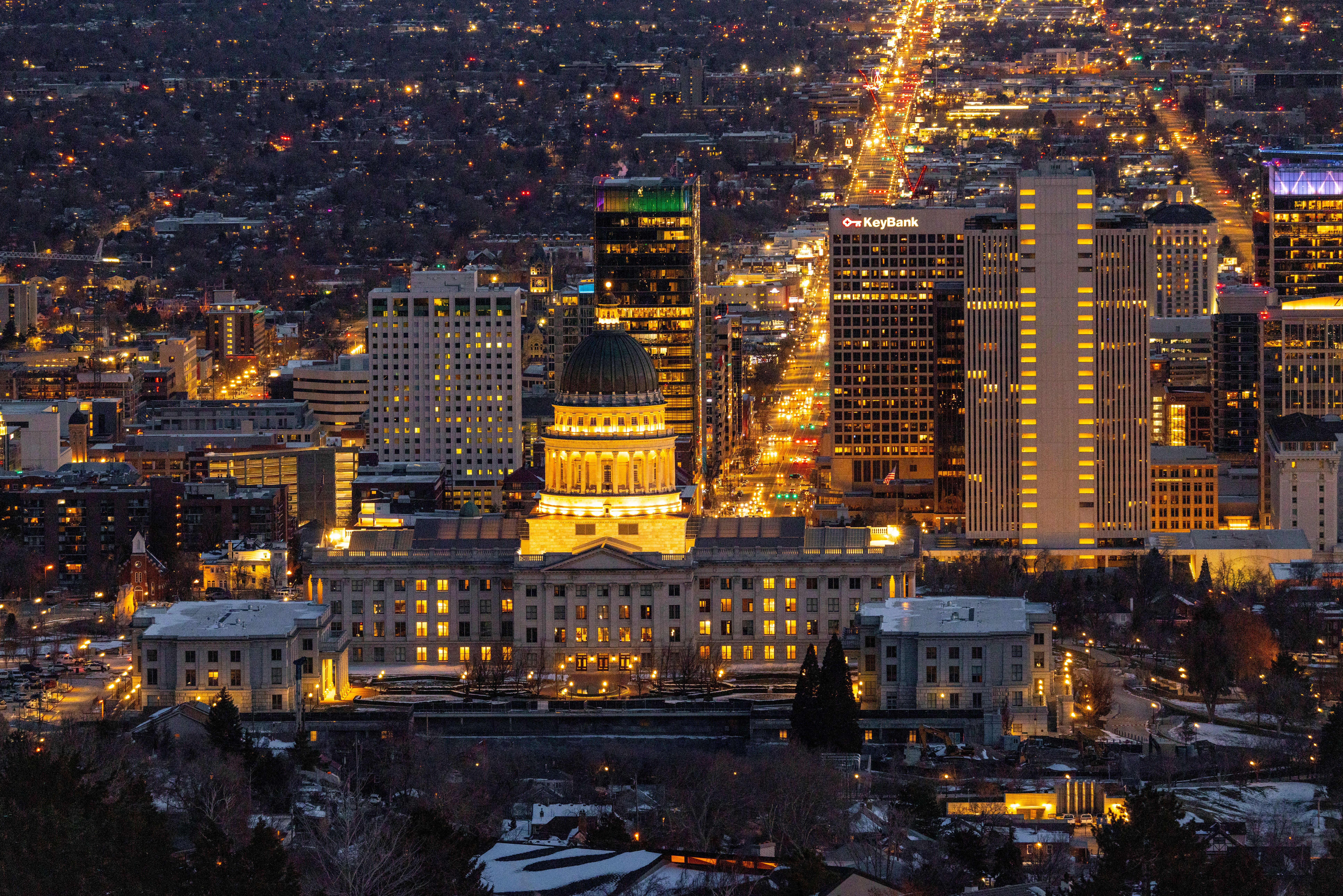
This is where every single thing we've discussed — density, who benefits, water, growth — collides in one place. The old Utah State Prison sat on more than 600 acres of state-owned land right at the Point of the Mountain in Draper, smack between Salt Lake County and Utah County — arguably the most valuable undeveloped land on the entire Wasatch Front. The legislature decided back in 2018 to turn it into what they're calling an innovation community: housing, offices, retail, transit, parks, the works.
After years of moving dirt and laying roads, 2026 is the year it finally goes vertical. The first real buildings start coming out of the ground. Phase 1 alone is a roughly $2 billion effort, with thousands of multifamily homes planned — and out of those, somewhere around 400 units are designated affordable housing. Sit with that ratio for a minute. Out of roughly 3,000-plus homes in the early phases, about 400 carry the affordable label. The rest are market-rate, the land itself is expensive, the state is leasing it on a 99-year deal, and the whole project reflects that premium.
When you hear the Point pitched as the answer to Utah's affordability crisis, be a little skeptical. It is a genuinely impressive, well-planned, badly needed addition of housing supply. It is not the affordability fix. Those are two different claims, and people who want your vote or your attention love to blur those lines.
How to apply this if you're a buyer or investor: First, if you're investor-minded and thinking about the south end of the valley, the Point is going to reshape Draper and surrounding submarkets for the next decade — the amenities, the jobs, the transit will lift values in a 2-to-3-mile ring. Watch the timing though; some buildings won't deliver until 2028 or beyond. This is a patience play, not a flip. Second, if you want a walkable, mixed-use lifestyle and you've been priced out of downtown Salt Lake City, keep an eye on the for-rent product here as it delivers — it's bringing a downtown-style lifestyle to the suburbs in a way that basically doesn't exist on the south end of the valley right now. Third, don't bank your personal affordability plan on those 400 affordable units. They'll be spoken for quickly and they're a drop in the bucket against statewide need. Plan around the market, not the headline.
The Point is the state of Utah physically answering the question I opened with: who is Utah for? The honest answer, looking at the plan, is: a lot of people — but built on premium land and reflecting premium economics, with a real but modest slice carved out for affordability. That's not a scandal. That's a trade-off made in public with your tax dollars. And it previews every big growth fight coming this decade.
The Framework: What Every Utah Housing Headline Actually Means
Here's everything tied together. The density war — the missing middle fight, the state overriding cities — isn't about neighborhood character. It's about who gets to live here next. Every no has a name attached to it. Out-of-state buyers are real in the luxury and resort pockets, but they're winning the shortage, not causing it. The real villain is the homes we never built. Water and the Great Salt Lake could be the quiet brake on all of this growth — but growth and conservation aren't actual enemies, and the people telling you they are might price you right out. And the Point is Utah's $2 billion answer to who this place is for: genuinely great supply, but not the affordability miracle it sometimes gets sold as.
The pain point most buyers feel — that the whole state is rigged and you're the only one who didn't get the memo — here's the truth: it's not rigged against you. It's that almost everybody is arguing about the wrong thing. And that fog is what actually costs people money. You came in thinking the story was greed and villains. The real story is a structural shortage that everything else just orbits around. We need more homes to sustain not only the growth of people moving to Utah, but the growth happening within it — the youngest state in the nation, building families and buying homes.
Thinking About Buying, Selling, or Moving to Utah? Let's Talk.
My team and I work exclusively with buyers navigating the Utah real estate market. We help you cut through the noise, match the right neighborhood to your specific lifestyle and priorities, and make sure you're buying from a position of clarity — not FOMO.
Whether you're zeroing in on Salt Lake City homes, Utah County new construction, Draper real estate, or somewhere else entirely, the process starts with a conversation. The call is free. Getting the wrong answer on a home purchase is not.
Book a call with us HERE — free 30-minute consultation
Check out our relocation guide HERE
Subscribe to our weekly newsletter HERE
Scott Steele | HOME@TheUtahReel.com | 801-680-8050 | www.TheUtahReel.com
Categories
Recent Posts