Moving to Utah: 10 Things Nobody Tells You Until After You Close
Moving to Utah: 10 Things Nobody Tells You Until After You Close
I have never had a client move to Utah and tell me they regret it. Not once. But I have had plenty of them sit across from me about six months in and say some version of the same sentence: "Why did nobody tell me that?"
It is never a complaint. It is that specific, slightly annoyed tone people get when they find out there was a thing they could have known, it was knowable, and nobody said it out loud.
So that is what this is. Ten things people wish they had known before moving to Utah. Not the tourism version, and not the ten-reasons-Utah-is-amazing version, because you can find four hundred of those and they will not help you. These are the things that show up after the moving truck leaves — the stuff on a tax notice, a water bill, an inspection report, a builder's contract. The stuff that costs real money, or costs you the house you actually wanted.
Nobody moving here is short on information. You are drowning in it. There is a video telling you Utah is the best kept secret in America and another telling you it is ruined, and both were made by somebody profiting off one extreme or the other. What is missing is the boring, mechanical stuff. That is what is below, ordered the way I would actually tell you: money first, then the house, then the geography, then how the state works day to day, and then the one that decides whether you get the house at all.
1. The Envelope From the County You Cannot Throw Away
Utah genuinely does have low property taxes. Effective rates here run about 0.4% to 0.55%. Texas is around 1.4%, and that gap is a big part of why some of you are reading this.
Here is the part nobody explains. That low rate only looks that low because of the primary residential exemption. Utah exempts 45% of the fair market value of your home, plus up to one acre of land, from taxation. So a $600,000 house is taxed as if it were worth $330,000. That is not a rounding detail. That is most of the reason Utah looks so cheap on paper.
Now the trap. That exemption is for primary residences only. A second home, a cabin in the mountains, a short-term rental, a place you bought for a kid at school — none of those get it. They are taxed on the full 100%, which means the effective rate roughly doubles. I have watched people buy a mountain place or a rental, budget the tax at the rate they saw quoted online, and then open a bill nearly twice what they penciled out.
There is a second version of this that is even easier to trip over. In several counties, when a property changes hands the assessor sends out a residential property declaration and gives you a short window to send it back confirming you actually live there. You are new, you are unpacking, it looks like junk mail, you toss it — and the exemption comes off your own primary home.
So here is what I tell every client: open every envelope from the county for the first 18 months. All of them. And if you are buying anything that is not your primary home, run the numbers on the full value, not the exempt value.
2. Two Water Bills, and the Meters Going In Right Now
In a lot of Utah neighborhoods, water reaches your house through two completely separate systems. One is culinary water, the treated drinking water you would expect. The other is secondary water, which most people here call pressurized irrigation — untreated canal, river, or reservoir water piped through a separate set of lines to a separate spigot. It is what runs your sprinklers.
If you have never lived with secondary water, it is strange the first time. You have a second valve. It gets turned on in April and shut off in October. You will hear neighbors talk about "the water being on" like it is a season, because it is one.
Here is why it matters to you as a buyer. For decades most secondary water in this state was completely unmetered. You paid a flat seasonal fee and used as much as you wanted, and Utah ended up with some of the highest per-person water use in the country. That is changing right now. The state has been funding and mandating secondary meters across the Wasatch Front, and district after district has been installing them.
The reason is not a mystery. Utah reservoirs sat at 64% this past July, 11 points below normal for that month. More than 40% of the state is in extreme or exceptional drought. The Great Salt Lake is sitting around 4,191 feet, still well inside the range the state itself calls seriously harmful.
Two things follow for you. First, a house with secondary water rights is worth more than an identical house without them, and that almost never shows up in the listing. Second, if you buy a big lot with big landscaping and the meter goes in the year after you close, your water cost is going up, not staying flat. Ask about it before you write the offer, not after.
3. Radon: Utah Has a Lot of It, and Your Inspection Will Not Catch It
Radon is a colorless, odorless, radioactive gas. It comes out of the soil, gets into houses through the foundation, and it is the leading cause of lung cancer in people who never smoked. Utah has a lot of it. Uranium in the rock and soil — the same geology that makes this state so beautiful — is the culprit.
Of the Utah homes tested between 2015 and 2025, 48.3% came back high enough to warrant a mitigation system. That is almost half. Utah County is 52%. Summit County, which includes Park City, is 50% even. The EPA's action level is four picocuries per liter, and they tell you to think seriously about mitigating at two.
Here is the part that actually costs people: a standard home inspection does not test for radon. It is a separate test, an add-on, and a lot of buyers either do not know to ask or skip it because they are already a few thousand dollars into inspections and appraisals they are tired of paying for.
Do not skip it. This is the cheapest test you will ever buy relative to what it tells you about the home. And new construction is not exempt — I have seen brand new homes test high. It is geology, not craftsmanship. Some builders install a passive mitigation pipe during construction, which is great, but passive is not the same as active, and a passive system that was never tested is just a pipe. If a house does test high, mitigation is usually a one-day job with a fan and a vent stack.
4. Those Beautiful Brick Homes Sit on a Fault Line
Utah has some genuinely gorgeous older brick homes. The Avenues, Sugar House, downtown, Provo, Ogden's East Bench — thick brick, big trees, real character. People fall in love on the first walkthrough, and I understand why. I love them too. I just want you to know what you are looking at.
All of that is unreinforced masonry, or URM: brick or block stacked without steel reinforcement running through it. It holds up beautifully against gravity, which is why these homes are still standing a hundred years later. It does not hold up against sideways movement.
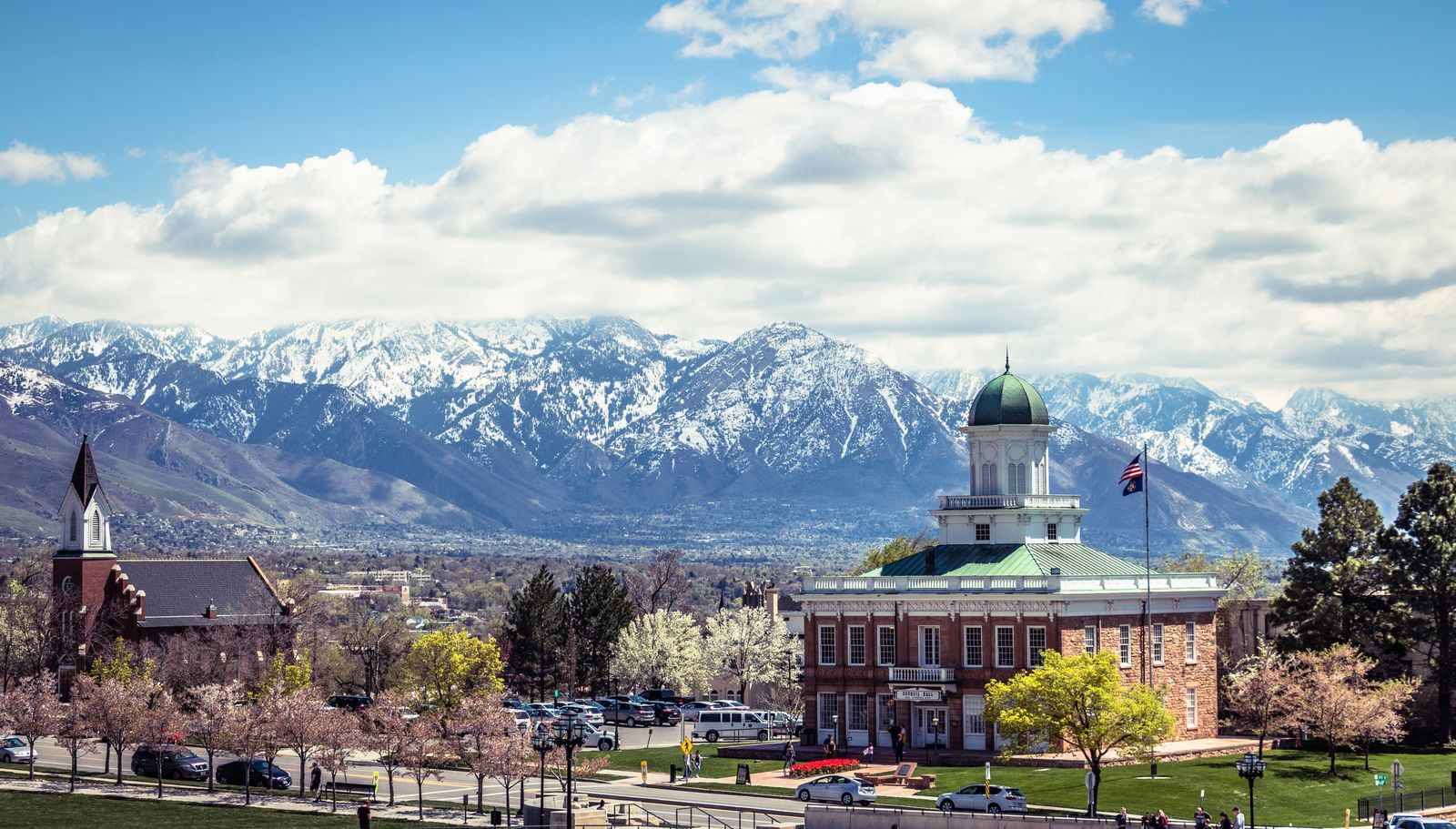
Utah's problem is that the Wasatch fault runs right along the base of these mountains, directly underneath the most populated part of the state. Geologists plan for an eventual earthquake somewhere around 7 to 7.5 in magnitude, and URM buildings are expected to account for about 75% of building losses in a major Wasatch Front event. Utah outlawed new URM construction back in the 1970s, which gives you a rough dividing line — homes built after that are generally engineered for seismic movement, and a lot of what came before was not.
I am not telling you to avoid old brick homes. Salt Lake City has run a retrofit program called Fix the Bricks for years precisely because retrofitting works. Bracing the walls to the roof and floor diaphragms is a real, established, permitted job. What I am telling you is to know what you own before you own it. When I walk an older brick home I am looking for visible bracing in the attic, whether the foundation has been touched, whether the chimney is still tied in, whether a previous owner did a retrofit and nobody ever mentioned it. That is a fifteen-minute conversation that changes the whole picture.
One more thing that catches almost every out-of-state buyer off guard: earthquake coverage is not in your standard homeowners policy. It is a separate endorsement you have to ask for, and roughly 18% of Utah homeowners carry it. I am not going to tell you what to do there. I am going to tell you to make a decision instead of an accident.
5. The Inversion Has an Elevation
You have probably read about the inversion. Let me tell you what it actually is, because the explanation changes how your house hunt should go.
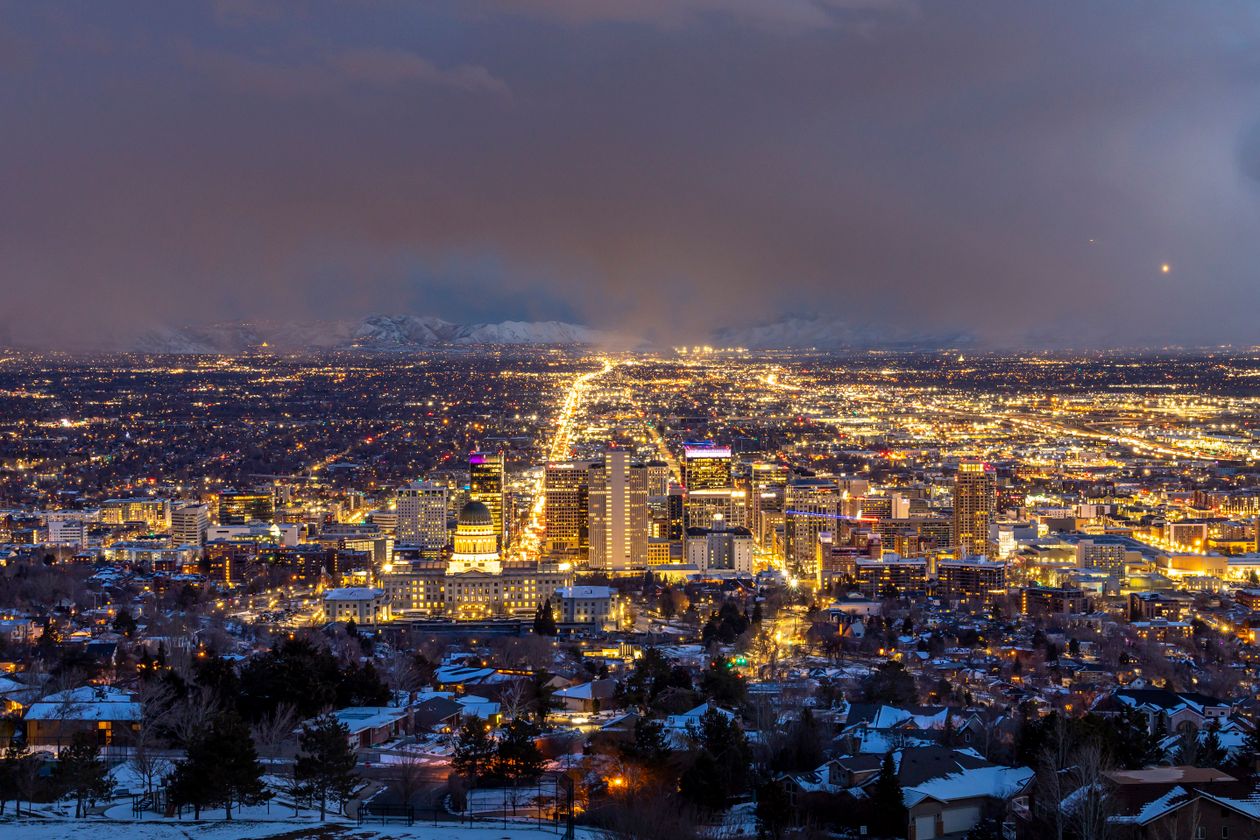
The Salt Lake Valley is a bowl with mountains on three sides. In winter, a layer of warm air settles on top of a layer of cold air and puts a lid on the whole thing. Everything the valley emits stays in the valley until the next storm blows it out. It does not clear on its own. It sits there and thickens until a storm scrubs it out.
This past January, Salt Lake City ranked as the worst air in the United States for several days running during one of those events. The American Lung Association's 2026 report grades this area an F for ozone, 13th worst in the country, and an F for short-term particle pollution. That is not a rumor. That is the measurement.
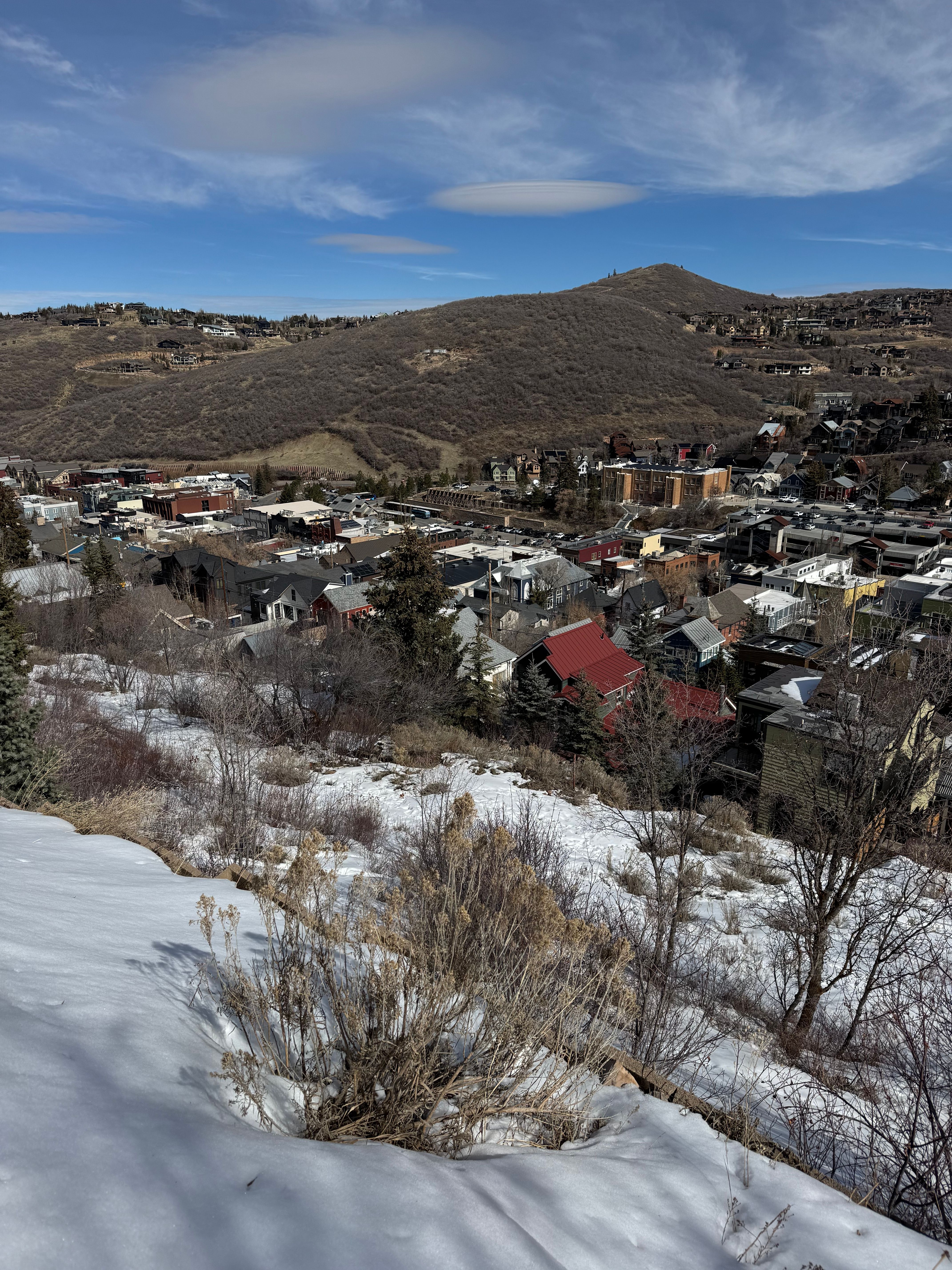
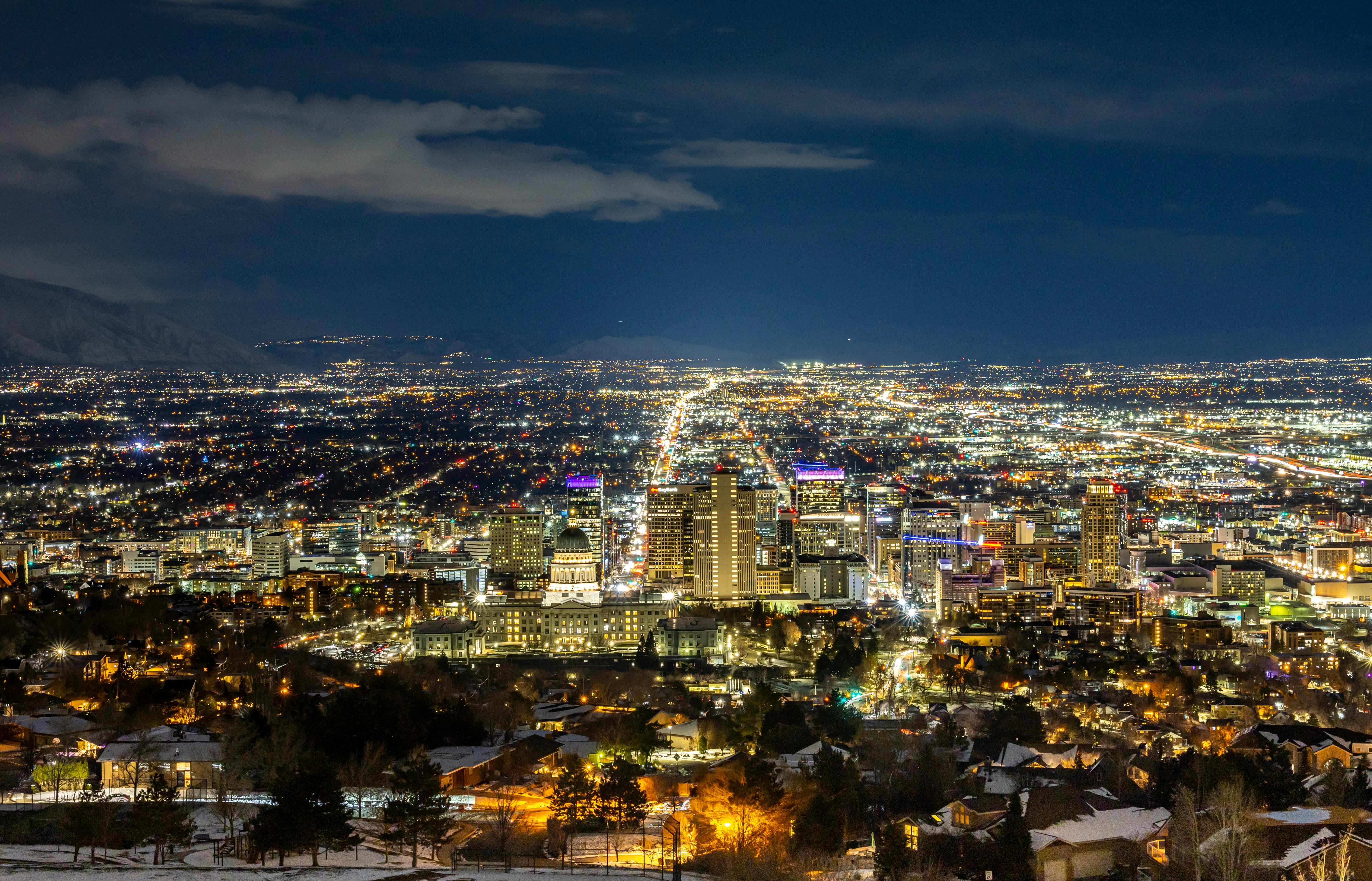
And here is the useful part almost nobody tells a relocating buyer: the inversion has an elevation. It has a top. Homes up on the benches, higher on the east side against the mountains, up in the canyons, or in Park City are very often above that layer looking down on it. Same city, sometimes the same zip code, completely different air on a January morning.
So if air matters to you — and for some of you it genuinely does — the question is not "is Salt Lake City bad." The question is where in the valley, at what elevation, and which direction the canyon winds run through that specific neighborhood. The honest flip side, because I said I would give you both: summer brings ozone instead, plus wildfire smoke from other states we cannot control. There is no perfect answer here. There is just a much better answer than the one you would get picking a house off the internet.
6. A 23-Minute Commute and One Road That Carries Everything
Utah's average commute is about 23 minutes. That is genuinely good, four minutes better than the national average, and it is one of the real quality-of-life wins here.
Now let me complicate it. Almost everything on the Wasatch Front funnels onto one road: I-15. It runs the length of the valley north to south, and for most trips there is no meaningful alternative. When I-15 has a problem, the whole region has a problem.
Which means we have to talk about construction. UDOT is running $2.8 billion of construction this year across more than 150 projects. The Farmington to Salt Lake City stretch of I-15 is in reconstruction. There is a $621 million freeway connection going in at 2100 North in Utah County, running through the end of 2028, connecting I-15 to the Mountain View Corridor through the heart of Lehi. There is a $385 million interchange project in Clearfield running into late 2027. All of that is great news for 2030. All of it is also your Tuesday morning commute between now and then.
Here is what I actually want you to do about it: drive the commute you will have, at the hour you will have it. Not at 11:00 on a Saturday morning when you are out looking at houses with me — at 7:15 on a Wednesday. And the Point of the Mountain, that pinch between Salt Lake County and Utah County around Draper and Lehi, deserves its own warning. On paper it is a short hop. At rush hour it is not, and people who bought in Utah County planning to work in Salt Lake County sometimes learn that the expensive way. One more, and this one is actually fun: on a big powder day the canyon roads back up hard. If you buy near a canyon mouth, that is your street.
7. School Boundaries Do Not Follow City Lines, and Alpine Is Splitting Into Three
Two things about schools here, and I am going to stay strictly on geography and administration, because that is where the useful information is.
First, and this is true everywhere but it bites harder in Utah because of how the valleys are laid out: district and school boundaries do not follow city lines. You can buy in one city and be zoned to a school in the next one over. Two houses across the street from each other can feed different schools. The listing will tell you what the agent believes. The district office will tell you what is true. Verify with the district, in writing if you can.
Second, and this is the big one right now: Alpine School District is splitting into three separate districts. Alpine has been one of the largest districts in the state, covering a huge chunk of northern Utah County. Voters approved splitting it up, Utah County approved the boundary maps, new school boards were elected last November and seated in December, and the new districts begin operating in the 2027 school year.
So if you are buying in Lehi, American Fork, Highland, Eagle Mountain, Saratoga Springs, Orem, Pleasant Grove, Lindon, Vineyard, or parts of Draper, the district you are buying into is not the district that will exist when your kids start school. Boundaries, budgets, boards, tax rates — all of it is in motion. That is not a reason to avoid Utah County. It is a reason to ask a much better question than "how are the schools?"
8. New Construction: The Base Price Is Not the Price
Utah builds a lot of new homes — at the highest rate in the country over the last decade. In some of the fastest-growing cities out here, new construction is not an option you consider, it is most of what is available. And builders in this market are competing pretty hard right now: rate buydowns, closing cost credits, incentive packages. Some of those deals are genuinely excellent. I am not anti-builder at all. I just want you to know how the numbers work.
The base price on the sign is the base price for the house. It is frequently not the lot, because desirable lots carry a premium. It is usually not the landscaping — and in a lot of Utah communities your contract or your HOA gives you a deadline to get the front yard landscaped after you close, which means that is not a someday expense, it is a this-summer expense with a date attached. Fencing is almost never included. Window coverings usually are not. People move into a brand new house and discover they need about $15,000 they had not planned for, just for those things.
Then there is the HOA. Check whether there are two. A lot of the master-planned communities out here have a sub association for your specific neighborhood and a master association for the whole development, and you pay both.
And now the one that costs the most. If you walk into a builder's model home by yourself and sign at that desk, in a lot of cases you have just registered with that builder, and you may have given up your ability to bring your own representation into that transaction later. The person at the model home is lovely and usually great to work with, but they work for the builder. That is their job. They are not on your side of the table and they are not supposed to be. Bring a good agent with you the very first time you step into a model home — whether that is me or anybody else who knows new construction. And walk the house before drywall goes up if the builder will let you, because that is the only chance anybody gets to see how it is actually built.
9. Sundays, State Liquor Stores, and 8% Humidity
This one is purely practical. No judgment in it, just logistics that catch people.
Sundays are quieter here than in most of the country. Not everywhere and not uniformly, but in a lot of neighborhoods, particularly outside the urban core, more businesses are closed and the streets are noticeably calmer. If Sunday is your errand day, that will adjust.
Alcohol works differently too. Liquor and full-strength wine are sold through state stores, and those stores are closed on Sundays and holidays. Grocery stores carry beer up to a certain strength and that is it. Restaurants can serve you, but the rules around it are their own thing. None of this is a problem. It is just different from what you are probably used to, and it is better to find out now than at 4:00 on a Sunday afternoon when you are hosting people.
There is a practical geography piece as well: many neighborhoods are organized around a local congregation and a nearby chapel, and that shapes ordinary things — where parking fills up on Sunday morning, which weeknight the youth activities happen. If you tour a house on a Sunday, the street will look different than it does the rest of the week, in both directions.
And the last piece: this is a dry, high-elevation state. Your first winter you will want a humidifier. Hardwood floors and trim can shrink and gap in a way you may not be used to. I have had people call me convinced the builder did something wrong when the house was just doing what houses do in 8% humidity.
10. How You Buy Here Decides Whether You Get the House
This is the one I made the whole video for.
Salt Lake County just set a record high of $645,000 for a single-family home, up almost 5% year over year. Utah County is at $600,000. Davis County is $568,000. Weber County is $499,000. Average days on market in Salt Lake County is 48.
Forty-eight days sounds relaxed. It is not, because that is an average across everything, and this market is split down the middle. The upper end is soft and sitting. The entry and mid-level, which is the stuff most of you are shopping for, still moves in a weekend when it is priced well and shows well. So people come from a slower market, read a headline that says Utah has cooled off — and it has — write a careful offer on a good house, and lose it.
Here is what that means for you. Utah's standard purchase contract is built around deadlines, and it moves faster than the contracts a lot of you are used to, especially coming from the East Coast. You get a due diligence period to inspect and investigate. There is a separate deadline for financing and appraisal. And when the due diligence deadline passes, your position changes materially — your earnest money is exposed in a way it was not the day before.
That structure rewards people who are ready for it, and it is genuinely unkind to people who are still deciding. If you are flying in for a weekend, touring nine houses, and hoping to think about it for a week, the calendar will make the decision for you.
So here is what ready actually looks like in Utah: a fully underwritten pre-approval, not a pre-qualification letter, ideally with a local lender who has relationships here. Inspectors lined up before you need one. A radon test ordered as a matter of course. And clarity on what you would walk away from and what you would not, decided in advance, in the calm — not in the hour after you fall in love with a kitchen. That is the difference between the people who get the house and the people who tell me about the one they lost.
Who Should Not Move to Utah
One more, and this one costs me clients, which is fine.
If clean air is non-negotiable in your life, sit with those grades before you fall in love with a house here, not after. If you or your kid has asthma, that is a real conversation with a real doctor. If you are coming here to escape water problems, understand that we are managing a hard one of our own — 64% reservoirs and a lake that is still too low is not a safe harbor, it is a state working the problem. And if you need a dense, walkable city with real nightlife, Salt Lake City is a great small city, but it is not that. Some people arrive expecting Denver or Seattle, and it is not those places either.
I chose it here, and I would choose it again. I love Utah. I would just rather you hear all of this from me in August than find it out for yourself in February, after you have already moved.
None of that is a reason not to come. All of it is a reason to come prepared.
Thinking About Moving to Utah? Let's Talk.
Utah is one of the fastest-growing states in the entire country, and navigating the cultural landscape alongside the real estate market takes genuine local expertise. Whether you're considering Salt Lake County, Utah County, Davis County, or further out — finding the right neighborhood for your lifestyle, budget, and long-term goals makes all the difference.
My team and I work exclusively with buyers and sellers navigating the Utah real estate market. We help you cut through the noise, match the right submarket to your specific lifestyle and priorities, and make sure you're buying from a position of clarity — not FOMO.
Book a call with us HERE — free 30-minute consultation
Check out our relocation guide HERE
Subscribe to our weekly newsletter HERE
Categories
Recent Posts