How High-Profile Buyers Buy a Home Discreetly in Park City, Utah
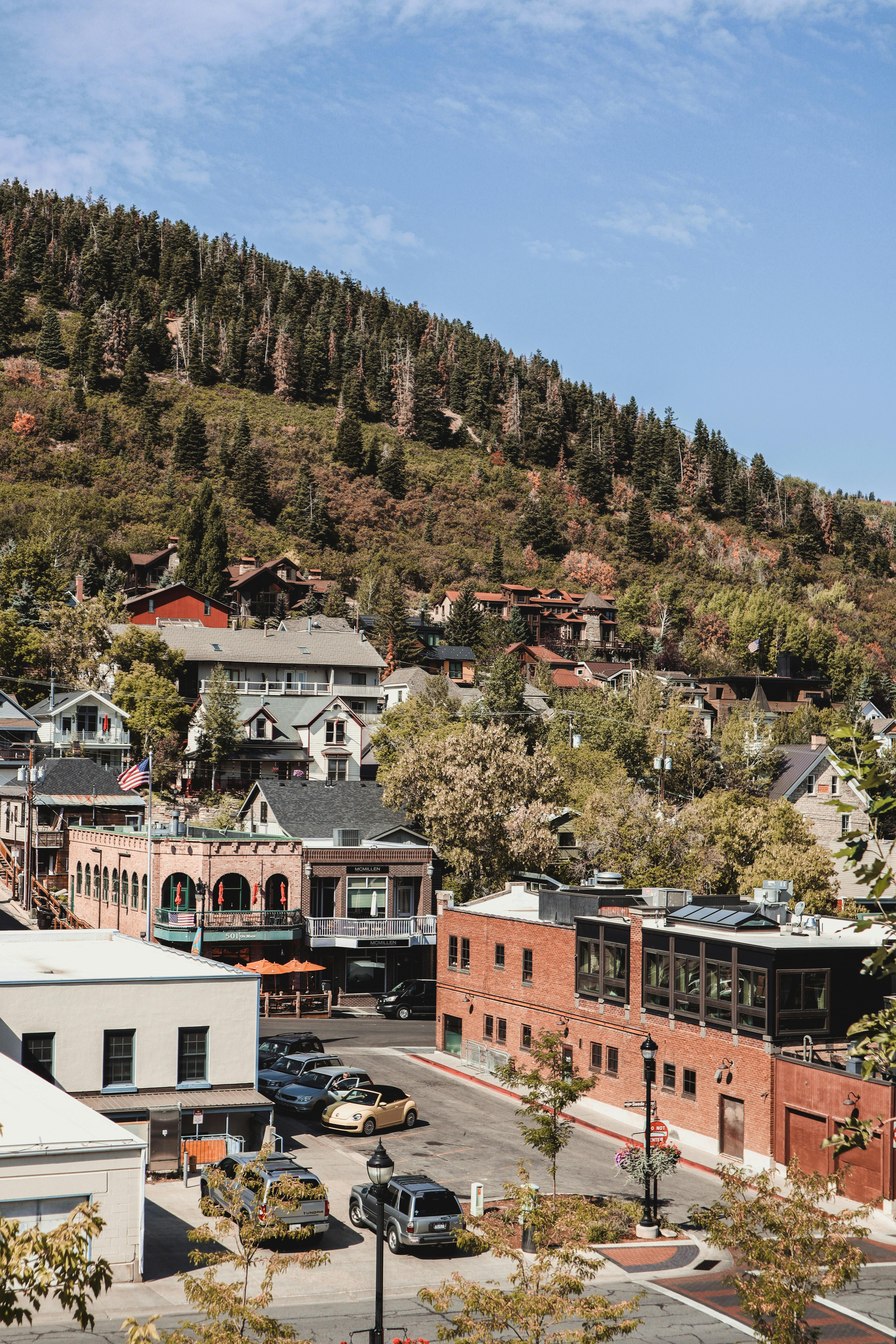
How High-Profile Buyers Buy a Home Discreetly in Park City, Utah
A few years ago, a buyer flew into Park City, toured four homes in two days, and went home without making an offer. A week later his assistant called me. He wasn't worried about price. He was worried because somebody at a restaurant in town had already asked him which house he was going to buy, and he hadn't told a soul.
That's how fast word moves here. Park City feels big when you're skiing it. It is very small when you're shopping for a home that costs eight figures. Agents talk, showing apps keep logs, title paperwork passes through a lot of hands, and the county records your name on a deed for anyone to look up. So if your name carries weight, or you simply value your family's privacy, buying here quietly takes a plan.
Here's what I believe: privacy in Park City isn't about hiding. It's about controlling who knows what, and when. Most people think it comes down to one trick, usually "just buy it in an LLC." That helps, but on its own it's a little like locking the front door and leaving every window open. Real discretion has layers, and each one comes with honest trade-offs.
Layer 1: Your Name on the Public Record
When you buy a home in Utah, the deed is recorded with the county recorder. In Park City that's usually Summit County. If you're buying on the Wasatch County side, in places like Tuhaye, Victory Ranch, Red Ledges or Deer Valley's East Village, it's Wasatch County. That record is public, and so are the assessor's ownership information and parcel maps. Anyone with a laptop and ten minutes can type in an address and see whose name is on it.
The good news a lot of buyers don't know: Utah is a non-disclosure state. The deed is public, but the price you paid is not part of the public record. At this level, the number is often what gets talked about most, so that matters.
The obvious move is to buy through an entity, like an LLC, a trust, or a combination. Here's the mistake I see most. Someone sets up a revocable trust for estate planning and takes title in it, but the deed reads something like "John and Sarah Smith, trustees of the Smith Family Trust." Their names are right on the deed. The trust did its estate planning job and nothing for privacy. Same idea with an LLC named after your last name plus "Holdings." And depending on how an entity is set up and where it's registered, state business records can show a manager, member or organizer. Many private buyers end up with a structure where an attorney or professional manager appears on the public filings instead. Whether that's right for you is a conversation with your attorney, not with me.
Instead of asking "Should I use an LLC?", walk into your attorney's office with these questions:
If someone searches the county records for my name, what comes up? If someone searches the property address, whose name shows up on the deed, the assessor record and the state business registry? Does this structure still work for financing, insurance and my estate plan? If I want primary residence property tax treatment, what do I have to sign, and who sees it?
That last one matters. In Utah, a primary residence gets a significant property tax break compared to a second home, and some buyers chase maximum privacy and accidentally make that harder to claim. Talk to your CPA before you pick a structure, not after you close.
One more, and it's been moving around. A federal FinCEN rule requiring reports on all-cash residential purchases by LLCs and trusts took effect March 1, 2026, and a federal court in Texas vacated it a few weeks later. As this video was recorded, FinCEN said no reports were required, but it could come back. Even if it does, those reports go to the federal government, not the public. Your title company will know the current status on the day you close, so ask them.
The honest downside: entities cost money and add paperwork every year, and a lender will often want a personal guarantee, which puts your name in the loan documents. If you finance, the deed of trust gets recorded too. Paying cash through a properly set-up entity is usually the most private path. That's not right for everyone. It's just how it works.
Layer 2: Off-Market Access Without Losing Your Leverage
At the top of this market, some of the best homes never show up on a public website. The owner may not want photos of their kids' bedrooms online, or may not want the town knowing they're selling at all. So the home trades quietly, agent to agent, sometimes with a confidentiality agreement before you even get the address.
The rules here have changed. The National Association of Realtors created formal options for sellers who want to hold back from public marketing: an office exclusive, where only agents inside one brokerage can share it, and delayed marketing, where the listing is in the MLS for agents but kept off public sites for a period. The seller has to sign off on either one, each local MLS sets its own details, and the Park City MLS rules have been shifting. This is exactly where you want an agent who is current.
What buyers don't hear enough: off-market is not automatically a good deal. The seller skips the open market, which means fewer competing buyers, but also means you don't have that competition telling you what the house is really worth. At $10, $15, $20 or $30 million there may only be a handful of true comparable sales, and because Utah is a non-disclosure state, the public can't see those prices at all. Pricing becomes an argument, not a formula. If your agent can't build that argument from real closed data, you're taking the seller's word for it.
I've also seen the "secret listing" pitch used as a sales tactic. Sometimes the home just didn't sell when it was on the market a year ago. That's recycled inventory with a velvet rope around it. If you want off-market access, which most private buyers should, here's how I'd handle it: sign the NDA through your entity or your attorney rather than personally when you can, ask for the listing history, ask for the closed comps your agent is using and why, and be willing to walk. Nobody knows you're shopping, so nobody knows if you leave.
Layer 3: Touring Without Starting Rumors
Most rumors start in the first ten minutes of the first showing. The showing request goes into scheduling software with a name on it. The listing agent gets a notification. A house manager or housekeeper sees who walks in. The luxury agent community in Park City is not large, and people talk. If a seller learns exactly who you are and how motivated you are, that's leverage you handed over before you made an offer.
Here's how I set up a private search. I preview the homes first and record a private walkthrough video for you or your assistant, so half the homes get eliminated before you ever get on a plane. Showings are booked under my name or the entity's, not yours. When you do tour in person, we keep the group small and ask for the home to be empty. Proof of funds comes from your attorney, family office, or a bank letter that confirms capacity without listing your personal accounts, and offers and earnest money come from the buying entity.
Before real estate I spent years in construction, so a lot of what you'd normally learn poking around a house for an hour, I can find on my own walkthrough: roof lines and where snow will sit, signs of ice dams, how drainage moves water around the foundation, and how old the mechanical systems are. The trade-off is that you have to trust your agent's eyes more than you might be used to. A fully private search works best for people who know what they want and are happy to let someone else make the first cut.
Layer 4: Sightlines Matter More Than the Gate
A lot of buyers assume privacy means a gated community. Most of the big club communities, like Promontory, Glenwild, The Colony, Red Ledges and Victory Ranch, have a controlled entrance of some kind that keeps random traffic and sightseers off the roads, and for a lot of families that's worth a lot. But a gate only controls who drives in. It doesn't control who can see into your windows.
Ski-in, ski-out is the dream for many buyers, but a run next to the house means strangers riding past your windows all winter, and some lifts look right down onto decks and hot tubs. That's a great lifestyle. It's not a private one. Trails are the same in summer: if a public trail or easement runs behind the property, people will be walking and biking past your yard. A home on a main loop gets more traffic than one at the end of a cul-de-sac or up a long private driveway, and a house on a ridge has amazing views but can be seen from a long way off.
What I tell private buyers to check: stand on every deck and look out, then go stand where the public can stand, on the run, the trail, the road, and look back at the house. Review the lot map for trail and ski easements and any open lots next door that could be built on later. Look at lift and run maps, and know what's coming nearby, since Deer Valley's expansion to the east is adding new terrain and lifts. Mature evergreens can buy you privacy; new ones take years to fill in.
Some buyers decide privacy means acreage, not a gate. Land in a place like Wasatch County can give you more distance from neighbors than anything inside a club community, with the trade-off of drive time, snow removal on a long driveway, and distance from town. A walkable home in Old Town is close to everything, and you will be recognized walking down Main Street. There's no perfect answer. The point is to choose on purpose.
Layer 5: How You Arrive and What Shows Up at the Door
Park City has two very different ways in. Salt Lake City International Airport is about 40 minutes away, a real advantage over many mountain towns that rely on small regional airports. Heber Valley Airport is about 12 miles from Park City, with a runway of almost 7,000 feet, enough for a lot of private jets. Plenty of people fly commercial and never get recognized. But if people do recognize you, a private arrival into Heber lets you go from plane to car to driveway without walking through anything public.
A few practical things people forget: book car service through your house manager or assistant under the entity's name; have deliveries go to a separate address or your house manager, not to the home under your name; put utilities, internet and even trash service in the entity's name if your attorney sets it up that way; ask the major map services to blur the home; and if the home was listed publicly before you bought it, ask about getting the old interior photos taken down. You can't always erase every copy, but you can take down most of it. And plan for winter. In a big storm, Parleys Canyon can slow way down and private flights can be delayed, so have a four-wheel-drive vehicle or a driver who knows mountain roads.
Layer 6: The People Around Your Home
Most high-end Park City homes need someone keeping an eye on them while the owner is gone. Frozen pipes, ice dams, roof snow load or a boiler that quits in January can turn into a six-figure water damage problem in a house this size. So you'll have people: a house manager or caretaker, housekeeping, snow removal, maybe a chef or a property management company. Every one of them knows when you're home and who's with you, and one careless social media post or coffee shop conversation can undo all the planning.
Private owners handle it with confidentiality agreements for anyone who works in the home, which is normal at this level, plus vetting through referrals from owners they trust and background checks where appropriate. Give each person their own access code so you know who came and went and can shut off one person without changing everything. Keep security systems, cameras and smart home controls managed by someone accountable.
Then there's the branded residence path, places like the Montage, Stein Eriksen, the Four Seasons and the Waldorf Astoria, with a front desk, security and staff used to high-profile guests. The trade-off is a lot of people around: hotel guests, other owners and staff that changes over time. You're trading the privacy of being alone for the privacy of being protected. Some people love that; some find it feels more like a hotel than a home.
And I'll be straight about one more thing. If what you really want is to be invisible, Park City might not be your place. It's a small town, and you'll see people you know at the grocery store, on the mountain and at the kids' ski program. The families who are happiest here aren't trying to disappear. They set up the right protections and then get to live like normal people.
Layer 7: The Build or Remodel That Undoes Everything
This is the one I see blow up privacy more than anything else, long after closing. You can do everything right, then remodel the kitchen or build from scratch, and it all comes undone. I know this from the other side, because I spent years in construction and new home building before I ever sold a house, and a job site is one of the leakiest places on earth.
Building permits are public records that can show the property, the work and the owner or applicant. In many communities, plans go through an HOA design review committee made up of your future neighbors, who see your floor plan, square footage and sometimes your security features. On a big custom home you can have dozens of subcontractors and hundreds of people over a year or two, and every one of them has a phone. Trades are proud of their work and they post it. The tile setter shares your primary bathroom, the AV company shares your theater, sometimes tagged with the neighborhood. More importantly, the electrician knows where the panel is, the low-voltage installer knows where your cameras are and aren't, and the framer knows if there's a safe room.
Here's how I'd run a private build or remodel: pull permits through the entity with the builder or attorney as the contact where the rules allow; hire a general contractor who writes confidentiality, including a no-photos, no-posting rule, into every subcontract; split the sensitive work so the security designer and installer isn't the same crew doing everything else; keep the full security plan on as few sets of drawings as possible; ask design review what actually needs to be submitted; and keep the site quiet, with no signs bearing the owner's name and privacy-screened fencing if the lot is visible from the road.
Is it extra cost? Yes. A contractor who runs a tight, quiet site and enforces confidentiality usually isn't the cheapest bid, and a custom build already runs about $700 to $1,000 per square foot or more. But compared to having the inside of your home posted online with the neighborhood attached, it's a small price. You can't take that back once it's out there.
Bringing It Back to That Buyer at the Restaurant
He didn't do anything wrong. He just didn't have a plan for how quickly word travels in Park City. Buying discreetly here comes down to seven layers: keep your name off the public record the right way, use off-market access without giving up leverage, tour quietly and let someone else make the first cut, choose a location for real sightlines rather than just a gate, arrive and receive things without your name all over them, put agreements in place with the people around your home, and protect the job site as carefully as the closing.
If you're the buyer, or the assistant or family office doing the research for someone, a private, confidential conversation is the best place to start.
Watch the full video here: How High-Profile Buyers Buy Discreetly in Park City, Utah
This article is general information, not legal or tax advice. Talk to your own attorney and CPA about entity structure and tax treatment.
Thinking About Moving to Utah? Let's Talk.
Utah is one of the fastest-growing states in the entire country, and navigating the cultural landscape alongside the real estate market takes genuine local expertise. Whether you're considering Salt Lake County, Utah County, Davis County, or further out — finding the right neighborhood for your lifestyle, budget, and long-term goals makes all the difference.
My team and I work exclusively with buyers and sellers navigating the Utah real estate market. We help you cut through the noise, match the right submarket to your specific lifestyle and priorities, and make sure you're buying from a position of clarity — not FOMO.
Book a call with us HERE — free 30-minute consultation
Check out our relocation guide HERE
Subscribe to our weekly newsletter HERE
Categories
Recent Posts