Is Utah's Middle Class Being Pushed Out? The Real Numbers and the Paths That Still Work

Is Utah's Middle Class Being Pushed Out? The Real Numbers and the Paths That Still Work
If you're doing everything right in Utah right now, with a good job, showing up, saving what you can, and you still feel like the kind of house you grew up in is out of reach, I want you to hear this first. You're not crazy, and you're not behind. The math has changed.
Ten years ago, the median single-family home in Utah was around $249,000. Today it's around $560,000. In Salt Lake County, a household now needs to earn almost $187,000 a year to afford the median single-family home, and the typical household in that county earns far less than that. So when people ask me whether the middle class is getting pushed out of Utah, I understand exactly why they're asking.
Half the internet says the market is about to crash. The other half says buy anything with a roof before it's too late. Neither one helps you make a good decision. So here's an honest look at where the middle class actually stands in Utah real estate, why it happened, what it really costs, and what people with normal incomes are doing right now to get a home. Some of it stings. But this isn't a doom-and-gloom post. By the end, you'll have a plan.
A little context on me: I lead The Steele Group here in Utah, and before real estate I spent years in construction and new home construction. So I tend to look at homes differently than most agents, and that matters here, because a big part of this story is what it actually costs to build a house in this state.
The Timeline You Were Handed No Longer Matches the Market
Most of us were handed a timeline: finish school, get a decent job, maybe get married, and buy a house somewhere in your late 20s. That wasn't a fantasy. Back in 1991, the median first-time home buyer in America was 28 years old.
Look at what happened here. According to the Kem C. Gardner Policy Institute at the University of Utah, 91% of Utah renters are now priced out of the median-priced home. In 2015, that number was 59%. The estimated monthly payment on a median-priced Utah home was about $3,670 in early 2026, more than $1,200 a month higher than in 2021. Same kind of house, $1,200 more every single month.
It gets a little tougher than that. The report behind the $187,000 Salt Lake County income figure assumed an interest rate of about 6.4%. As this video was recorded, the national 30-year average was sitting around 7.3%.
You'll also see a headline that the median first-time buyer nationally is now 41, from a National Association of Realtors survey. Some economists push back and say credit data puts it closer to the mid-30s. Either way, the clock moved roughly a decade.
So if you're 31, renting, and feeling like a failure because your parents owned a house at 26 on one income, stop grading yourself on their scorecard. They played a different game. That isn't a character flaw. It's math. The first thing I do with buyers in this situation is take the median off the table. The median is not your house. Your number is what you can comfortably pay, where you're willing to live, and what kind of home gets you started.
Why Utah Got Squeezed Harder Than Most of the Country
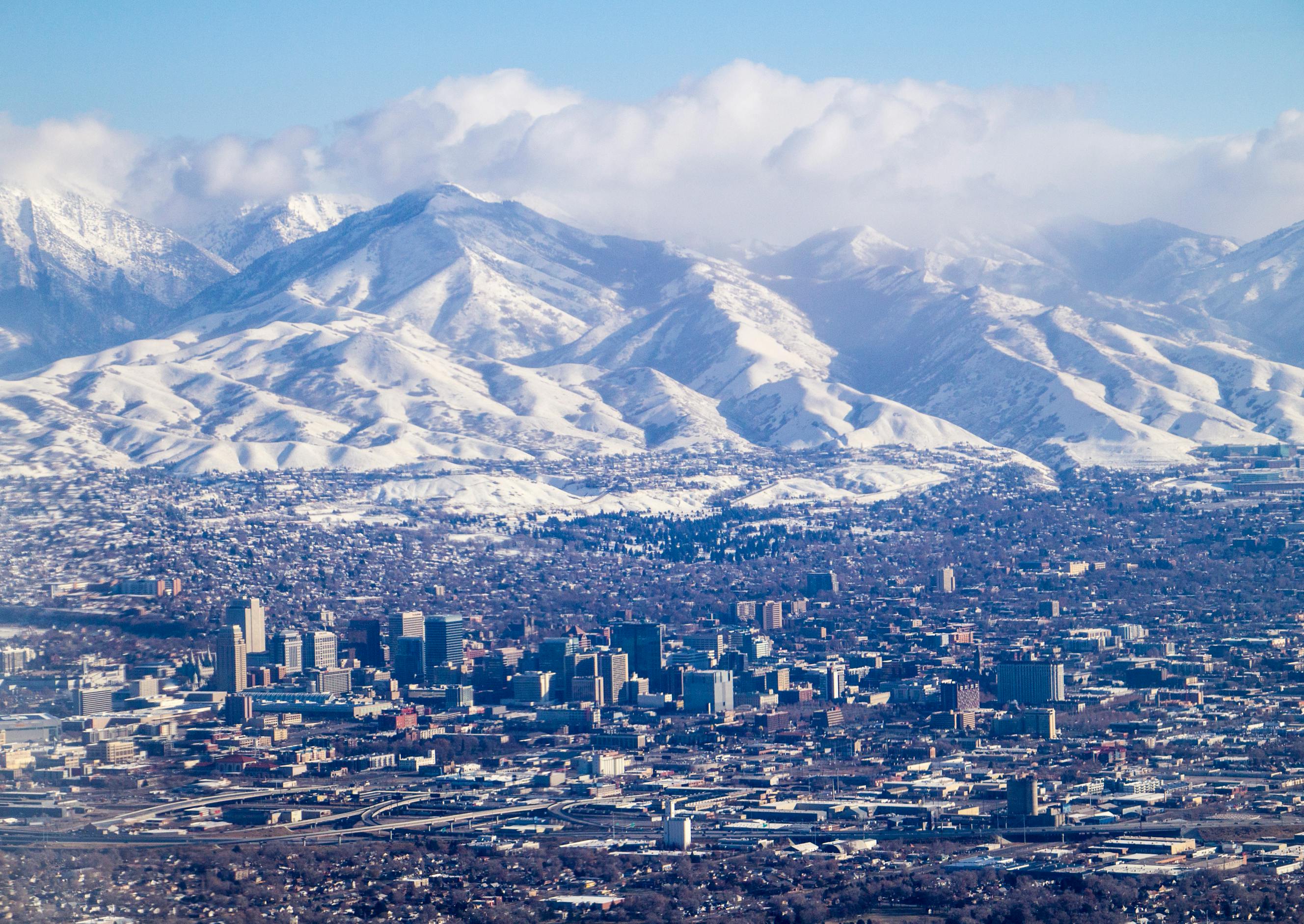
Pull up a map of the Wasatch Front and you'll see it right away: mountains on the east, the Great Salt Lake on the west, and a valley that pinches at the Point of the Mountain. We can't keep spreading across the desert the way Phoenix, Dallas or Houston can. There's only so much flat, buildable ground with water and roads already nearby. Much of the west side of the state is salt flats and desert, and much of the south is national parks, state parks and recreation areas.
Then put demand on top of that. People keep moving here, and a lot of the growth is homegrown, our own kids becoming adults and needing a place to live. The Kem C. Gardner Policy Institute projects that Utah County alone will roughly double to about 1.5 million people by 2065.
This is where my construction background kicks in. Before a single wall goes up, you've got land, entitlements and approvals, impact fees, water and sewer connections, roads and utilities. Then lumber, concrete, labor, and the interest a builder pays the whole time a project waits on a permit. A Weber County builder recently told KUER that you now pay more for an undeveloped lot than you used to pay for a finished one, and even taking less profit, his larger starter home is listed around $423,000.
So prices in Utah aren't high because someone is ripping you off at the closing table. They're high because land is limited, building is expensive, and demand doesn't stop. That's also why I'm honest about the crash question. A 2008-style collapse needs a flood of forced sellers. Back then, inventory was dramatically higher and people were in loans they couldn't afford. Today, most Utah homeowners are sitting on equity and low fixed rates. Could prices soften in some areas? Absolutely. Utah County's median actually dipped a little this year. But waiting for a crash to rescue you is a bet, not a plan.
The Costs Nobody Puts in the Budget
Most people shop with two numbers: price and rate. Then they move in and the real bills show up.
Insurance. In 2025, Utah had the highest home insurance non-renewal rate in the country, with about 1 in every 22 policies dropped by the insurer. We went from 17th worst to number one in a single year. Between 2021 and 2024, Utah premiums jumped around 59%, the biggest increase of any state according to the Consumer Federation of America. To be fair, Utah's average premium is still below the national average, but the direction matters, especially on the benches and foothills where wildfire risk is higher. Get a real insurance quote before you write the offer, not after.
HOA dues. A lot of the newer, more affordable product along the Wasatch Front is townhomes, condos and smaller-lot communities, and those usually come with an HOA. Sometimes that's a great deal because it covers exterior maintenance, snow removal and landscaping. Sometimes it's a few hundred a month you didn't budget for. Read the documents and look at the reserve study. A thin reserve today is a special assessment tomorrow.
Water. Depending on where you buy, you may have culinary water plus a separate secondary water bill for irrigation, and some cities are changing how they meter and charge for it. Know who your provider is and what it costs.
What's behind the walls. The cheapest house on the street is sometimes cheap for a reason: a roof at the end of its life, a 20-year-old furnace and AC, an older sewer line running to the street. Any one of those can be a five-figure surprise. Always get a full inspection, especially on an older home, and get a sewer scope. Budget for the total cost of owning the home, not the payment on the listing. The families who get hurt worst are the ones who stretch to the max and then get hit in year two.
The Good News Most People Missed: Renting on Purpose
You've heard it a hundred times: renting is throwing money away. Over a long enough timeline there's some truth to that. But right now in the Salt Lake area, renting has become one of the smartest moves a future buyer can make.
Salt Lake County went through an apartment building boom, with close to 9,000 new units delivered in 2024 and more than 7,000 in 2025. When that much supply hits at once, landlords have to compete for tenants. Salt Lake County rents have come down from their peak, and in downtown Salt Lake City vacancy has been around 13% with an average concession of about two months of free rent. A few years ago, people were fighting over apartments. Now apartments are fighting over people.
Here's how I'd use that if I were trying to buy in the next couple of years. Negotiate your lease. Ask for the concession, a longer rate lock, and waived fees. Then take the difference between your rent and what a mortgage payment would cost, and set it aside every month like it's already a house payment. That builds your down payment and proves to you and a lender that you can handle the payment.
The honest part: this window won't stay open forever. New apartment construction is falling off sharply in 2026, and once that supply is absorbed, rents will start climbing again. Renting on purpose, with a plan and a date, is a strategy. Renting by default with no plan is just drifting.
How Middle-Class Buyers Are Actually Getting In Right Now
The president of the Salt Lake Board of Realtors described today's buyers as getting "scrappy," and that's exactly what I see. The people getting in aren't waiting for the market to hand them a deal. They're stacking every advantage they can find.
1. The state first-time buyer program. Through Utah Housing Corporation, qualifying first-time buyers can get up to $20,000 toward a newly built home. It's a zero-interest deferred loan you can use for your down payment, closing costs, or to permanently buy down your rate. There are price limits and rules, and funding depends on the legislature, so check the current details.
2. Local programs. Utah County has a Loan to Own program with up to $40,000 in down payment assistance in many of its cities. Not every city qualifies, so ask. Most buyers never hear about these programs because nobody tells them to look.
3. Builder incentives and rate buydowns. A lot of builders right now will pay to buy your rate down for the first couple of years, or better yet, permanently. My contractor warning: make sure the incentive isn't just baked into a higher price, and compare the builder's preferred lender against at least one outside lender. Sometimes a straight price reduction is the better deal.
4. The type of home. In Salt Lake County, the median condo sold for around $418,000 this spring, down from last year. A townhome or condo isn't settling. It's the first rung on the ladder, and it starts building equity while everyone else is waiting.
5. Geography. Inside Salt Lake County alone, the median single-family home ranges from about $497,000 in West Valley City to around $925,000 in Draper, and the income you'd need ranges from roughly $148,000 to about $260,000 a year. Outside the county, Tooele and Weber County medians are both under $500,000. The trade-off is usually time, so look hard at commute corridors like I-15, Bangerter Highway, the Mountain View Corridor and FrontRunner. Sometimes 20 extra minutes in the car is worth $150,000.
6. Family and house hacking. More families are buying together, with parents and adult kids under one roof, or buying a home with a basement apartment that helps cover the mortgage. Not everybody has that option, and there's no shame either way. But if you do, it's a legitimate strategy.
The buyers getting in right now usually aren't the ones with the biggest incomes. They're the ones who got flexible on one thing: location, home type, or timeline. You don't have to give up all three. Just pick one.
Where the Future of Utah Housing Is Headed
The state of Utah's own housing plan, finalized at the end of 2025, calls housing affordability the single greatest threat to Utah's prosperity and future. That's the state saying it, and I agree. A recent quality-of-life survey ranked housing affordability dead last out of 20 factors, with the lowest overall score since that survey began in 2011.
A couple of years ago, the governor set a goal of 35,000 new starter homes priced at $450,000 or less by the end of 2028. At the halfway point this year, about 7,900 had reportedly been built, most of them in Utah County. In fairness, homes take years to plan and build, and some bigger changes only recently kicked in. Lawmakers set aside $250 million for grants and loans to help cities build the infrastructure new homes need, and the state is lining up developers to build on leftover land. Most of that shows up in 2027 and 2028, not this year.
Then there are rates. Nobody can promise where they go next, and anybody who says they can is guessing. The Salt Lake Board of Realtors ran the numbers: a one-point drop in rates would lower the income needed for a median Salt Lake County home from about $187,000 to about $172,000. That helps. It doesn't fix the problem.
Here's my honest read: not a crash, but a slow grind. Prices going up modestly, what the Kem C. Gardner Policy Institute has described as running in place. More townhomes, more condos, smaller lots, and a lot more building on the west side of the valleys and down in Utah County. Relief will come through smaller homes, new areas and programs, not through the house you grew up in getting cheaper.
The Middle Class Isn't Disappearing. It's Moving.
When people say the middle class is being pushed out of Utah, most of us picture families loading a moving truck for Idaho or Texas, and some are. That's real. The same Weber County builder talked about families whose kids moved away for work and a home they could afford, and now the grandparents are getting to know the grandkids over FaceTime. As a dad, that one hits me.
But the bigger story isn't that the middle class is leaving. It's that it's moving in three directions:
On the map. Starter homes are being built in Utah County, on the west side of the Salt Lake Valley, out toward Tooele, and up in Weber and Davis counties. The middle-class neighborhoods of the next 20 years are being framed right now in places a lot of people haven't even driven through yet.
In the type of home. Townhomes, condos, smaller lots, homes with a basement apartment. The first house is getting smaller, and that's okay. It's a starting point, not a forever home.
On the timeline. People are buying a little later, renting on purpose first, getting help from family, and moving up once they've built equity. That first step matters more than people think. The National Association of Realtors estimates that putting off buying from age 30 to age 40 can cost around $150,000 in equity on a typical starter home. The goal isn't the perfect house. The goal is the first rung on the ladder.
Who Probably Shouldn't Buy Right Now
I promised honesty, so here it is. If your heart is set on a single-family home with a big yard in Holladay or Draper on one median income, I'm not going to sell you that dream. If you can't see yourself staying put for at least five years, renting with today's concessions is probably the smarter move. If buying means draining every dollar of savings at a 7% rate with nothing left for a broken furnace, wait and build a cushion first. And if you're moving to Utah from out of state expecting it to be cheap, it isn't anymore. It can still be a great move, especially compared to the coasts, but run the numbers against the job you'll actually have here.
If you're willing to get flexible on the map, the home or the timeline, there's a path. I see middle-class families buying homes in Utah every single week, not the way their parents did it, but their own way. The old version of the dream, one house on one income by 28 in the neighborhood you grew up in, is mostly gone. The dream itself, a home that's yours in a place you love, close to the people you love, is still very much alive here. It just has a new address and maybe a few more steps.
Watch the full video here: The Middle Class in Utah and the Future of Utah
Thinking About Moving to Utah? Let's Talk.
Utah is one of the fastest-growing states in the entire country, and navigating the cultural landscape alongside the real estate market takes genuine local expertise. Whether you're considering Salt Lake County, Utah County, Davis County, or further out — finding the right neighborhood for your lifestyle, budget, and long-term goals makes all the difference.
My team and I work exclusively with buyers and sellers navigating the Utah real estate market. We help you cut through the noise, match the right submarket to your specific lifestyle and priorities, and make sure you're buying from a position of clarity — not FOMO.
Book a call with us HERE — free 30-minute consultation
Check out our relocation guide HERE
Subscribe to our weekly newsletter HERE
Categories
Recent Posts