Best Places to Live in Utah: A Complete Wasatch Front Neighborhood Guide
Best Places to Live in Utah: A Complete Wasatch Front Neighborhood Guide
Planning on moving to Utah and trying to figure out where to actually live? You are not alone. It is one of the most common questions people have when relocating to Salt Lake City or anywhere along the Wasatch Front, and it is also one of the hardest to get a straight answer on.
This guide covers every major area along the Wasatch Front so that anyone moving to Utah can make a confident, informed decision about where to plant roots. Whether you are relocating for work, family, outdoor access, or simply a better quality of life, understanding how this corridor works will save you months of confusion and potentially a very expensive mistake.
What Most People Moving to Utah Get Wrong
Most people approaching a Utah relocation think of Salt Lake City as a single city. The logic is simple: find a zip code near the job, check the school ratings, find something in the budget, and move on.
The problem is that Salt Lake City does not work that way.
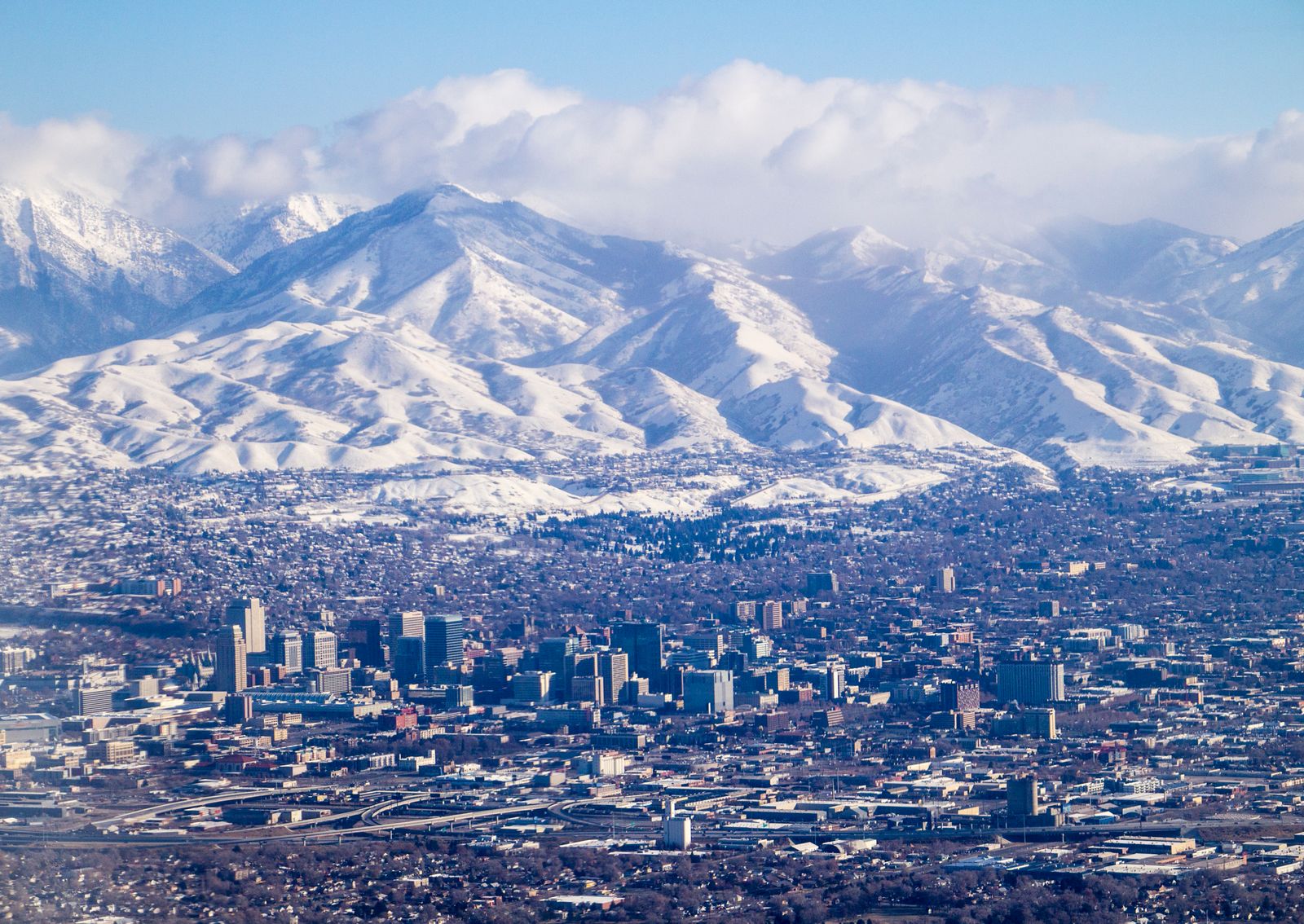
Salt Lake City is not a traditional city. It is a 100-mile corridor of land pressed between the Wasatch Mountains to the east and the desert to the west, stretching from Ogden in the north through Salt Lake City in the middle down to Provo and Orem in the south. About 80 percent of Utah's entire population lives within that strip.
What makes this essential to understand for anyone moving to Utah is that the strip is not one continuous metro. It is a collection of cities and communities that are geographically connected but culturally, economically, and lifestyle-wise completely different from one another.
Where you land on that corridor determines your daily commute, your school options, your access to outdoor recreation, your social environment, and your long-term property value. For people relocating to Salt Lake City or Utah County, this is the single most important thing to understand before starting a home search.
The most useful mental model is to stop thinking about Utah real estate as a bullseye measuring distance from downtown. Instead think of it as a position on a north-to-south line. Which position on that corridor matches the life you actually want to build?
Here is how each area breaks down.
Is Downtown Salt Lake City a Good Place to Live?
Downtown Salt Lake City has transformed significantly over the last two decades and is now a legitimate option for people moving to Utah who want an urban lifestyle.
There is a walkable grid, light rail access through the TRAX system, a growing restaurant and bar scene, proximity to the airport and the Delta Center, and an urban energy that continues to build year over year. The condo and apartment market has expanded considerably, with prices generally ranging from $350,000 to $550,000 depending on the building and finishes, and luxury product pushing well above that range.
Downtown Salt Lake City is a strong fit for young professionals, buyers relocating from larger cities like Chicago, Seattle, or Denver who want to maintain some urban energy, and people who prefer not to rely on a car for daily life.
It is a harder fit for families prioritizing school districts and yard space, buyers who want maximum square footage for their dollar, or anyone commuting daily to Silicon Slopes or Utah County who wants to avoid a long drive each way.
Best Neighborhoods in Salt Lake City for People Moving to Utah
When people ask about the best neighborhoods in Salt Lake City, the east side consistently comes up first. Sugar House, Millcreek, Canyon Rim, and the 9th and 9th corridor make up some of the most desirable real estate in the entire Wasatch Front.
Sugar House sits about three miles southeast of downtown and offers a historic main street with locally owned restaurants, coffee shops, boutiques, and Sugar House Park, one of the best green spaces in the city. The housing stock is a mix of craftsman bungalows from the 1920s through 1940s alongside newer infill construction. The neighborhood has a strong identity, genuine walkability, and a community feel that is difficult to replicate elsewhere in the valley.
A 1,500 square foot home in Sugar House typically runs $600,000 to $750,000. That premium reflects the location, walkability, and neighborhood character buyers are paying for.
The 9th and 9th corridor just north of Sugar House offers boutique shops, restaurants, and walkable access to almost everything. Millcreek to the south became its own incorporated city in 2016 and offers a similar lifestyle with slightly more breathing room on price.
These Salt Lake City neighborhoods are a strong fit for coastal transplants who prioritize culture and walkability, professionals working downtown or at the University of Utah, and buyers who value neighborhood identity over square footage.
For buyers on a tighter budget, families who need more space, or anyone commuting daily to Silicon Slopes, the east side can be a difficult financial fit. Inventory in this part of Salt Lake City is consistently low and well-priced homes move quickly. Buyers targeting this area need to be pre-approved and ready to act.
Best Salt Lake City Suburbs for Families: Draper, South Jordan, Herriman, Riverton, and Bluffdale
For families moving to Utah, the South Valley is where the majority of people ultimately settle, and the reasons are straightforward. Newer construction, larger lots, highly rated school districts, and easy access to Silicon Slopes make this area one of the most practical choices along the entire Wasatch Front.
Draper is one of the most recognized names in Utah real estate and for good reason. It sits at the junction of Salt Lake and Utah counties at the mouth of Corner Canyon, offering exceptional trail access for hikers and mountain bikers. It anchors the southern end of Silicon Slopes and has some of the most desirable newer construction in the metro. Median home prices in Draper have been in the high $600,000s to $800,000s, with premium homes near the mountain pushing into the millions.
South Jordan is a consistent favorite for relocating families and one of the best suburbs in Salt Lake City for people moving to Utah with children. It offers excellent Jordan School District schools, solid lot sizes, the Daybreak mixed-use entertainment district, and FrontRunner commuter rail access as a practical alternative to driving I-15 every day. Median prices run in the mid to high $600,000s for a solid single family home.
Herriman and Riverton offer some of the best value in the Salt Lake metro for buyers who prioritize square footage and newer construction at a lower price point. The trade-off is commute time, which can reach 45 minutes to an hour into downtown Salt Lake City during peak traffic hours. Drive testing the commute at rush hour before committing is strongly recommended.
Bluffdale at the southern tip of the county attracts a specific buyer profile. Horse property, large lots, and oversized detached garages are common here. For buyers who need space for animals, livestock, or recreational vehicles, Bluffdale delivers at a price point that makes the commute worthwhile.
Is Utah County a Good Place to Live?
Utah County is one of the fastest-growing counties in the entire United States and offers a meaningfully different experience from Salt Lake County. For people moving to Utah from out of state, understanding that difference before choosing a neighborhood is essential.
The cities of Lehi, American Fork, Pleasant Grove, Orem, Provo, Saratoga Springs, and Eagle Mountain make up the core of Utah County real estate. Combined, Utah County is home to over 800,000 people and continues to grow rapidly.
The primary draw for buyers relocating to Utah County is value. More square footage, newer construction, and larger lots are available for materially less money than comparable homes in Salt Lake County. In Saratoga Springs and Eagle Mountain on the western edge of northern Utah County, new construction under $500,000 is still available, which is increasingly rare in today's Utah market.
Lehi is the recognized epicenter of Silicon Slopes, with Adobe, Qualtrics, and dozens of other major tech companies headquartered there. Provo benefits from BYU's university energy, which keeps the city younger and more dynamic than its reputation often suggests. Downtown Provo has developed locally owned restaurants, a food truck scene, and a growing arts district. Orem sits just north of Provo with solid commercial access and strong I-15 connectivity.
One thing worth understanding clearly before choosing Utah County: the area has a strong cultural identity centered around the Church of Jesus Christ of Latter-day Saints. This influence is more pronounced here than anywhere else along the Wasatch Front. It is not a positive or negative statement. It is a reality that affects daily life, social networks, and community experience in ways that differ significantly from Salt Lake County. Going in with accurate expectations makes the transition far smoother.
Utah County is a strong fit for families, tech workers employed in Silicon Slopes, and buyers focused on getting the most home for their money. It is a harder fit for buyers seeking a more urban lifestyle or a more culturally diverse social environment.
Is Ogden Utah a Good Place to Live? The Northern Corridor Breakdown
The Northern Corridor, which includes Bountiful, North Salt Lake, Centerville, Farmington, Kaysville, and Ogden, is consistently the most overlooked section of the Wasatch Front. For buyers moving to Utah who are willing to look north, it represents some of the strongest value in the entire state.
Bountiful sits just minutes north of Salt Lake City against the Wasatch foothills with views over the Great Salt Lake that rank among the best in the valley. It is an older established community with a character and maturity that newer suburban developments cannot replicate. Solid family homes here run from the mid $400,000s into the $600,000s.
Farmington surprises buyers who discover it. Station Park brings genuine retail and restaurant options to the area. FrontRunner commuter rail makes the trip to downtown Salt Lake City fast and practical. The residential neighborhoods including Fruit Heights to the north offer mountain and valley views at prices well below the south valley.
Ogden is having a genuine moment. Long considered the overlooked sibling of Salt Lake City, downtown Ogden has developed a real arts and restaurant scene over the last several years. Snowbasin, regularly voted one of North America's best ski resorts, is within 30 minutes. Powder Mountain and Nordic Valley are also nearby. Home prices in Ogden are among the most affordable anywhere on the Wasatch Front, making it a particularly compelling option for remote workers, first-time buyers, and anyone who values outdoor access over proximity to the urban core.
How to Choose the Right Area When Moving to Utah: A Four-Question Framework
Rather than starting a Utah home search on Zillow and filtering by price, a far more effective approach is to answer four questions first.
Where is your job located? Commute time on I-15 during rush hour is a quality of life factor that buyers consistently underestimate when moving to Utah. A practical starting point is to identify the workplace on a map, draw a 15 to 20 mile radius around it, and focus the search inside that circle first.
What does daily life actually look like outside of work? Walkability and access to restaurants and nightlife points toward downtown Salt Lake City, Sugar House, or 9th and 9th. Outdoor recreation and canyon access points toward the east side of the corridor near Big Cottonwood Canyon, Little Cottonwood Canyon, and Millcreek Canyon. Family infrastructure, school quality, and yard space points toward the South Valley or Northern Corridor communities like Farmington and Kaysville. Maximum value and square footage for the dollar points toward Herriman, Eagle Mountain, Saratoga Springs, or Ogden.
What kind of community environment is the right fit? Different parts of the Wasatch Front corridor feel genuinely different socially. The east side of Salt Lake City skews younger and more culturally diverse. Utah County has a stronger and more uniform LDS cultural identity. Most people find their community and settle in well wherever they land, but going in with accurate expectations makes the relocation to Utah significantly smoother.
What does the five-year financial picture look like? Silicon Slopes from Lehi through Draper continues to attract tech employment and capital investment. Communities with FrontRunner and TRAX station access have historically held value well. Utah hosting the 2034 Winter Olympics is expected to lift the profile of the entire region, particularly areas tied to ski and outdoor recreation. The east side of Salt Lake City and Draper have historically been the most liquid and resilient markets. South Jordan and Farmington offer strong fundamentals for buyers prioritizing long-term stability.
Frequently Asked Questions About Moving to Utah
How far is Salt Lake City from Utah County?
The border between Salt Lake County and Utah County sits roughly at the Draper and Lehi line, about 25 miles south of downtown Salt Lake City. Lehi, the northern tip of Utah County, is approximately a 30 to 40 minute drive from downtown depending on traffic.
What is Silicon Slopes in Utah?
Silicon Slopes is the nickname for the tech employment corridor that runs along the Wasatch Front from Lehi in Utah County north through Draper in Salt Lake County. It is home to major employers including Adobe, Qualtrics, and dozens of other technology companies and is one of the primary reasons people are moving to Utah from California, Arizona, and other states.
Is Salt Lake City affordable compared to other western cities?
Salt Lake City real estate has appreciated significantly over the last decade but remains more affordable than comparable metros like Denver, Seattle, or the San Francisco Bay Area. Median home prices in Salt Lake County range from the mid $400,000s in the Northern Corridor up to the $800,000s and above in Draper and the east side. Utah County generally runs $50,000 to $100,000 less for comparable homes.
What is the Wasatch Front?
The Wasatch Front is the term used to describe the 100-mile urbanized strip of land running along the western base of the Wasatch Mountain Range in Utah. It includes the cities of Ogden, Salt Lake City, and Provo and is home to roughly 80 percent of Utah's total population. Understanding the Wasatch Front is essential for anyone moving to Utah or relocating to Salt Lake City.
Is Utah County or Salt Lake County better for families?
Both counties are strong options for families moving to Utah. Salt Lake County offers more variety in terms of neighborhood character and lifestyle, while Utah County generally provides more square footage and newer construction for less money. School districts in both counties are highly rated. The primary differentiator tends to be cultural fit and commute location rather than school quality.
The Bottom Line on the Best Places to Live in Utah
The Wasatch Front is not one market. It is a collection of distinct communities each offering a different combination of lifestyle, pricing, schools, commute, and long-term opportunity.
Downtown Salt Lake City and the east side offer urban energy and neighborhood character at a premium price point. The South Valley delivers family infrastructure, newer construction, and Silicon Slopes access. Utah County provides more home for the dollar and one of the fastest-growing job markets in the country. The Northern Corridor offers value, outdoor access, and communities that consistently exceed expectations for buyers willing to look north.
For anyone moving to Utah, the decision about where to live is not purely a housing decision. It is a decision about daily environment, commute, schools, community, and long-term financial picture.
Get the location right and finding the right home becomes significantly easier.
For buyers who want help identifying the right area before starting a search, that is exactly what The Steele Group does. Reach out using the contact information below to get the conversation started.
Scott Steele is the Team Lead of The Steele Group at Signature Real Estate Utah, serving buyers and sellers across Salt Lake County, Utah County, and the greater Wasatch Front. Contact us at 801-680-8050. For more Utah relocation guides visit TheUtahReel.com or subscribe to the Scott Steele Living in Utah YouTube channel.
Categories
Recent Posts