Buying a Home in Lehi, Utah in 2026: What's Really Changing (And Which Side of the City You Should Target)
Buying a Home in Lehi, Utah in 2026: What's Really Changing (And Which Side of the City You Should Target)
If you're thinking about buying a home in Lehi — or moving to Lehi in 2026 — there's something important you need to hear first. The Lehi you're picturing in your head, the one from the relocation videos, the one your cousin moved to in 2021, the one that shows up when you Google "Silicon Slopes" — that Lehi doesn't really exist anymore. Or, more accurately, it only represents half of the city now.
Over the last 12 months, something happened in Lehi that most agents aren't talking about. The city has essentially split into two completely different real estate markets — two different lifestyles, two different price trajectories, and two very different futures. Buyers who don't understand which side of the city they should be targeting are either overpaying for the wrong half or missing a closing window on the right half.
My name is Scott Steele, a real estate broker here in Utah. I sell in Lehi pretty much every single week, and I've been watching this city change in real time for years. The shift happening right now in 2026 is honestly the biggest one I've seen since the original Adobe campus opened. This guide breaks down the four things actually changing in Lehi this year, why they matter far more than the headlines suggest, and — most importantly — which side of Lehi you should be buying in if you want your money to work for you.
The Great Lehi Split: East Side vs. West Side
Draw an imaginary line right down I-15 and you've essentially divided Lehi into two cities that happen to share a zip code. Understanding this split is the single most important thing you can do before shopping for a home here.
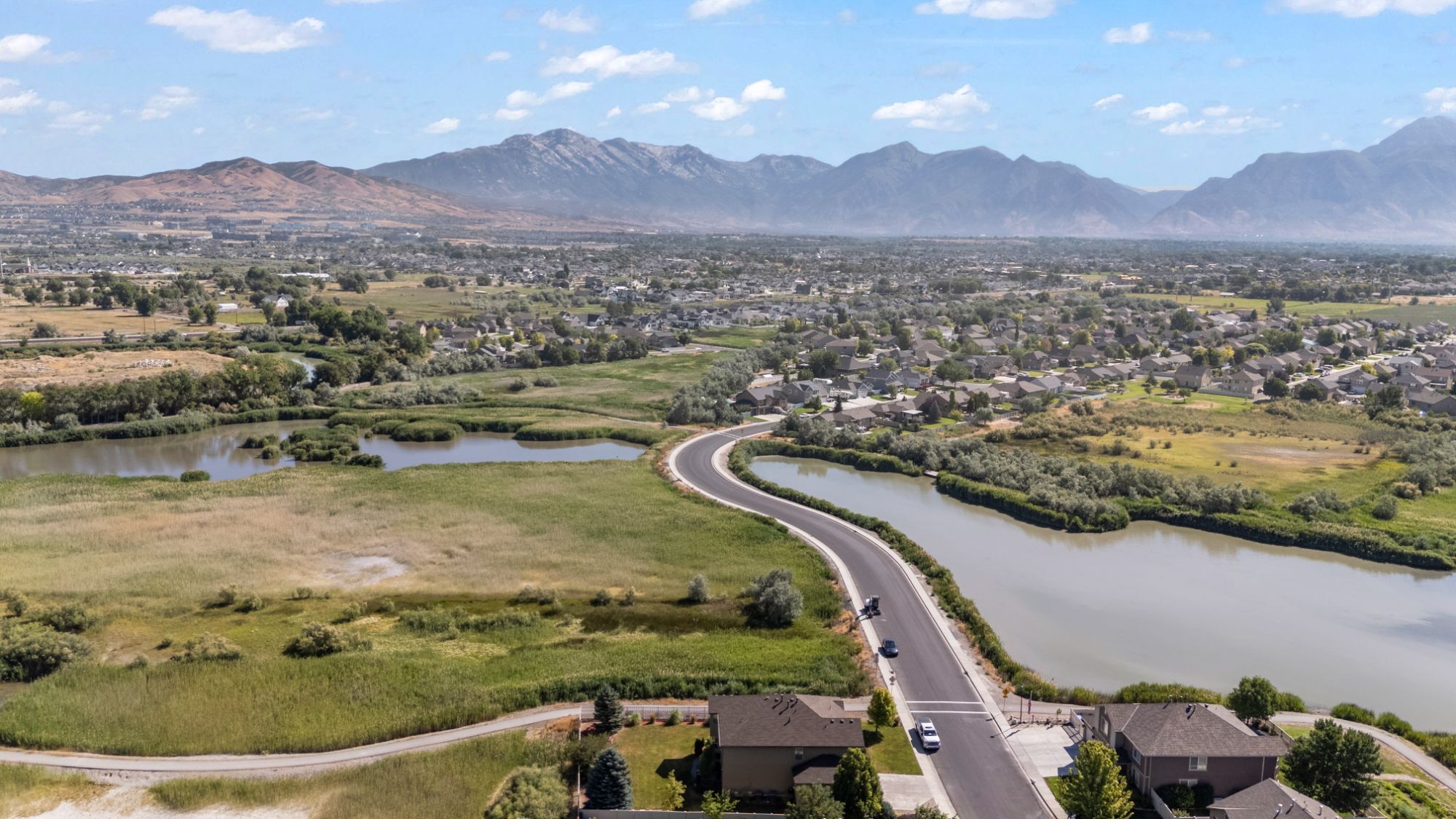
East Lehi encompasses everything from Thanksgiving Point up through Traverse Mountain, the Silicon Slopes corridor, and the areas nestled against the foothills. This is established Lehi — most of it built between 2010 and 2022. Adobe, Microsoft, and Ancestry campuses sit on this side of the freeway. Freeway access is solid, schools are mature, and some subdivisions now have actual full-grown trees, which anyone who's toured a brand-new Utah development knows is no small thing.
West Lehi is still being born. The new Primary Children's Hospital Miller Family Campus opened on the west side of the freeway. Major neighborhoods like Hulbert Farms are booming. The 2100 North Freeway connection being built right now on the west side will eventually link the Mountain View Corridor to I-15 — but most of that new construction happening in Lehi today is happening west of I-15.
So what does this look like in real numbers? In January 2026, the median home price in Lehi hit $585,000 — up approximately 10.5% year-over-year. Taken at face value, that looks like one healthy, unified market. But split the data east versus west and the story looks completely different. East-side homes in Traverse Mountain and the luxury tier are priced higher per square foot and holding value, but they're taking longer to sell. On the west side, builders are still offering major incentives, and you can find brand-new homes at the same price point as a 2018 build five miles to the east — simply because the area is still developing.
Here's the bottom line for budget-conscious buyers: if your number is around $650,000, you're probably a west-side buyer. At $850,000 and above, you've got options on the east side. At $1 million-plus, you can play in either market — just know what you're actually buying.
The $621 Million Buying Window: The 2100 North Freeway Project
In March 2026, the Utah Department of Transportation officially broke ground on the 2100 North Express Freeway project — a 3-mile freeway-to-freeway connection linking I-15 to the new Mountain View Corridor freeway. The price tag: $621 million. Fourteen new bridges. Nearly 2 miles of shared-use paths and pedestrian bridges. Targeted completion: late 2028.
That means three full years of active, heavy construction across the most-traveled east-west corridor in northwest Utah County. UDOT estimates that once complete, the project will save commuters roughly 12 minutes each direction at peak times — about 100 hours per commuter per year, simply gone from your daily life.
But here's the critical insight most buyers are missing: to get those 12 minutes back, we have to go through three years of getting them taken away first.
And that is the buying window. Right now, buyers are second-guessing neighborhoods adjacent to the construction — places like Hulbert Farms and developments just south of the new hospital. They drive out for a Saturday showing, see the orange cones, feel the dust, and decide to look in Saratoga Springs instead. Demand isn't collapsing, but it's softer than it should be relative to the long-term fundamentals.
If you buy on the west side of Lehi in 2026 or 2027, you're effectively buying with an undisclosed discount. The price reflects construction disruption, but by the time the freeway opens in Q4 2028, those same homes will be sitting in a neighborhood with 12-minute shorter commutes, finished pedestrian paths, new bridges, and a brand-new freeway interchange that was essentially bolted onto their neighborhood for free. That's a value-add event. And by then, much of the new construction inventory that's currently keeping resale prices honest will have been absorbed — meaning demand catches back up, new amenities are in place, and new construction competition has thinned out. That is exactly the kind of setup that creates meaningful appreciation.
The flip side: you have to actually live through those three years. If you work from home, the construction barely touches you. If you commute east-west through that corridor every day, your life will get harder before it gets easier. Be honest with yourself about which one you are before you tour.
Why the Lehi Median Lies: Subdivision-Level Data Is Everything
Here's where the data gets genuinely useful for active buyers. When you look at Lehi at the city level — median price $585K, days on market in the high 60s, modest year-over-year appreciation — it looks like one coherent market. Crack open the data at the subdivision level and you find two completely different stories playing out simultaneously.
Some neighborhoods in Lehi are selling in 1 to 2 days, sometimes at or above asking price. Others are sitting for 100, 200, even nearly 400 days, and selling well below the original ask. Same city. Same school district in some cases. Same builder in a couple of cases.
The fastest-moving subdivisions — places like Hulbert Farms and Inesse — share three common traits: honest pricing from day one, floor plans that match what current buyers actually want, and lots that are genuinely usable without being backed up to a power easement or sitting on a cut-through shortcut.
The slowest-moving listings tell the opposite story. In Lehi's luxury tier — Lake View Estates, Vivian Estates, Seasons Estates, parts of Traverse Mountain — homes are sitting for 100, 200, and in some cases close to 400 days. Price cuts in those neighborhoods have been significant: $100,000 to $200,000 below original asking in some cases. That's not a market correction. That's a pricing strategy failure. Those sellers anchored to 2022 comparables, and the market simply won't validate the number.
What do you do with this as a buyer? Two things. First, don't trust the city-level data when evaluating a specific home at a specific price. The "Lehi is up 10%" headline is technically accurate but nearly useless for determining whether any given listing is a deal. Go subdivision by subdivision — block by block if necessary. Second, and this is the contrarian one: long days-on-market listings are often not the deals buyers assume they are. People see 120 days and think "motivated seller, time to lowball." But frequently what those listings represent is a stubborn seller who already cut once and is still anchored to a number the market won't meet. The faster path to a good deal is usually a fairly-priced new listing in a fast-moving subdivision — counterintuitive, but that's what the data consistently shows.
The Economic Anchor Effect: Why Lehi's Long-Term Fundamentals Are Stronger Than Most People Realize
When most people think about Lehi's economy, they think Silicon Slopes — Adobe, Microsoft, the tech corridor. Those are huge and they're not going anywhere. But the economic change happening in Lehi in 2026 is that the base is broadening in a very specific, very durable way.
Three investments are stacking on top of each other right now:
Texas Instruments LFAB2. An $11 billion semiconductor manufacturing investment currently under construction in Lehi — the largest single economic investment in the history of the state of Utah, according to Governor Cox. The plant produces analog and embedded processing chips for automotive, industrial, and consumer electronics applications. Roughly 1,000 high-wage direct jobs at that one facility, plus thousands of indirect jobs in the supplier ecosystem. Those workers need somewhere to live. The plant is in Lehi.
Primary Children's Hospital Miller Family Campus. A $335 million, 38-acre facility — the largest healthcare project in Lehi's history and one of the largest in the entire state. Doctors, specialists, nurses, administrators, imaging technicians, lab technicians: these are high-wage, stable, recession-resistant jobs. And they're all looking at housing within a reasonable commute of west Lehi.
Municipal Fiber Backbone. The city of Lehi bonded for $65 million to build out its own fiber network to every single resident — targeted for completion by mid-2026. That makes Lehi one of the very few mid-sized U.S. cities with gigabit fiber to every household at municipal pricing. For remote workers, tech-adjacent small businesses, and anyone who relies on bandwidth, that infrastructure is a competitive advantage that takes other cities a decade to replicate.
Stack those three together with the existing Silicon Slopes employer base — Adobe, Microsoft, Ancestry, Pluralsight, Qualtrics, and dozens more — and what you have is one of the most economically diversified mid-size cities in the entire Mountain West. And here's the underrated part: economic diversification is what protects real estate values during downturns. Lehi was more vulnerable to a tech sector pullback in 2019. Lehi in 2026 is structurally less vulnerable because the base is much broader: tech, semiconductors, healthcare, financial services, government infrastructure investment, transportation infrastructure investment.
Layer on the 2034 Winter Olympics returning to Utah, and Lehi — sitting roughly in the middle of the Wasatch Front between Salt Lake City and Provo, right along I-15 — is positioned to capture infrastructure investment and visibility that most people aren't pricing in yet.
The Simplified Framework for Buying in Lehi in 2026
If all of this feels like a lot to track, here's the framework I walk clients through when they're shopping Lehi:
Step 1: Pick east or west side based on your actual budget and lifestyle — not based on the picture in your head from a YouTube relocation video.
Step 2: Identify three to five specific subdivisions inside your chosen side, not "Lehi" as a whole.
Step 3: Get actual subdivision-level days-on-market data, not the city-level average.
Step 4: Set up listing alerts so you're seeing new inventory in those subdivisions before it goes stale.
Step 5: When something fairly priced hits, move fast. In the subdivisions where demand is real, hesitation costs you.
The subdivision matters more than the city. The pricing strategy of the listing matters more than the asking price. And you need someone on the ground who's watching this in real time — not just running comps from a website.
Thinking About Buying in Lehi or Moving to Utah? Let's Talk.
My team and I work exclusively with buyers navigating the Utah real estate market. We help you cut through the noise, match the right neighborhood to your specific lifestyle and priorities, and make sure you're buying from a position of clarity — not FOMO.
Whether you're zeroing in on Lehi new construction, west-side Lehi homes, Traverse Mountain real estate, or somewhere else entirely, the process starts with a conversation. The call is free. Getting the wrong answer on a home purchase is not.
Book a call with us HERE — free 30-minute consultation
Check out our relocation guide HERE
Subscribe to our weekly newsletter HERE
Scott Steele | HOME@TheUtahReel.com | 801-680-8050 | www.TheUtahReel.com
Categories
Recent Posts