Is Utah Still Worth It in 2026? 10 Hot Topics Every Buyer and Mover Needs to Know
Is Utah Still Worth It in 2026? 10 Hot Topics Every Buyer and Mover Needs to Know
Here’s the question nobody at the dinner party wants to answer out loud: Is Utah still worth it? Depending on who you ask, you’ll get two completely different answers. Someone who moved here in 2015 will tell you it’s paradise — mountains, outdoor lifestyle, strong job market, low crime. Can’t lose. But someone who’s been here their entire life will tell you it’s paved over, priced out, and dried up — and you’re about 10 years too late.
They can’t both be right. And here’s the thing: most content you’ll find on this is either selling you the postcard or burning the place down. This post does neither. Because the reality — the part almost nobody says — is that Utah is doing two opposite things at the exact same time.
It is one of the most desirable, fastest-growing, opportunity-rich states in the entire country. And it is running headfirst into a set of physical limitations — water, air, land — that no amount of optimism makes go away. Both are true. And the people who do well here over the next decade are the ones who understand exactly where those two stories collide.
Below are the 10 hottest topics in Utah real estate and life in 2026 — the arguments people here are actually having. The list gets heavier as we go. Number one ties almost everything else together.
#10 — Out-of-State Buyers (Especially Californians) Are Ruining Utah
You hear it at every barbecue: Californians are coming in with cash and pricing the rest of us out. But the data doesn’t say what either camp thinks it says.
California is the single largest source of out-of-state movers to Utah — that part is real. But Californians make up only about 18% of residents moving into the state. And a meaningful share of those Californians were actually born in Utah. They’re coming back home.
Where do they land? Not randomly. The biggest share concentrates in the Utah County corridor — Saratoga Springs, Lehi, Eagle Mountain, Herriman, South Jordan, Draper — as well as St. George and southern Utah. If you’re shopping in those submarkets, yes, you’re competing with buyers carrying strong equity from more expensive markets. But in Ogden or the West Side of Salt Lake, that pressure exists — it’s just softer.
The real issue isn’t who’s moving here. It’s that Utah hasn’t built enough housing for the people who already want to be here. Hold that thought — it comes back hard.
#9 — The Point of the Mountain Development in Draper
On the site of the old Utah State Prison in Draper, the state is building an entirely new district from scratch. We’re talking 600+ acres, with Phase 1 covering roughly 100 of those. After years of underground infrastructure work, 2026 is the year it goes vertical.
The first phase includes a pedestrian promenade, a planned mid-size entertainment venue, and a first wave of more than 3,000 residential units — with around 12% earmarked as affordable. The state didn’t sell the land. Taxpayers still own it. Lawmakers authorized roughly $165 million in infrastructure loans, with lease payments intended to pay taxpayers back over time.
If you’re buying anywhere near the Point of the Mountain — Draper, Bluffdale, Lehi, the south end of the Salt Lake Valley — this is the single biggest variable in your neighborhood’s next decade. A successful Point development lifts everything around it. A stalled one becomes the most expensive empty lot in Utah history. The construction is happening. For a buyer, you’re not just buying a house — you’re betting on what gets built next door.
#8 — Utah’s Traffic and Infrastructure Growth Problem
Utah has been one of the fastest-growing states in the country for decades, and the Wasatch Front is where most of that lands. In 2026 alone, the Utah Department of Transportation announced around $2.8 billion in new and ongoing construction — 176 projects touching virtually every corridor you drive.
Short-term: more construction cones, more closures, more lane confusion along I-15, I-80, and the canyons. Long-term: the difference between a commute that stays livable and one that doesn’t often comes down to whether your community is tied into transit — the FrontRunner, the expanded TRAX system, new station plans for Bluffdale and beyond.
Stop shopping by house. Start shopping by commute. Drive your actual route at 5:00 p.m. on a Tuesday before you fall in love with any address. Sprawl is the price Utah pays for being so desirable. The buyers who win are the ones positioning around where transit and jobs are heading — not where they are today.
#7 — What It’s Like Living in Utah If You’re Not LDS
This is one of the most common questions from out-of-state buyers — usually asked in a quieter voice. What’s it actually like here if we’re not Latter-day Saints?
Utah has a strong, visible LDS culture. It shapes community rhythms, social patterns, how neighborhoods feel. But your experience varies enormously by area — and it tracks with geography and density more than anything else.
Parts of Salt Lake City — the East Bench neighborhoods, Millcreek, Holiday, areas near the University of Utah — tend to be more religiously mixed and cosmopolitan. Some of the newer, family-heavy suburbs are more homogeneous. Neither is better. It’s about fit.
The advice is the same for any culture-fit question anywhere: spend time in the actual neighborhood on a weekday and a weekend before you commit. The regret isn’t usually the state — it’s picking a micro-community that didn’t match your lifestyle. Utah works for an enormous range of people, including countless people who aren’t LDS. Whether it works for you is a neighborhood-level question, not a state-level one.
#6 — Utah Inversion and Winter Air Quality
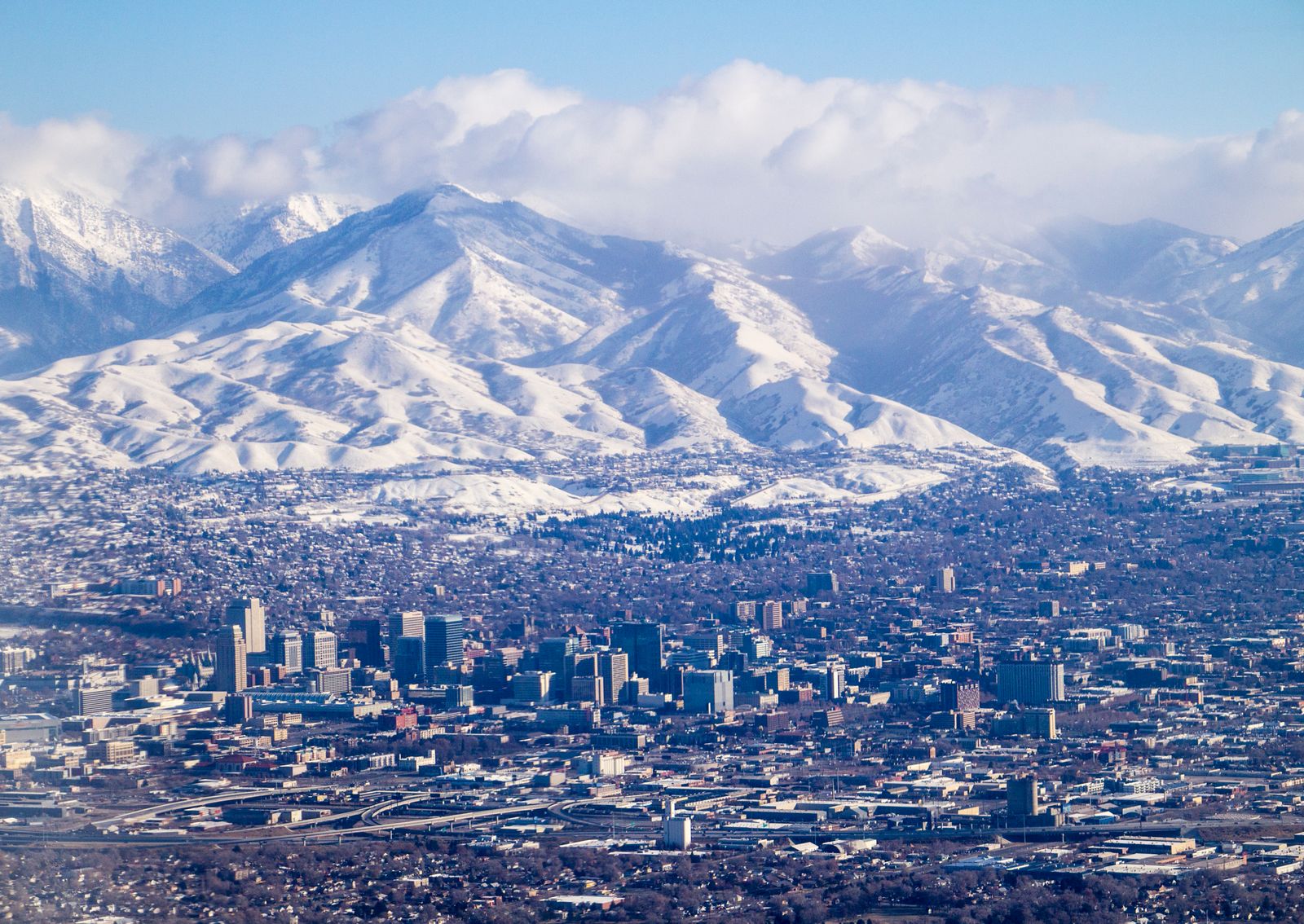
If you haven’t lived through a Wasatch Front winter, here’s what nobody puts in the brochure. The valley is a bowl ringed by mountains. In winter, cold air gets trapped under a layer of warmer air — that’s an inversion — and it acts like a lid, holding pollution down where you breathe it.
A typical winter brings five to six multi-day inversion episodes, up to roughly 15–18 days per year where fine particle pollution (PM2.5) exceeds the federal health standard. In January 2026, several Salt Lake Valley cities literally led the nation in worst air quality for multiple days.
What do you do with this? Three things: First, elevation and location matter — higher benches and windier areas clear faster. Second, this is a seasonal problem, not year-round; Utah’s annual average air quality is decent and summers are often beautiful. Third, if anyone in your household has asthma or respiratory issues, this belongs on your must-investigate list right next to schools and commute.
The inversion is the visible symptom of a bigger story: the same growth driving the housing market is putting more emissions into a bowl that physically can’t flush them out fast.
#5 — The 2034 Winter Olympics Are Coming Back to Salt Lake City
Salt Lake City is hosting the 2034 Winter Olympics for the second time. The operating budget is pegged at roughly $2.83 billion, with organizers promising it’s funded entirely from private and commercial sources — sponsorships, tickets, broadcast rights — with no state or local tax dollars in the operational budget.
They point to 2002, widely considered the most economically successful modern Olympics, with a projected multi-billion-dollar economic impact on Utah’s output. For buyers and homeowners, an Olympics tends to accelerate things already happening — transit projects, airport upgrades, venue-area investments — and concentrates attention and demand, especially in Olympic-adjacent areas and mountain towns.
The honest counterweight: a privately funded operating budget is not the same as costing taxpayers nothing. Security, infrastructure, and public services historically involve public money. The windfall is real — and so might be the asterisk. For most homeowners, the bigger story is timing: the run-up to a Games is usually a multi-year period of rising investment and visibility. It’s a tailwind, not a magic wand.
#4 — The Stratos Data Center Project in Box Elder County
In western Box Elder County, north of the Great Salt Lake, there’s a proposal for one of the largest data centers on the planet — the Stratos Project, backed by investor Kevin Oleary’s group, Olyri Digital, on land designated through a state authority called MIDA (Military Installation Development Authority).
Early reporting ties the complex to power demand in the multi-gigawatt range — up to 9 gigawatts — figures that could exceed the entire state’s peak electricity demand by twofold, and water use estimated in the billions of gallons per year in some analyses. In May 2026, Box Elder County commissioners approved a project area. The public reaction was intense: thousands of protest letters, a rally at the capitol, petitions with thousands of signatures.
Why should a homeowner in Lehi or Holiday care about a data center an hour and a half away? Two reasons: power and water. These facilities consume enormous amounts of both — and Utah is already water-stressed. Critics including clean energy and Great Salt Lake advocates warn about emissions, energy costs, and pressure on the very water the lake needs so desperately. The regulatory process is still ongoing.
This is the collision made concrete: Utah’s economic ambition to become the center of the AI economy running directly into its physical limits. How the state handles Stratos is a preview of how it handles everything else.
#3 — Runaway Utah Housing Costs in 2026
Let’s put real numbers on the thing everyone feels. As of spring 2026, the median home price in Salt Lake County sits around $563,000, with statewide Utah figures in the low-to-mid $500s depending on the source. The brutal stretch was 2020–2022, when Salt Lake County prices surged by roughly 42% — the strongest run in Utah history.
But here’s the part that’s actually useful — and a little hopeful. The market has cooled from a sprint to a walk. The Salt Lake Board of Realtors’ 2026 forecast shows prices have risen only modestly since 2022. Homes are taking longer to sell (30–50 days on market vs. the teens and high 20s before). Listings are up, and sales per capita hit the lowest level in about 25 years.
Translation for buyers: you have more options, more time, and more negotiating leverage than you’ve had in years. The frenzy is gone. That doesn’t make it cheap — it makes it survivable if you’re strategic about submarket and timing.
Price is the symptom you can see. But it’s downstream of something most people never connect to their mortgage: Utah simply didn’t build enough homes for the demand. The next two topics are the root of it all.
#2 — Utah’s Water Crisis
Utah is one of the driest states in the country — the second driest, in fact. And the state keeps adding people and rooftops while the water math gets tighter. Roughly 95% of the water in the Great Salt Lake Basin starts as mountain snowpack, and warmer temperatures since the mid-1980s have meant more evaporation and less efficient runoff.
In 2026, most of the state entered spring and summer in a poor drought position. For a homeowner, water stops being abstract fast. It shows up as landscaping rules, water-use requirements, and increasingly as a factor in where new development can even be approved to begin with.
When you’re evaluating a community — especially a fast-growing one on the edges — “Where does this town’s water come from, and how secure is it?” is becoming a legitimate due diligence question, right alongside schools and flood zones.
Here’s the bigger picture: every other item on this list — the growth, the Olympics, the data centers, the housing demand — ultimately runs through this one bottleneck. You can’t build, grow, or thrive past the amount of water you actually have. Utah’s entire future is, in a very real sense, a water story.
#1 — The Great Salt Lake and the Air You Breathe
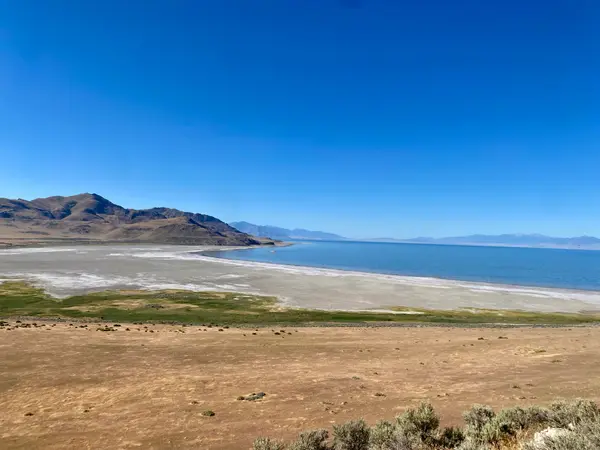
In October 2022, the Great Salt Lake hit the lowest level ever recorded going back to 1847. It has stabilized somewhat since — in 2025, the south arm closed the year at roughly 4,191 feet in elevation, still in what the state calls the “serious adverse effects” range. State projections suggest the lake needs a sustained extra 800,000 acre-feet of inflow per year to return to a healthy 4,198-foot level by mid-century.
Why is this number one? Because a shrinking lake exposes the lakebed. And that lakebed contains dust — including arsenic and heavy metals in places. As more of it dries out, windstorms can lift that dust into the air over the most populated parts of the state. Combine that with winter inversions — the bowl that already traps pollution — and you have a genuine long-term risk that the air along the Wasatch Front gets meaningfully harder to breathe.
This is the scenario that turns great place to live into a real public health question for Utah real estate buyers. The lake isn’t vanishing tomorrow, and the state is investing real money and policy attention into it. But smart buyers weigh elevation, wind exposure, and air quality toward the top of their priorities — not the bottom.
So, Is Utah Still Worth It in 2026?
We covered 10 things: out-of-state buyers, the Point development, growth and traffic, religion and culture, inversions, the 2034 Olympics, the Stratos data center, housing costs, the water crisis, and the Great Salt Lake. And here’s the answer to the question that opened this whole thing:
It’s not “yes, it’s paradise.” And it’s not “no, you missed it.” Utah is absolutely still worth it — for the right person who walks in with their eyes wide open.
The water crisis, the growth, the data centers, the dust, the inversions, the housing demand — these are not 10 separate stories. They are one story. And the Great Salt Lake is where it all lands. Utah’s greatest opportunity and its greatest risks are in the same place.
Buy by submarket, not by state. Utah is not a real estate decision. Saratoga Springs vs. Holiday vs. Ogden vs. St. George — those are real estate decisions. On every one of these 10 issues, the right neighborhood can be the difference between a great decade and an expensive mistake. Get that one thing right and you’ve outpositioned 90% of buyers.
Thinking About Buying, Selling, or Moving to Utah? Let’s Talk.
My team and I work exclusively with buyers navigating the Utah real estate market. We help you cut through the noise, match the right neighborhood to your specific lifestyle and priorities, and make sure you’re buying from a position of clarity — not FOMO.
Whether you’re zeroing in on Salt Lake City homes, Utah County new construction, Draper real estate, or somewhere else entirely, the process starts with a conversation. The call is free. Getting the wrong answer on a home purchase is not.
Book a call with us HERE — free 30-minute consultation
Check out our relocation guide HERE
Subscribe to our weekly newsletter HERE
Scott Steele | HOME@TheUtahReel.com | 801-680-8050 | www.TheUtahReel.com
Categories
Recent Posts