Park City Home Prices Rose 10% and Fell 47% Year Over Year (Same MLS, Same Quarter)
Park City Home Prices Rose 10% and Fell 47% Year Over Year (Same MLS, Same Quarter)
There were two headlines about the Park City market this year. One said prices were up. The other said prices were down by double digits. Same town, same year, same MLS.
Both of those numbers are real. Both came out of actual sold data. And if you are sitting somewhere right now trying to decide whether to buy a place up here, both of them are close to useless to you.
They are not describing one market. They are describing several markets that happen to share a zip code, and almost nobody is separating them for you. So let me do that, using the most recent numbers from the Park City Board of REALTORS Q2 2026 market report, covering the period ending June 30, 2026.
Why a Single Park City Median Price Tells You Almost Nothing
The Park City MLS covers Summit and Wasatch Counties across roughly fifty numbered areas. That includes an Old Town condo on Main Street, an eight million dollar Glenwild estate, a Heber Valley starter home, and raw land in Kamas. Blend all of that into one median and you get a number that describes no actual house anyone can buy.
Here is how convincing the blended number looks. The total Park City market generated $1.358 billion in Q2 2026 sales, a 7% increase over Q2 2025, on 10% more transactions. Read that alone and you would conclude the market is simply healthy and moving in one direction.
Now look at the composition of that same quarter:
Single-family homes: 319 sales, $840.9 million, up 6% in units and 2% in volume.
Condominiums: 203 sales, $335.4 million, down 2% in units and 2% in volume.
Land: 147 sales, $181.3 million, up 46% in units and 74% in volume.
Three property types, three completely different stories, one headline number covering all of them.
Single-Family vs Condos: The Split Behind Every Confusing Headline
For a seasonal resort market, the rolling twelve-month numbers are far more reliable than any single quarter. For the year ending June 30, 2026 compared to the year prior:
Single-family: 1,341 sales totaling $3.609 billion, up 8% in units and 15% in volume.
Condominiums: 847 sales totaling $1.468 billion, down 14% in units and 7% in volume.
Land: 507 sales totaling $650.9 million, up 14% in units and 26% in volume.
There is your first pair of true, opposite numbers. Single-family volume up 15%. Condo volume down 7%. Same MLS, same twelve months. If a headline picks one and calls it "the Park City market," it is not lying. It is just answering a question you did not ask.
Median prices tell the same split story. Across the full MLS area, the single-family median rose 10% year over year to $1.7 million.
Where the Down 47% Number Actually Comes From
In Mayflower-Jordanelle, condo transactions jumped 108% in Q2, from 13 sales a year ago to 27. Volume rose 39%. And the median price fell 47% to $1.35 million.
Read that again. Transactions doubled and the median dropped nearly in half in the same area, in the same quarter.
That is not a price crash. It is a product mix shift. New, more affordable inventory entered the area and pulled the median down even as buyer activity grew. The homes that sold last year were not the homes that sold this year.
The same pattern shows up in Kamas Valley. Q2 single-family volume there jumped 70% to $45.2 million on 22 transactions, with the average price up 47% to $2.05 million. Yet the rolling twelve-month median is down 22% to $795,000, because a wave of newer, more affordable product is working through the numbers.
So a median can fall hard while demand is rising, purely because of what is being built and sold. If you do not know which is happening, the percentage is noise.
What Homes Actually Cost Inside Park City Limits
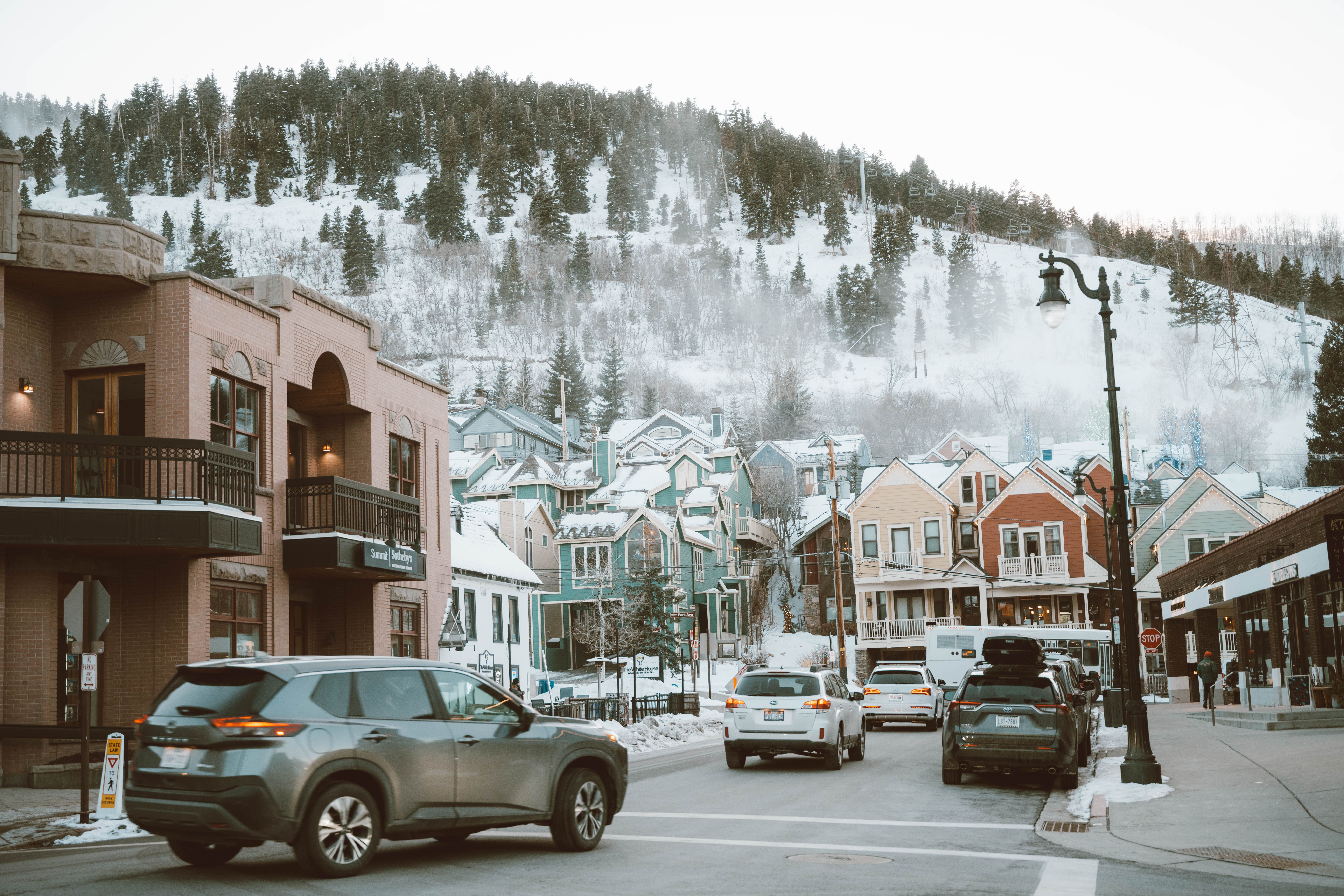
Park City proper, Areas 1 through 9, ran against the broader trend in Q2 2026. Single-family transactions jumped 21%, from 24 sales to 29, and volume surged 35% to $148.8 million. The Q2 median inside city limits was $3.8 million.
Park Meadows was the standout with 10 sales at a $3.95 million median and volume up 61%. Old Town held flat at 7 transactions with the identical $3.65 million median it posted in Q2 2025.
Empire Pass produced the quarter's most instructive data point. One home sold for $25 million. That was the only transaction in the area for the quarter, which pushed the area "average" to $25 million. If you ever see an average price from a small Park City sub-area, that is exactly the kind of thing that can be hiding behind it.
Condos inside city limits are a different animal. There were 47 sales in Q2, down 11% from a year ago, at a $2.325 million median. But the rolling twelve-month Park City Limits condo median rose 24% to $2.3 million. Less is selling, and what does sell is commanding strong prices.
Snyderville Basin, Jordanelle, Heber and Kamas Give Four Different Answers
Snyderville Basin single-family had a softer quarter: 77 sales at $289.2 million, down 8% in units and 19% in volume, with a $2.25 million median. The rolling twelve-month view is calmer, at 369 sales totaling $1.338 billion, up 5% in units and 8% in volume.
Inside the Basin, the divergence gets wider. Promontory logged 17 single-family sales at $126 million. Units fell 32%, but the average sale price rose 40% to $7.41 million and the median jumped 28% to $6.6 million. Fewer deals, bigger homes. Glenwild posted 4 sales at $35 million with a median of $8.33 million, up 60%.
Canyons Village condos went the other way and outperformed almost everything: 28 sales generating $68.5 million, volume up 62%, with the average condo selling for $2.45 million, up 50% from a year ago. That is higher-priced inventory genuinely clearing, not a statistical artifact.
Jordanelle single-family was roughly flat at 24 sales and $111.2 million, with a $3.669 million median. Jordanelle condos ran the opposite way, with 64 sales, up 19% in units, at a $1.239 million median.
Heber Valley single-family transactions were essentially flat at 97 sales, but volume fell 10% to $147.2 million, with a $940,000 median. Red Ledges anchored the high end with 12 sales averaging $3.76 million each, up 38%. Heber Valley condos, meanwhile, cratered to just 12 sales at $7.8 million, down 64% in units.
Kamas Valley single-family posted 22 sales at $45.2 million, up 16% in units and 70% in volume, with a $595,000 Q2 median.
Five geographic areas. Five different directions. There is no honest way to average them into one sentence.
Land Is the Park City Number Almost Nobody Is Watching
Land was the breakout category of the quarter with 147 transactions at $181.3 million, up 46% in units and 74% in volume. Within the primary market area it was even more dramatic, at 144 transactions and $180.5 million, up 58% in units and 102% in volume.
South Jordanelle went from 3 land sales in Q2 2025 to 41 in Q2 2026, $58.2 million in volume, at a $1.4 million median that was up 40%. Promontory land had 21 sales at $33.3 million, up 320% in units, with a $1.5 million median lot price, up 66%.
This matters for buyers because land activity historically leads the broader housing market by twelve to twenty-four months. Developers and well-capitalized buyers are placing bets right now on where this market sits in 2027 and 2028.
How to Find Your Actual Number Before You Buy or Sell
Here is the process I walk clients through instead of quoting them a headline.
Start with property type. Single-family, condo and land are behaving differently enough right now that mixing them makes the number meaningless. Then narrow to your specific area, because Old Town, Promontory, Hideout and Heber North are not interchangeable. Then use the rolling twelve-month data rather than a single quarter, especially in small sub-areas where one $25 million sale can swing everything.
Then ask the question almost no one asks: did the median move because prices moved, or because the mix of what sold changed? Mayflower-Jordanelle and Kamas Valley both show how much those two things can diverge.
And be honest about the headwinds. Elevated mortgage rates and trade policy uncertainty continued to weigh on buyer confidence through Q2, particularly in the upper-mid market, while the luxury segment stayed more insulated because more of those deals are cash. Fire risk reclassifications in parts of Summit and Wasatch Counties are also pushing homeowner insurance premiums to levels that are starting to affect purchase decisions. Price that in before you fall in love with a property.
One more caveat worth stating plainly: the Board notes this data is preliminary and subject to revision as late-reporting transactions are recorded, and only areas meeting minimum transaction thresholds are included in sub-area statistics.
Park City Real Estate FAQ
Are Park City home prices going up or down in 2026?
Both, depending on what you are buying. Through the year ending June 30, 2026, single-family volume was up 15% and the single-family median rose 10% to $1.7 million, while condo volume was down 7% on 14% fewer transactions. Anyone answering this with one number is not answering your question.
Why did Park City condo sales drop so much?
The Board attributes it largely to supply, not demand. The extraordinary wave of Founders Place and Jordanelle Ridge new-construction closings in 2024 and 2025 is now largely complete, so year-over-year comparisons will look severe for several more quarters until that baseline rolls off.
What does a single-family home cost in Park City right now?
It depends entirely on where. The Q2 2026 median was $3.8 million inside Park City limits, $2.25 million in Snyderville Basin, $3.669 million in Jordanelle, $940,000 in Heber Valley and $595,000 in Kamas Valley.
Is this a good time to buy a Park City condo?
The condo market appears to have found a floor after the Q1 2026 pullback, with Q2 essentially flat against Q2 2025. Selection is better than it has been, but the tradeoff is real: buyers are paying a clear premium for new construction, so condition, presentation and accurate pricing matter more than ever on older units. Nightly rental eligibility also varies street by street, and that alone can change what a unit is worth to you.
Thinking About Moving to Utah? Let's Talk.
Utah is one of the fastest-growing states in the entire country, and navigating the cultural landscape alongside the real estate market takes genuine local expertise. Whether you're considering Salt Lake County, Utah County, Davis County, or further out — finding the right neighborhood for your lifestyle, budget, and long-term goals makes all the difference.
My team and I work exclusively with buyers and sellers navigating the Utah real estate market. We help you cut through the noise, match the right submarket to your specific lifestyle and priorities, and make sure you're buying from a position of clarity — not FOMO.
Book a call with us HERE — free 30-minute consultation
Check out our relocation guide HERE
Subscribe to our weekly newsletter HERE
Categories
Recent Posts