Don't Move to Utah If You Can't Handle These 5 Things
Don't Move to Utah If You Can't Handle These 5 Things
We have a version of this conversation about four times a week, usually with somebody in California or Texas who has a spreadsheet open in a house they are about to list. And somewhere in that call, they ask the question everybody eventually asks: what is the catch?
So here is the catch. All of it. Five things about living in Utah that will genuinely wear on you if you are not built for them, and we are not going to soften any of them. The people who regret this move are almost never the ones who moved here. They are the ones who moved here surprised.
Let's be clear about where we stand first. Utah is one of the best places in the country to live. We choose it. Our families are here. But it is a place with a real set of costs, and the internet has gotten very good at showing you the first part and almost none of the second. You will find hundreds of videos of beautiful drone footage over the Wasatch Front, and maybe twenty or thirty that will tell you what a February morning in this valley actually looks like.
Five things, in order. The money. The air. The water. The construction. And the adjustment, which is the one that sends more people home than the other four combined.
1. The Money: Utah Stopped Being Cheap and the Reputation Never Updated
Somewhere in the last decade, Utah quietly stopped being an inexpensive place to live, and the reputation did not catch up. We still get calls from people in the Bay Area who have run their numbers on a $500,000 home here. That house was real. It was real in 2019.
Here is where we actually are. As of the second quarter of this year, the median single family home in Salt Lake County is $640,000, up almost 5% from a year ago. Utah County sits at $600,000 and has been essentially flat, actually down about eight tenths of a percent.
But the price is not the number that should stop you. The Salt Lake Board of Realtors ran their mid-year affordability report for 2026, and to afford the median single family home in Salt Lake County you need a household income of roughly $180,000 per year. The actual median household income in Salt Lake County is about $97,000 to $98,000. Sit with that for a second, because it is not a small gap. It is a 92% gap.
That report flagged 16 municipalities in Salt Lake County as severely unaffordable. Draper requires about $260,000 in income. West Valley City is the most accessible city in the county and it still calls for roughly $140,000 a year.
Here is where we can actually be useful, though, because there are two things about the money that nobody tells you until you are already under contract.
First, the property tax rule. Utah gives owner occupied primary residences a 45% exemption, which means you are taxed on 55% of your home's market value. That is a real advantage and one of the reasons the effective rate here looks so low next to Texas. But it only applies if the home is your primary residence, occupied at least 183 consecutive days in a year. If you are buying a second home in Park City, a cabin, a rental, or a place you plan to be in five months out of the year, that exemption is gone. You are taxed on 100% of the value. Same house, same street, and your annual tax bill is roughly double your neighbor's. We have watched second home buyers discover that in the closing statement, and it is a bad afternoon.
Second, the price is not the cost. Utah housing stock carries specific line items that may not exist where you are coming from: expansive soils on parts of the bench that move with moisture and eventually tell you about it through the foundation, snow load and ice damming on north facing roofs, stucco assemblies from a particular building era that need to be looked at closely rather than glanced at, radon, which is common enough here that testing should be automatic rather than optional, and earthquake coverage, which is not in a standard homeowners policy and has to be added as a separate endorsement you specifically ask for.
None of that is a reason to avoid buying here. All of it is a reason to know the real number before you fall in love with the kitchen.
2. The Air: The Inversion Is Real, and It Has a Top
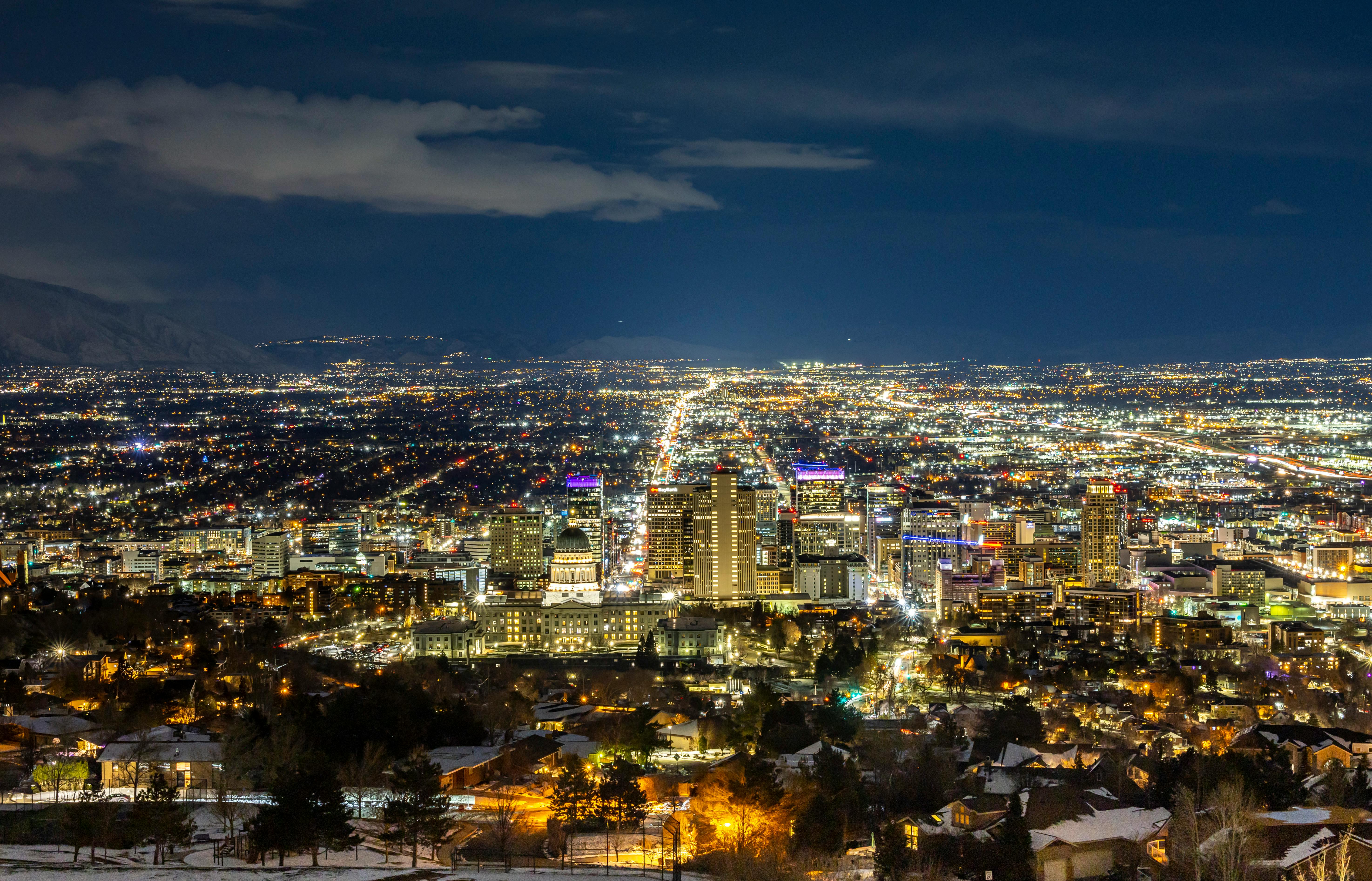
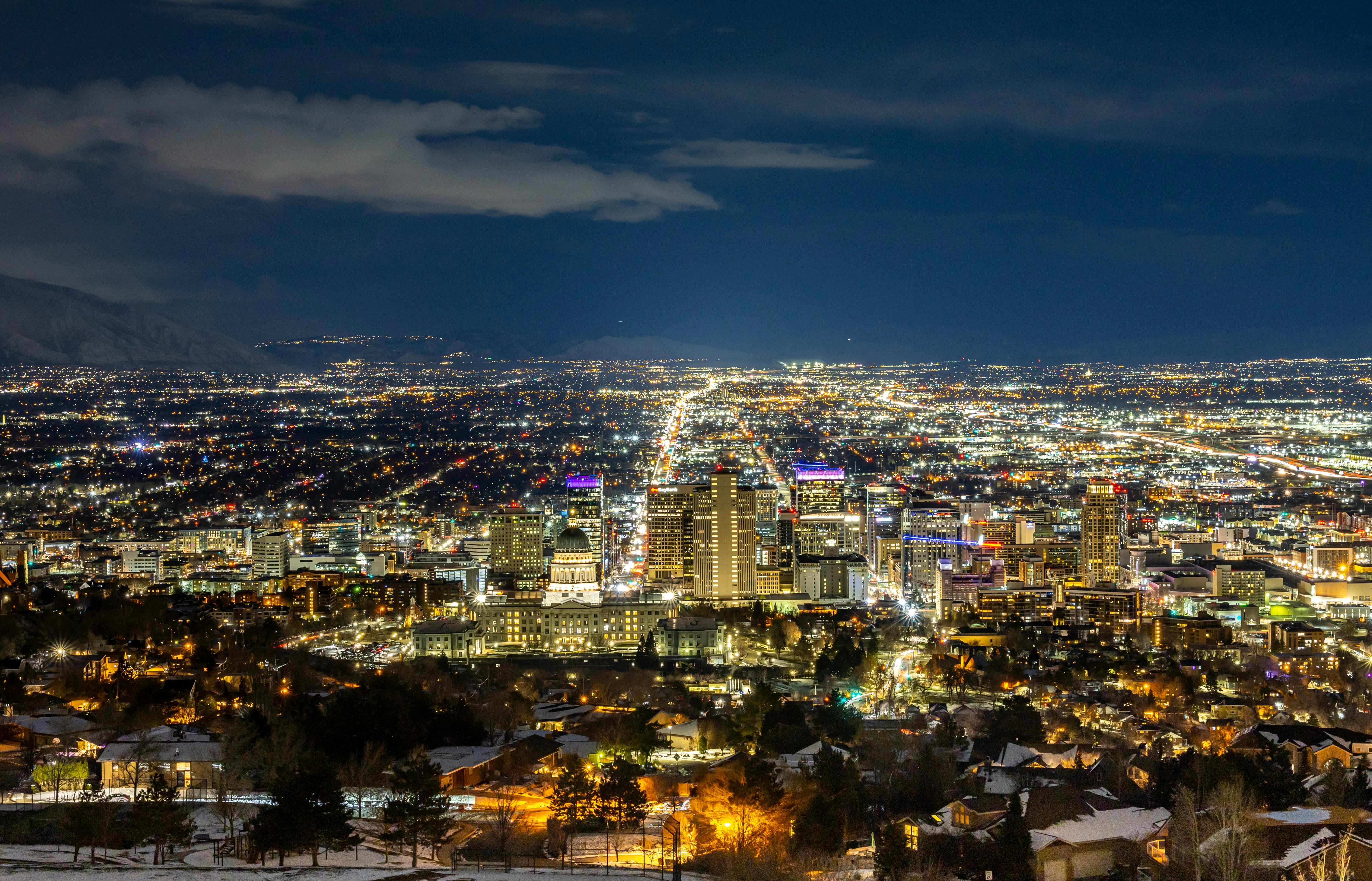
Every January, for somewhere between a few days and a few weeks, this valley puts a lid on itself.
The mechanics matter, because once you understand them you house hunt differently. The Salt Lake Valley is a bowl with mountains on three sides. Normally warm air sits at the bottom, rises, and carries everything with it. In winter that flips. A layer of warm air settles on top of a layer of colder air and seals it in. Everything the valley produces stays in the valley. It does not blow out. It sits and thickens and keeps thickening until a storm system comes through and scrubs the whole thing clean in about six hours.
Here are the actual measurements rather than anyone's opinion, because this is the one where people get accused of exaggerating in both directions. The American Lung Association's 2026 State of the Air report grades the Salt Lake City and Provo metro areas an F for ozone, 13th worst in the country, with about 20.5 unhealthy ozone days per year in Salt Lake County. It also grades us an F for short-term particulate pollution, 22nd worst nationally, around seven unhealthy days per year. And this past January, on several specific days, Salt Lake City had the worst measured air in the United States.
Now here is the part that gets left out of the scary version of this story. Both of those ozone numbers improved from the previous year. We went from 9th worst to 13th worst on ozone, and from about 26 unhealthy days down to 20.5. Year-round particle pollution is now passing the federal standard and dropped from 54th worst to 70th. Short-term particulate pollution did get slightly worse.
So the honest read is this. It is a real problem. It is measured. It is not made up, and it is not uniformly getting worse.
And this is the useful part: the inversion has a top. It is a layer, and it has an elevation. Homes above that elevation are frequently sitting in clean sun looking down at the whole thing. Same city, sometimes the same zip code, completely different February. That is why you see people driving up a canyon on a gray Saturday afternoon. They are not going anywhere. They are just going above it.
So if air is a real factor for you, and for some of you it absolutely is, the question is not whether Salt Lake City is bad. The question is which elevation, which side of the valley, and how the canyon winds move through that specific neighborhood. Those are three different answers within about a 15-minute drive of each other, and none of them are in the listing.
The flip side, because we said we would give you both: summer trades particulates for ozone, and we get wildfire smoke from other states that we have zero control over. There is no perfect address here. There is a significantly better one, and you will not find it by browsing photos.
3. The Water: You Did Not Move Away From This Problem
A lot of people move to Utah specifically to get away from water problems. Wildfire risk in California. Hurricanes and insurance on the Gulf Coast. Drought in Arizona. We need to be straight with you: we are not the safe harbor. Utah is a desert actively managing a hard problem, and this year's numbers are not good.
As of the end of August, 100% of Utah is in some level of drought. Statewide reservoir storage is at 52%, which is 15% below normal for late August and 18% lower than the same week last year, and it keeps declining until irrigation season ends in October. This spring, Utah's snowpack hit 19% of normal. Not the lowest in a decade. The lowest ever recorded.
Then there is the lake. The Great Salt Lake is sitting right around 4,190 feet. The all-time record low was 4,188.5 feet back in November of 2022, so we are within about two feet of it. The elevation the state has set as a healthy minimum is 4,198 feet by 2034, which is eight feet up from here.
To be fair, and this is real, we are not expected to hit a new record low this year, and state officials credit conservation for that. Utahns did change behavior and it measurably mattered. But a BYU ecologist put the scale of it plainly: current conservation efforts are delivering somewhere between 50,000 and 80,000 acre feet a year toward the lake, while the amount needed annually to actually restore it by 2034 is around 1 million acre feet. We are doing less than 10% of the job.
Here is what that means for you practically, as somebody buying a home here.
First, know whether the property is on secondary water, culinary water, or both, because they are built differently, metered differently, and delivered on a different seasonal schedule. Secondary water is untreated irrigation water. It typically shuts off in the fall and turns back on in the spring, and if you did not know that going in, your first October here is going to be confusing.
Second, understand that the state has said out loud what happens if the lake does hit a new record low. They lease additional water from other rights holders and they potentially restrict irrigation deliveries. That is not a rumor. That is the stated plan.
Third, and this is the one we would actually plan around: assume landscaping rules get tighter, not looser, over the next 10 years. If your dream is a half acre of green lawn in a Utah summer, think hard about whether that dream survives a decade from now. Buy for the lot you will be allowed to water.
4. The Construction: A Decade of Orange Barrels
You will feel this one every single morning. And unlike the water, there is no version of it that gets better in the next 10 years. It gets worse first, on purpose.
Utah sits at roughly just north of three and a half million people and is still one of the fastest growing states in the country. Salt Lake County and Utah County together account for more than half of that growth. Saratoga Springs, Lehi, and Eagle Mountain have each added tens of thousands of new people in a very short window.
That growth has a physical consequence, and you are going to drive through it daily. In March, the Utah Department of Transportation announced $2.8 billion of new and ongoing construction for this year alone. Not a plan. Not a proposal. Funded and moving.
A partial list of what is currently torn up or about to be: The Legacy Parkway is being widened through Davis County, $65 million, finishing at the end of this year. The West Davis Highway extension, $225 million, with major work starting this summer and running through the middle of 2029. A new interchange at 1800 North and I-15 in Clearfield with a realignment of northbound I-15, $385 million, completing in late 2027. I-215 on the west side of Salt Lake County is being reconstructed with 30 bridges rehabilitated and 14 miles of ramps repaved, $150 million, running through the summer of 2027. And on I-80 heading up toward Park City, $73 million in repaving and bridge replacement near Jeremy Ranch, with bridge work going through late 2027.
That is one year's worth of announcements, and it does not even include the biggest projects, like the work at 2100 North in Lehi. Add the Point of the Mountain and the 2034 Winter Olympics infrastructure coming behind all of it, and you are looking at a decade of orange barrels.
Two honest things about this. The first is that Utah's average commute is still about 22 to 23 minutes, which is right around the national average. That is a genuine quality of life win and it survives all of this, so do not let anyone convince you that you are moving into Los Angeles traffic. You are not.
The second is the part that actually affects your purchase. Your commute here is not measured in miles. It is measured in which corridor you are on and which construction season you are in. Somebody in Lehi commuting north to Salt Lake City and somebody in Bountiful commuting south have two completely different lives right now, and in three years they may swap.
So when we look at homes together, we are not just going to ask where you work. We are going to ask which direction you drive, at which hour, and what UDOT has scheduled on that specific stretch between now and 2029. That is a 15-minute conversation that changes which cities we even put on your short list.
And if what you need is a place that is finished, quiet, and unchanging, the fast growing corridors of Utah will frustrate you. There are quieter corners here and we can point you toward them. But the I-15 spine is going to be a work zone for quite some time.
5. The Adjustment: The One That Actually Sends People Home
We want to be careful and precise here, and explain why first. We are licensed real estate agents. Under the Fair Housing Act, we are not allowed to steer anybody toward or away from a neighborhood based on who lives there. That is not a technicality we are hiding behind. It is a good law and we follow it completely.
So here is what we are not going to do. We are not going to tell you what any neighborhood in Utah is made up of, and we are not going to tell you where you will fit in. If an agent offers to do that for you, that is a red flag about the agent, not a helpful service.
What we can talk about is logistics, rhythm, calendar, and the practical texture of the week. And that is genuinely the thing that catches people off guard.
Utah runs on a different weekly rhythm than most of the country, and it shows up in ordinary ways. Sundays are quiet here and a lot of businesses are closed. State liquor stores are closed Sundays entirely, and Monday through Saturday they open at 11:00 and close somewhere between 5:00 and 10:00 p.m. depending on the store. Grocery and convenience stores sell beer up to 5%, and anything above that comes from a state store or a package agency. At restaurants, alcohol is served with food. The laws changed again this past May and they are getting steadily less restrictive, and they are completely manageable once you learn them. But if you land here on a Sunday afternoon planning to pick up a bottle of wine for dinner, you are going to have a moment.
The bigger one is social, and it has nothing to do with any of that.
A lot of social life here is organized around the neighborhood you live in, rather than around a scene, a bar, a district, or the office. The block, the street, the school boundary. That is a feature for most people, and it is the single thing our clients from big anonymous metros tell us they did not know they were missing until they had it. Neighbors who actually know your kids' names.
But it cuts both ways. In a place where social life is that geographically organized, a newcomer does not get absorbed automatically. If you are used to a city where you build a circle through work and through going out, that machinery is weaker here. Your first six months might feel lonelier than you expected, in a place that from the outside looks extremely friendly. And it is friendly.
So here is our actual advice, and it is the same advice we give clients over coffee. Do not move to Utah for the community. Move here for the job, the mountains, the schools, and the life you can build, and let the community be the thing that surprises you a year later. The people who arrive expecting a specific social experience tend to feel let down. The people who arrive curious tend to be the ones who tell us two years later that they cannot imagine living anywhere else.
And go into it knowing that you will have to be the one who knocks first. In a neighborhood organized place, the newcomer sets the pace. That is the whole trick, and it does work.
So Which One Are You?
None of these five things make Utah a bad place to live. They make it a place that is right for a lot of people and wrong for some, and you deserve to know which one you are before you move your entire life across the country.
One more time. The money, which is no longer a bargain and carries a property tax rule that punishes second homes. The air, which is real, measured, and has an elevation you can buy above. The water, which is worse than most people moving here realize and will shape landscaping rules for the next decade. The construction, which is $2.8 billion this year and is not slowing down before 2034. And the adjustment, which is the one that actually sends people home.
We said we were not going to walk any of these back, and we did not. We also choose to live here, with our families, knowing every single one of them. Both of those things are true at the same time.
Want the full version? Watch the video here.
Thinking About Moving to Utah? Let's Talk.
Utah is one of the fastest-growing states in the entire country, and navigating the cultural landscape alongside the real estate market takes genuine local expertise. Whether you're considering Salt Lake County, Utah County, Davis County, or further out — finding the right neighborhood for your lifestyle, budget, and long-term goals makes all the difference.
My team and I work exclusively with buyers and sellers navigating the Utah real estate market. We help you cut through the noise, match the right submarket to your specific lifestyle and priorities, and make sure you're buying from a position of clarity — not FOMO.
Book a call with us HERE — free 30-minute consultation
Check out our relocation guide HERE
Subscribe to our weekly newsletter HERE
Categories
Recent Posts