5 Ways Salt Lake City Runs the Opposite Playbook From Every Other Major U.S. City
5 Ways Salt Lake City Runs the Opposite Playbook From Every Other Major U.S. City
Every major city in America is basically running the same playbook. People are leaving. Housing is a nightmare. The economy leans hard on one or two industries — and when those wobble, the whole place wobbles. The population is getting older. The closest thing to nature is a city park with a duck pond.
Salt Lake City does the opposite of almost all of it. Point by point. And once you see the pattern — once you actually line it up against the cities everybody else talks about — you can't unsee it. Here are the five ways this place runs a completely different playbook. And the last one is the thing that even a lot of locals don't fully appreciate until they've lived somewhere else and come back.
My name is Scott Steele. I'm a real estate broker here in Utah, and I sell across the entire Wasatch Front — from Lehi and Draper to South Jordan, Herriman, Provo, Ogden, St. George, and Park City. I sit across the table from buyers relocating from California, Texas, the East Coast, and the Pacific Northwest every single week. I watch their expectations collide with reality in real time. So this isn't a brochure. Some of what follows is genuinely great. And where there's a catch, I'll be straight with you about it.
#1: The Population Is Young and Moving In (While the Rest of the Country Ages and Thins Out)
For the past several years, the story in most of America's biggest cities has been the same: people are leaving. New York City, San Francisco, Los Angeles, and D.C. all took population hits during and after the pandemic. Some are recovering, but the long-term trend lines in many legacy cities point one direction — and it's not up.
Meanwhile, the country as a whole is aging. The national median age keeps creeping higher.
Utah went the other direction. The state hit approximately 3.55 million residents in 2025, adding more than 44,000 net new residents in a single year — one of the five fastest-growing states in the country. And here's the kicker: Utah is the youngest state in the nation. Salt Lake City's median age sits around 33. The national median is closer to 39. That's not a rounding error. That's a different generation walking around.
Why does that matter if you're thinking about moving or investing here? Because young, growing populations drive everything underneath a housing market. They form households. They need apartments, then starter homes, then move-up homes. They start businesses. They fill restaurants on a Tuesday. When you're wondering why Lehi, Saratoga Springs, and Eagle Mountain feel like they're on fire with new construction and new businesses — this is the engine. It's not hype. It's demographics.
The catch: Growth is moderating. For the first time this decade, more of Utah's growth is coming from babies being born here than people moving in. Net migration has cooled compared to the wild post-pandemic years. Inside Salt Lake City proper, the under-18 population has actually been shrinking slightly as families get priced toward the suburbs. The young-and-growing story is real — but it's shifting from migration-driven to homegrown and spreading into the ring counties. Utah County (Provo, Lehi, Silicon Slopes) added the most people of any county in the state — roughly 16,000 in a single year, about a third of the entire state's growth. If you're a buyer, that tells you where to look.
#2: The Economy Has Five Legs, Not One
A lot of famous American cities are basically one-industry towns wearing a big-city costume. Detroit has cars. Other cities live and die on finance, oil, or one giant employer. And the problem is obvious: when that industry catches a cold, the whole city goes to the hospital. Jobs leave. The housing market follows. The recovery takes a decade.
Salt Lake City is built the opposite way. The state of Utah has deliberately leaned into five strategic industries: software and tech, aerospace and defense, financial services, life sciences and healthcare, and advanced manufacturing. Those five targeted industries employ close to half a million people and pay well above the rest of the economy.
You've got Silicon Slopes — the tech corridor running through Lehi and the south end of the Salt Lake Valley — with names like Adobe and Qualtrics and dozens more. Hill Air Force Base anchors aerospace and defense to the north, with Northrop Grumman and others. Goldman Sachs has a real presence in financial services. And a serious healthcare and university ecosystem rounds it all out. That's not one leg. That's a stool with five.
What does that mean on the ground? When tech hiring slowed down recently — and it did slow — Utah's unemployment still stayed well below the national rate, hovering around the mid-3% range while the country drifted toward 4.4%. The state kept adding jobs even while tech caught its breath because the other four legs were still standing. If you're moving here for work or worried about whether your industry travels, diversification is your insurance policy.
And there's a sixth leg coming that's hard to overstate: the 2034 Winter Olympics are returning to Utah. Salt Lake City hosted in 2002, and many credit those games with kicking off the modern era of growth here. The airport, the infrastructure, the global attention. That's now happening again — a decade-plus runway of infrastructure investment, international visibility, and confidence pointed at this valley. As a backdrop to an already diversified economy, it adds another layer of unusual durability to the foundation here.
#3: The City Tells You Exactly Where You Are (The Grid)
Most American cities grew up by accident. A cow path became a road. The road became a street. Somebody built around it. Three hundred years later, you've got Boston, where the streets were apparently designed by throwing spaghetti at a map.
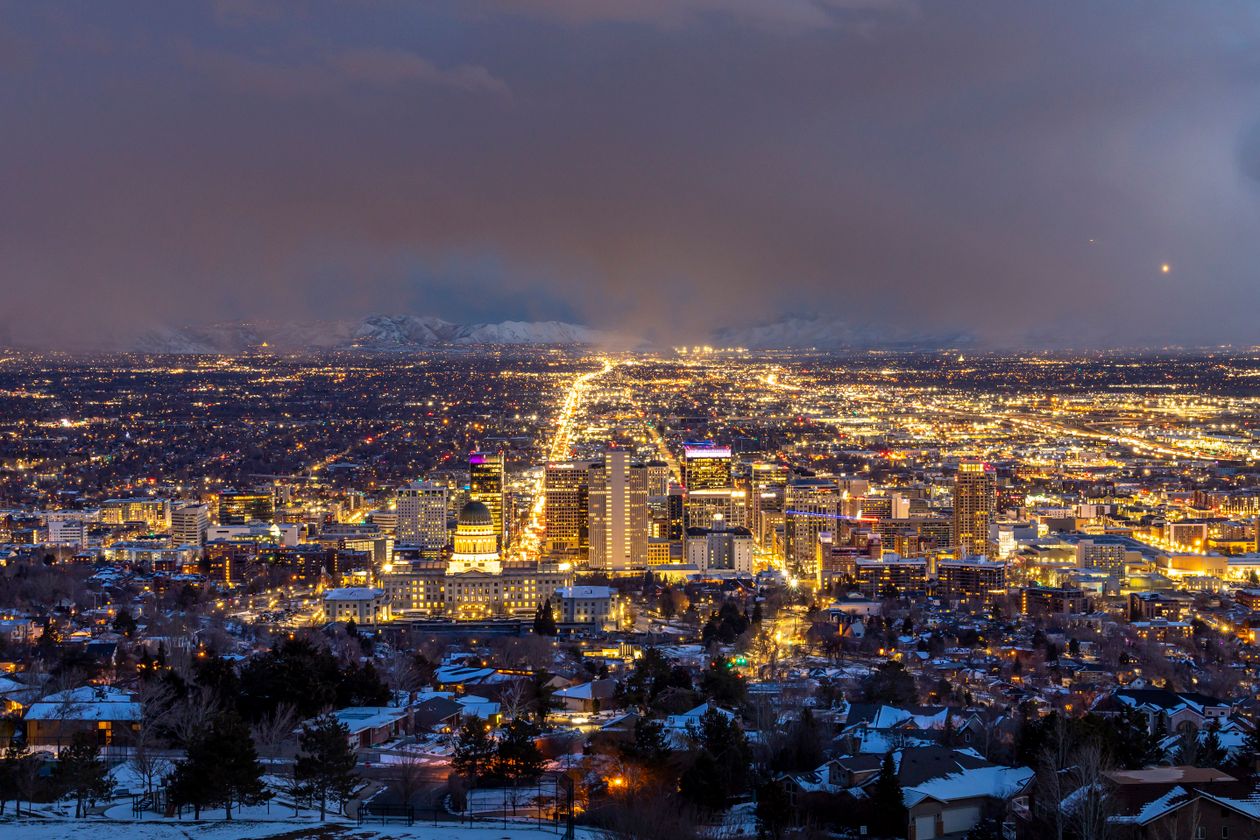
Salt Lake City did the opposite — on purpose, from day one. When the city was founded, the planners laid it out as a perfect grid oriented to the compass with one fixed point at the center: the southeast corner of Temple Square in downtown Salt Lake City. That's literally ground zero: 0 East, 0 West, 0 North, 0 South. Every address radiates out from that point in increments of 100.
An address here isn't a name — it's a coordinate. "700 East, 300 South" tells you you're seven blocks east and three blocks south of the temple. The address is the map. Once you get the system — and it takes about a week — you can find any address in the valley without GPS. You always know which direction you're facing, because the mountains are to the east and the numbers count up as you move away from the center.
The streets are also famously wide — among the widest in the country — reportedly designed to be wide enough to turn a full wagon team around without, as the legend goes, resorting to profanity. Long blocks, broad roads, logical addresses: it's a city built for people who intended to actually live here.
Why does the grid belong in a conversation about a city's identity? Because it's the physical proof of the whole thing. Most cities are improvised. Salt Lake City was planned deliberately — rationally — from a single idea before anyone even lived here. That built-from-scratch DNA shows up in the population growth, in the diversified economy, and literally in the pavement under your feet.
#4: Wilderness Is a 30-Minute Errand, Not a Weekend Event
In most major cities, getting to real nature is a project. It's a 2-to-3-hour drive. You make a weekend of it. You come home exhausted. Nature is the destination you escape to — not something woven into your daily life.
Salt Lake City flips that completely. From downtown, you can be at a world-class ski resort — Alta, Snowbird, Brighton, Solitude — in roughly 30 to 35 minutes. Not 30 minutes to a trailhead before a 2-hour drive. Thirty minutes car to chairlift. There are approximately 10 resorts within an hour of Salt Lake City International Airport. People who live here genuinely ski in the morning and make an afternoon meeting.
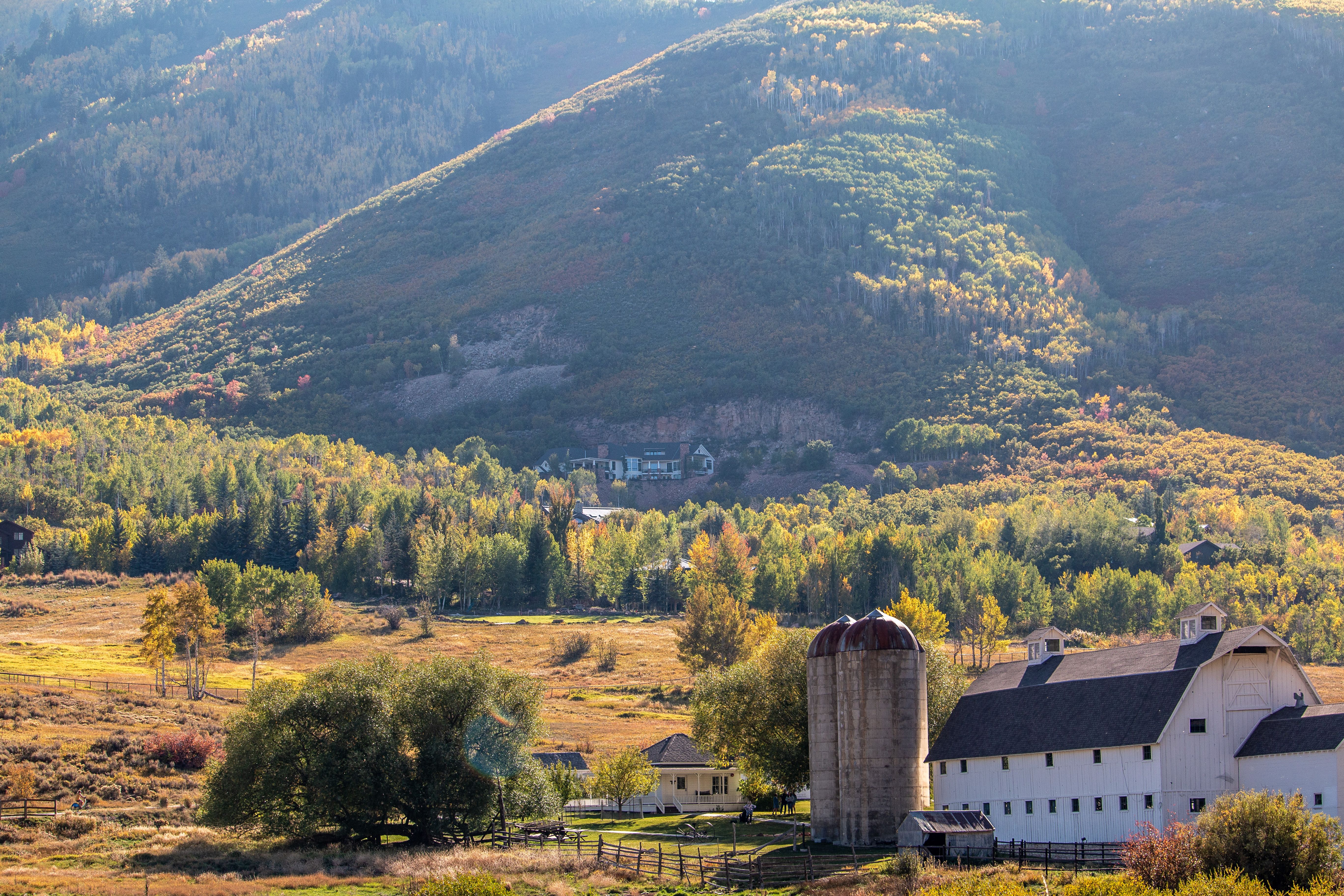
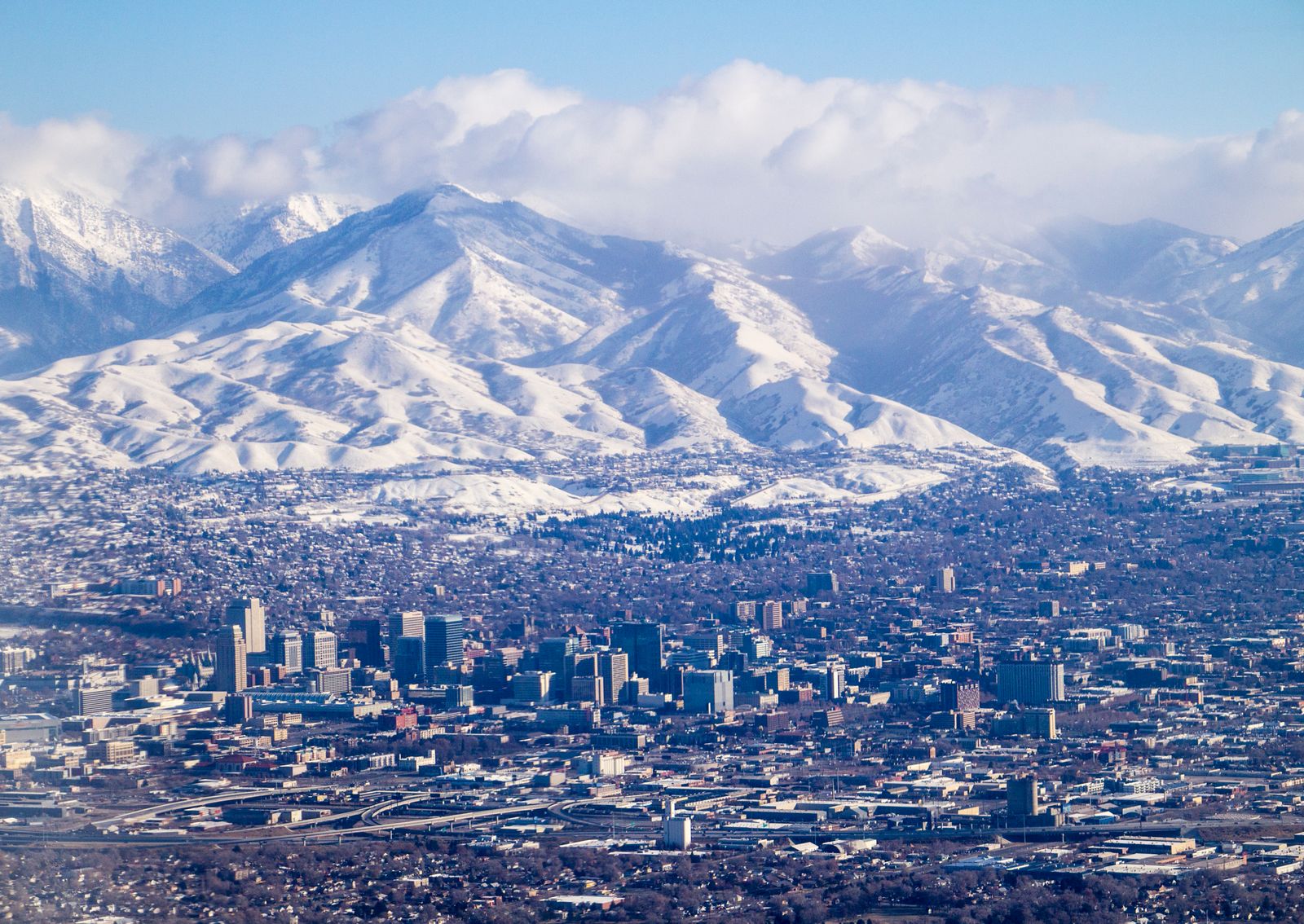
The mountains aren't on the horizon as decoration. They're at the end of the street you live on. The canyons that hold all that terrain start basically where the neighborhoods end. A trailhead becomes an after-work thing, not a vacation. The Greatest Snow on Earth — that's the actual marketing slogan, and the dry powder mostly earns it — is a weekday option, not a once-a-year trip.
The catch: Be honest about how you'll actually use it. Some buyers pay a premium to be right at the mouth of a canyon and then ski four times a year. Buy for the life you'll actually live, not the brochure version. And there's one real asterisk on the geography: in winter, the valley can trap cold air in what's called an inversion. Air quality dips for stretches — typically 14 to 17 days on average — and if you or your kids are sensitive to air quality, it's a real consideration. The bench areas up higher tend to sit above the worst of it. If you want to know which specific neighborhoods consistently avoid the inversion zone, that's a conversation worth having before you buy.
#5: The Culture Is Built Around Staying, Not Passing Through
This is the one underneath all the others. And it's the part the listicles always miss because it's harder to put a number on.
The unspoken culture of a lot of major American cities is transience. People come for a job, stay a few years, chase the next opportunity somewhere else, and leave. The city is a stepping stone. That mindset shapes everything — it's why community feels thin in so many places, why people don't invest in where they actually live, why the social fabric feels stretched.
Salt Lake City grew out of the opposite instinct. This place was founded by people who came here specifically to stop moving — to plant, to build something permanent, to stay for generations. That we live here, we're not passing through DNA is still woven into the culture whether or not you share the faith that started it.
You feel it in concrete ways: strong family orientation, high rates of volunteering and community involvement, Utah consistently ranking at or near the top nationally for charitable giving. Neighbors who actually know each other. A built environment — those big lots, wide streets, planned communities — designed for households that intend to stick around.
What does that mean for you as a buyer? It means stability — the most underrated word in real estate. People who plan to stay maintain their homes. They invest in their schools. They build neighborhoods that hold value through downturns because the demand underneath them isn't speculative. It's people building a life. When I tell out-of-state clients that a suburb they're nervous about is full of people who've been there 15 years and aren't going anywhere, that's not a soft feel-good detail. That's a fundamentals story. Roots are what makes a housing market durable.
The catch: The flip side of a strong, established culture is that it can feel tight-knit in a way that takes newcomers a minute to break into. It's worth knowing going in. But it's the good kind of problem — the kind that resolves once you show up and stick around.
Why All Five Come From the Same Place
Here's how it all ties together. Why is the population young and growing? Because people come here to build families and stay. Why is the economy diversified and steady? Because a community planning for the long haul builds for resilience, not the quick win. Why is the city laid out on a perfect rational grid? Because it was built from day one by people who intended to be here forever and wanted to do it the right way. And why are the mountains woven into the city instead of fenced off from it? Because this was never meant to be a place to escape to. It was meant to be a place where you stay.
Every one of these opposites comes from the same root. This is a city designed to be lived in, not passed through. And in a country full of cities people are trying to leave, that might be the most opposite thing about it.
Salt Lake City isn't perfect. Housing has gotten genuinely expensive fast, which is exactly why families are spreading into the ring suburbs. The winter inversion can be rough. Growing this fast strains roads and schools. I sell real estate here every single day and I'll tell you all of that to your face — because the people who end up happiest here are the ones who moved with clear eyes, not the ones who fell for a highlight reel. But when you stack the trade-offs against the rest of the country, the math keeps landing in the same place: young instead of aging, growing instead of shrinking, diversified instead of fragile, planned instead of accidental, mountains woven in instead of fenced off, rooted instead of transient. Six for six, the opposite direction.
Thinking About Moving to Utah? Let's Talk.
My team and I work exclusively with buyers navigating the Utah real estate market. We help you cut through the noise, match the right neighborhood to your specific lifestyle and priorities, and make sure you're buying from a position of clarity — not FOMO.
Whether you're zeroing in on Salt Lake City homes, Lehi new construction, Draper real estate, or somewhere else entirely, the process starts with a conversation. The call is free. Getting the wrong answer on a home purchase is not.
Book a call with us HERE — free 30-minute consultation
Check out our relocation guide HERE
Subscribe to our weekly newsletter HERE
Scott Steele | HOME@TheUtahReel.com | 801-680-8050 | www.TheUtahReel.com
Categories
Recent Posts