Utah Just Approved a MASSIVE Data Center… Here's What They're Not Telling You
Utah Just Approved a MASSIVE Data Center… Here’s What They’re Not Telling You
Utah just signed off on a data center that is twice the size of Manhattan. It will burn through more electricity than the entire state of Utah uses right now. And it will sit 10 miles from the Great Salt Lake — a lake that is already dying. And the people who voted to approve it were just three.
If you live in Utah, if you’re thinking about moving to Utah, or if you just care about where the next decade of American AI gets built, you need to understand what is actually happening here. Because there is a story underneath the headlines that almost nobody is telling. It’s not really about the developer. It’s about a quiet state agency with the power to rewrite zoning laws, hand out tax breaks worth hundreds of millions of dollars, and approve 40,000-acre developments without a single vote from the public.
I’m going to walk you through exactly what was approved, who approved it, how much water and air pollution it will generate, where the money is actually going, and — most importantly — why the same agency behind this project is also behind Deer Valley East Village, the Sundance Inn, Tooele Army Depot, and much more. Same agency. Seven appointed board members. Multiple radically different projects.
You cannot understand what is happening in Utah right now — economically, environmentally, politically — without understanding MIDA. So let’s connect every single dot.
What Was Actually Approved: The Stratos Project
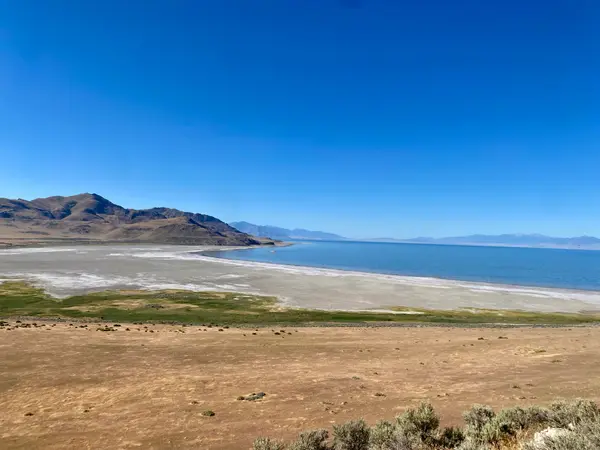
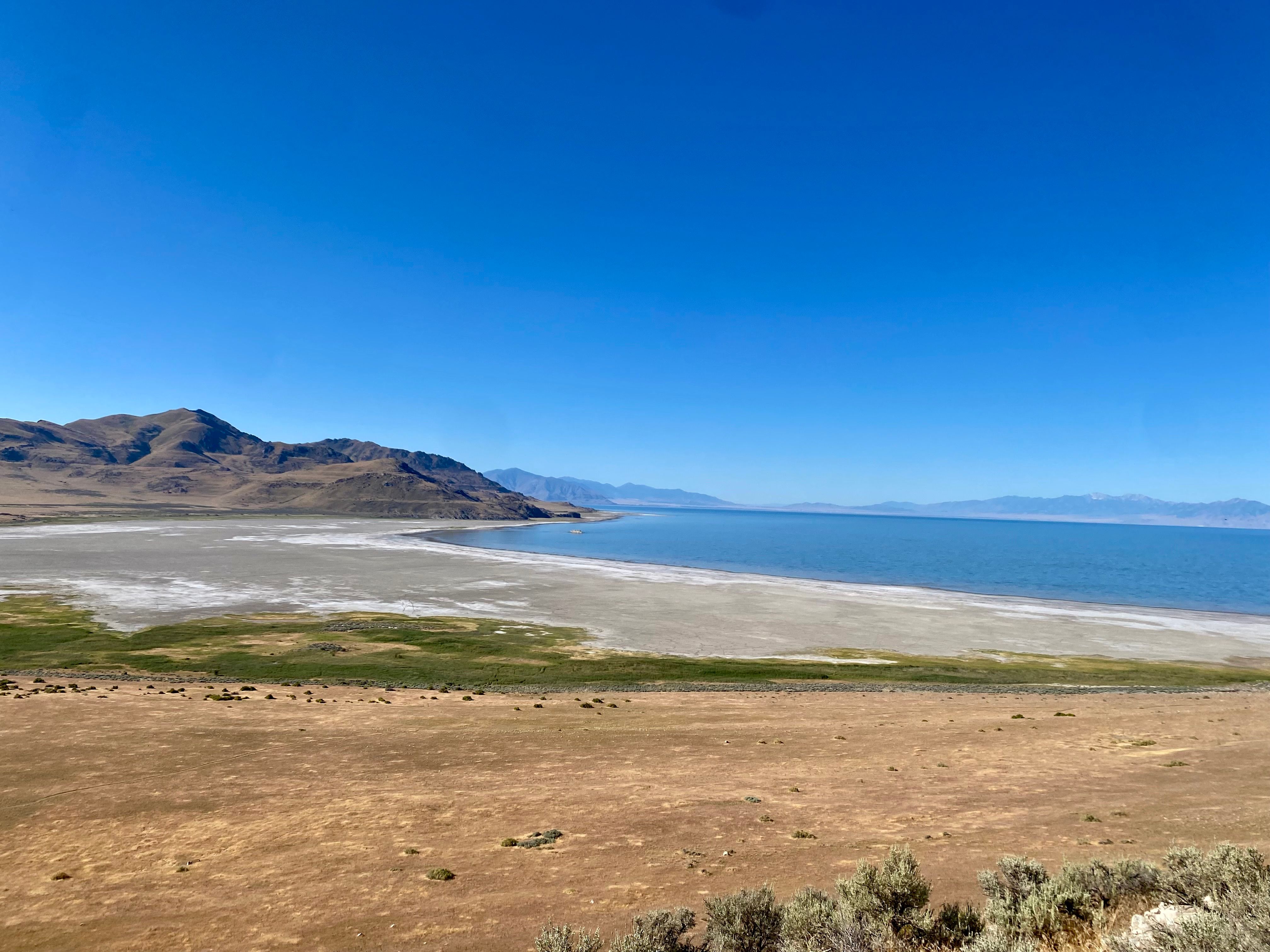
On May 4th, 2026, the Box Elder County Commission held a unanimous vote. Three commissioners. Three yeses. And with that, they approved an interlocal agreement that cleared the path for what is being called the Stratos project — a hyperscale data center campus planned for Hansel Valley in Box Elder County, an unincorporated stretch of land in northwestern Utah, just south of Interstate 84, about 10 miles from the Great Salt Lake.
The numbers are almost hard to comprehend, so sit with these for a moment. 40,000 acres — that is over 62 square miles, twice the size of Manhattan — approved in a single project area. 9 gigawatts of power at full buildout. To put that in context, the entire state of Utah uses about 4 gigawatts at peak demand. This single development, when fully built out, will consume more than double what every home, every business, every hospital, and every school in the state of Utah uses combined.
Phase 1 alone is 3 gigawatts, with 1.5 gigawatts to be operational within just a couple of years. The total projected investment from developers: over $100 billion. So far, about $20 million has been put in. The campus is being designed by Gensler, one of the largest architecture firms on the planet, and the initial 10,000 acres will reportedly house up to 60 separate data centers.
The developer is a company called Olyri Digital, partnered with a Utah-based company called West Genco. The entire thing is being branded as Wonder Valley — the same name used for a separate $70 billion data center being developed in Alberta, Canada. On paper it looks like a massive win: jobs, tax revenue, national security infrastructure, American AI dominance. But here is where the story gets uncomfortable.
The same week this was approved, nearly 4,000 local residents and environmental groups filed formal objections. The Sierra Club called it a threat to the Great Salt Lake Basin. Utah Clean Energy ran the numbers and found this single project would increase the entire state’s carbon emissions by up to 75%. And the residents of Hansel Valley — ranchers, farmers, families who have been there for generations — said publicly that they felt steamrolled, that their concerns about water, noise, light pollution, and air quality were never seriously addressed before the vote.
So how does a project this enormous get approved this fast in a state already facing one of the worst droughts in modern American history? How does it happen with three commissioners voting yes and effectively zero public referendum? That’s where MIDA comes in.
Meet MIDA: The Most Powerful Agency in Utah You’ve Never Heard Of
MIDA stands for the Military Installation Development Authority. It was created by the Utah State Legislature in 2007. The original reason is actually fascinating — back in the mid-1990s, the federal government’s base realignment and closure process (BRAC) put Hill Air Force Base on the chopping block. Utah lobbied hard, kept it open, and then built a permanent state agency to protect its military installations long-term: partner with the Department of Defense, leverage federal land, attract private investment, keep the bases economically viable.
Their first project was Falcon Hill — 525 acres at Hill Air Force Base — turned into an aerospace research park, a hotel, retail, and office space. Reasonable enough. But here is where the mission starts to drift, and “drift” is putting it lightly.
In 2008 and 2009, MIDA created a military recreational facility project area in Wasatch County. The idea on paper was to provide recreational opportunities for military members. In reality, it became the legal vehicle that is now building out Deer Valley East Village — a 6,000-acre luxury ski resort expansion featuring the Grand Hyatt, residential condos selling for millions of dollars, a new golf course, an equestrian center, and 10 new ski lifts. More on that in a moment.
MIDA’s portfolio today also includes the Sundance Inn project at Sundance Mountain Resort, the Utah Data Center at Camp Williams, the Falcon Hill Aerospace Research Park, 27 Utah National Guard properties scattered across the state, a brand new project area at Tooele Army Depot approved in December 2025, Dugway Proving Ground transportation infrastructure, and now — Stratos, 40,000 more acres.
According to MIDA’s own current fiscal year budget, the agency operates on roughly $73 million in annual revenue — all of which it spends.
The Democratic Accountability Problem
Here is the part that should make every Utahn — and frankly every American who cares about democratic accountability — sit up. MIDA is governed by an eight-member board. Seven voting members, one non-voting member. Five are appointed by the governor of Utah. One is appointed by the Senate President. One is appointed by the Speaker of the House. Zero of them are elected. Not by you, not by the residents of Box Elder County, not by anyone.
And yet, as MIDA board member Senator Jerry Stevenson stated directly on the legislative record in 2024: “Anything that a city can do, MIDA could do as well.” Read that again. Anything a city can do, MIDA can do — except cities have mayors and city councils that voters choose. MIDA has appointees.
The board chair is Stuart Adams, President of the Utah State Senate, who has been on the MIDA board since 2008 — two years before he was even elected to the Senate. The vice chair is Jerry Stevenson, also a Republican state senator appointed in 2008, and the sponsor of multiple bills that expanded MIDA’s taxing authority. Senator Stevenson received $11,000 in campaign donations over a two-year period from Extell, the New York luxury developer behind the Deer Valley East Village expansion. Both lawmakers have publicly said the donations don’t affect their decision-making.
The Six Powers That Explain Everything
Once you understand what MIDA can actually do, you understand exactly how Stratos and Deer Valley both happened.
Power #1: Project Area Creation. MIDA can designate any area that includes at least some military land as a project area. That military land can be tiny — a National Guard armory, a small section of a training range. The Stratos project technically touches a portion of the Utah Test and Training Range. But once that project area is created — even if military land is 1% of the total acreage — the entire area falls under MIDA’s jurisdiction. They effectively become a local government within those borders.
Power #2: Tax Increment Financing. When new development happens inside a MIDA project area, MIDA captures up to 75% of the new property tax revenue for as long as 40 years. That money does not go to the county. It does not go to the local school district. It does not fund roads, fire departments, or libraries. It gets reinvested into the MIDA project area itself — building out infrastructure that benefits the private developer. Local taxing entities get the leftover 25%. In Wasatch County, the county and school district each received only about $300,000 in a recent fiscal year from MIDA-related projects. That’s the 25% slice.
Power #3: Bonding. MIDA can issue revenue bonds to finance infrastructure. In Wasatch County alone, more than $650 million in bonds have been issued for the East Village area. The agency recently approved a $390 million bond and a $400 million public infrastructure district bond to accelerate construction at Deer Valley East Village.
Power #4: New Taxing Authority. In 2024, the Utah Legislature passed Senate Bill 169 — sponsored by Senator Jerry Stevenson, the same Jerry Stevenson on the MIDA board — which granted MIDA the authority to impose accommodations taxes and resort community sales taxes within their project areas. The senator who sponsored the bill said publicly he expects those taxes to be permanent.
Power #5: Land Use and Zoning. Within a project area, MIDA effectively becomes the planning commission. They write the development standards, approve master plans, set lighting and noise standards. The Stratos campus has a 55-decibel limit at the property line — set by MIDA, not by Box Elder County.
Power #6: Limited Open Records Access. Because of how the statute is written, MIDA is excluded from certain open records and open meetings laws when it comes to public-private partnerships. The Salt Lake Tribune had to file open records requests just to learn that MIDA was advocating on the developer’s behalf to share tens of millions of dollars in project costs with Box Elder County — information that was not publicly disclosed before the vote.
So to recap: an unelected board of seven people, supported by a $73 million annual budget, can declare a project area, divert 75% of property taxes away from local services for 40 years, issue hundreds of millions in bonds, levy new sales taxes, override local zoning, and do significant portions of their dealmaking outside of normal open records requirements. That is the machine that just approved the Stratos data center.
Deer Valley East Village: Where It Gets Really Wild
If you’ve driven up to Park City in the last three years, you’ve seen it. Massive construction zones around the Jordanelle Reservoir. New highways. Cranes. Hillsides being terraced. Ski lifts going in. That is Deer Valley East Village — one of the largest ski resort expansions in modern American history.
6,000 acres in Wasatch County. Thousands of new residential units, including some of the most expensive condos in the state. The Grand Hyatt Deer Valley. 10 new ski lifts. 300 acres of new skiable terrain opened in December 2024. A new luxury golf course called Skyridge. An equestrian center. The total private investment is estimated at $3.9 billion. And the public infrastructure — roads, utilities, ski lifts, snowmaking, parking — has been financed largely through MIDA. Over $650 million in bonds. Nine of the 10 new ski lifts were financed through MIDA mechanisms.
Here is the question that should bother everyone regardless of politics: MIDA was created to support the military. Where is the military in Deer Valley East Village? The official answer is there’s a morale, welfare, and recreation hotel component — veterans get some hotel discounts at the Grand Hyatt. The associated military land is technically a Department of Veterans Affairs Medical Center in Salt Lake City, miles away. There is the National Ability Center providing recreational programming for veterans in the project area. That’s it.
That is the military justification for redirecting 75% of property taxes from a 6,000-acre, multi-billion-dollar luxury ski resort development for the next 40 years. The Deer Valley East Village project includes 14.5 acres of actual military recreational programming out of 6,000 total acres — less than one-quarter of one percent. And yet MIDA captures 75% of property tax revenue from the entire 6,000 acres.
The flywheel: more infrastructure attracts more private development, which generates more property tax, which MIDA captures 75% of, which funds more infrastructure, and so on. Meanwhile, the nearby town of Hideout has had to raise property taxes on its own residents because MIDA captures most of the tax revenue from new MIDA-adjacent developments, leaving the town short on general fund revenue.
The Water Reality vs. The Official Story
MIDA’s official position is that the Stratos campus will not pull water from the Great Salt Lake, and that is technically true. The water will come from existing water rights attached to private property — water currently used for agricultural irrigation and seasonal cattle grazing. Their argument is that a closed-loop cooling system will use less water than current ranching operations. And that is a fair point. A nearby property called Barh Ranch already filed an application in March 2026 to transfer roughly 1,900 acre-feet of annual irrigation water rights from Saltwell Springs to industrial use at Stratos.
But here is the other side. The natural gas turbines that will power this campus also consume very large quantities of water for steam generation and cooling. Independent analysts have estimated the gas-fired power generation alone could consume 2 billion gallons of water per year — approximately 3,000 Olympic-size swimming pools every single year just for the power plant. Some environmental group estimates push that number as high as 16.6 billion gallons annually when everything is factored in.
Utah Clean Energy has called for full transparency in water consumption monitoring and a public water plan before construction proceeds. Governor Spencer Cox has publicly directed the Utah Department of Natural Resources to ensure the most environmentally sensitive cooling technology is used, stating: “In no event will the developer reduce water going to the Great Salt Lake.” Whether that promise gets enforced once construction is underway is a story we will be watching for years.
The Air Quality and Power Numbers
9 gigawatts at full buildout. Where does that power come from? Not the grid — the campus will generate 100% of its own electricity through on-site natural gas turbines. The Ruby Pipeline, a major interstate natural gas line running from Wyoming through Utah to Nevada, Oregon, and California, passes directly through the site. MIDA’s executive director said publicly: “This location was picked because of the gas pipeline.”
For context: 9 gigawatts is approximately the entire electricity consumption of Finland. The on-site power plant means the project doesn’t add direct pressure to the existing grid — that is a genuine benefit. But it also means an enormous amount of natural gas will be burned, permanently.
Utah Clean Energy’s analysis concluded the Stratos power plant alone could increase total state carbon dioxide emissions by up to 75%. Nitrogen oxide emissions — the kind that contribute to particulate pollution during winter inversions and summer ozone smog along the Wasatch Front — could approximately double the existing industrial output equivalent for Salt Lake County, or match the annual emissions from Utah’s entire oil and gas industry every single year. The campus is technically outside the EPA’s Wasatch Front non-attainment zone. But the prevailing winds blow south, toward Brigham City, Ogden, and Salt Lake City — areas that already have some of the worst winter air quality in the United States.
Governor Cox has said the project will have to meet existing federal air quality standards and that he does not intend to seek EPA waivers. But here is the reality: the air quality permits, water rights approvals, and drinking water permits have not been finalized. The May 4th vote was the project area approval. The actual environmental permits are still in process, meaning the project could still be slowed, modified, or stopped — though that outcome looks unlikely given the political momentum behind it.
Who Benefits and Who Pays
Let’s be honest about both sides of this ledger. The genuine upsides are real. Box Elder County is projected to bring in $30 million per year in new revenue in early phases and up to $180 million annually at full buildout. The developer has committed $16.2 million in upfront funding to offset initial budget impacts. 4,000 temporary construction jobs, 2,000 permanent jobs at minimum, with pathways into IT, engineering, facilities management, and skilled trades. This is real economic opportunity in a rural Utah county that has never seen anything like it.
The project also genuinely strengthens American AI capacity at a moment when the United States is in a serious infrastructure competition. National security concerns about secure compute are not invented. Hill Air Force Base and the Utah National Guard will benefit from the revenue MIDA captures.
But the costs are also real. Local ranchers and farmers in Hansel Valley get a 40,000-acre industrial complex next door. Their property values — and property taxes — go up, and if they’re inside the project area, 75% of those new taxes flow to MIDA, not to their local schools or fire departments. Agricultural water rights convert to industrial use. Utah’s air quality takes on new emissions. And the precedent matters more than the project itself — once Stratos is operational and the model proves out, MIDA will have a template. Other developers will come.
What This Means If You Live in or Are Moving to Utah
The first gigawatt of operational capacity is projected within two years, meaning construction ramps up almost immediately. If you live in Box Elder County, Brigham City, Tremonton, Snowville, Ogden, or Salt Lake City, your local air, your local water, and your local tax base are all going to be affected by what happens with this project over the next decade.
If you are thinking about making the move to Utah — especially anywhere along the Wasatch Front or northern Utah — this project will be part of the backdrop of your relocation decision whether you realize it or not. It will affect growth patterns, energy costs, real estate development, and political alignment in this state for at least the next 20 years.
The Stratos data center is the biggest single development Utah has ever seen. That is just a fact. But the more important story — the one almost nobody in the national press is telling — is about the agency that made it possible. MIDA started as a small, well-intentioned tool to keep Hill Air Force Base alive. It has grown into something that even its own board members describe as functioning like a local government: taxing authority, bonding authority, land use authority, limited public oversight, and a portfolio that now ranges from a 63-room veterans inn at Sundance, to a 6,000-acre luxury ski resort in Deer Valley, to a 40,000-acre AI data center on the edge of the Great Salt Lake.
Same agency. Same seven appointed board members. Same statutory authority. Three radically different projects. Now you know.
Thinking About Buying, Selling, or Moving to Utah? Let’s Talk.
My team and I work exclusively with buyers navigating the Utah real estate market. We help you cut through the noise, match the right neighborhood to your specific lifestyle and priorities, and make sure you’re buying from a position of clarity — not FOMO.
Whether you’re zeroing in on Salt Lake City homes, Utah County new construction, Draper real estate, or somewhere else entirely, the process starts with a conversation. The call is free. Getting the wrong answer on a home purchase is not.
Book a call with us HERE — free 30-minute consultation
Check out our relocation guide HERE
Subscribe to our weekly newsletter HERE
Scott Steele | HOME@TheUtahReel.com | 801-680-8050 | www.TheUtahReel.com
Categories
Recent Posts