Utah's Water Crisis Explained: Is the Great Salt Lake Drying Up and What It Means for Homebuyers
Utah’s Water Crisis Explained: Is the Great Salt Lake Drying Up — and What Does It Mean for Homebuyers?
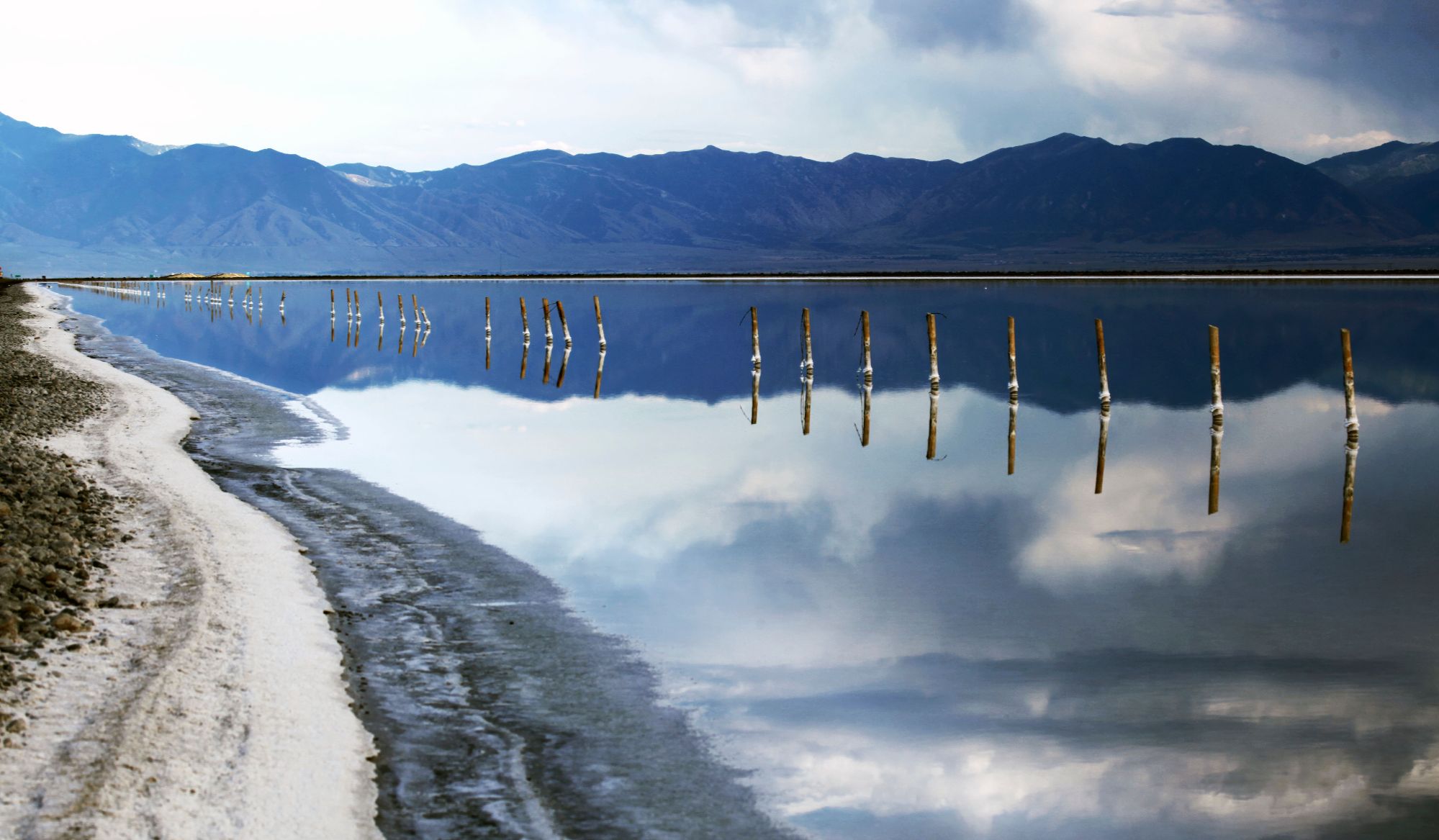
The Great Salt Lake started 2026 sitting about 3 feet above its all-time recorded low in roughly 120 years of measurements. Every summer, like clockwork, it loses around 3 feet to evaporation before winter snowpack refills it. Do the math: one more dry winter, and the largest saltwater lake in the Western Hemisphere could break its all-time record low — right here in Utah, while tens of thousands of new homes are being built along the same valley.
If you’re thinking about moving to Utah or relocating within the state, you’ve probably already seen the headlines: “The Great Salt Lake could disappear.” “Toxic dust threatens millions.” “Utah is growing faster than its water supply.” Those headlines plant a reasonable seed of doubt — and they deserve a real, honest answer.
This post gives you exactly that: the full, research-backed picture of Utah’s water situation, what it means for property values, what the state is actually doing, and how to make a smart, eyes-wide-open decision about buying here.
The Common Belief vs. The Real Story
Most people assume the story goes like this: Utah is booming, everyone’s watering their green lawns in the desert, and that’s why the lake is drying up. Too many people, too many sprinklers, too little water — and eventually the music stops.
It’s a clean story. It’s intuitive. And it is mostly wrong.
Here’s the contrarian truth backed by peer-reviewed research from the Kem C. Gardner Policy Institute at the University of Utah, the U.S. Geological Survey, and the state’s own Great Salt Lake Strike Team: the growth you see in Utah — the cranes, the rooftops, the new families — is not the main thing draining the lake. It’s not even close.
1. Where Utah’s Water Actually Goes: Killing the Lawn Myth
Researchers have built a detailed water budget for the Great Salt Lake — an accounting of every drop of water that should naturally flow into the lake and where it ends up instead. Here’s what they found:
Roughly 62% of river water naturally headed toward the Great Salt Lake never gets there. Humans divert it first. Of that diverted water, about 71% goes to agriculture. And of that agricultural water, roughly 80% goes to growing one category of crop: alfalfa and hay — cattle feed, grass for cows.
The overwhelming majority of the water that should be keeping the Great Salt Lake alive is instead being used to grow hay — a large portion of which gets exported out of state and overseas, including to China and Saudi Arabia, to feed livestock somewhere else entirely.
Residential, commercial, and industrial water use — all the people, homes, and businesses — represents a minority slice of the diverted water. If every new Utah resident zeroscaped their yard tomorrow, you would not save that lake. The math doesn’t close without touching agriculture.
Why this matters for buyers: The water tied up in cattle feed is, in cold economic terms, the most movable water in the entire system. One study found that growing hay accounts for less than one-tenth of 1% of Utah’s entire economy. A tiny sliver of economic output using the lion’s share of the state’s most precious resource. That’s not a death sentence — that’s a lever. And choices can be changed.
2. The Dust Problem and Your Home’s Value
When a lake recedes, it doesn’t just leave behind a smaller lake. It leaves behind exposed lakebed. The Great Salt Lake has been a catch basin for over a century, so that exposed bed holds a cocktail of things you don’t want airborne — including heavy metals like arsenic that settled there over decades.
When the wind kicks up across that dry playa, it lifts dust and carries it straight into the population centers along the Wasatch Front: Salt Lake County, Davis County, Weber County, Utah County — the exact corridor where most people moving to Utah want to live. Scientists have called this the single most serious public health threat the shrinking lake poses.
Let’s be grounded here. The dust events are real, they’re episodic (tied to wind and how much lakebed is exposed in any given year), and they’re a contributing factor to the air quality issues the Wasatch Front already deals with from inversions and traffic. They are not a Tuesday apocalypse, but they are also not nothing.
As a buyer, here’s what this means practically:
• Elevation matters. Benches and higher foothill areas often sit above the worst of the valley inversion layer.
• Indoor air filtration becomes a feature worth paying for in your home search.
• Long-term property value divergence is real. Areas perceived as cleaner and more resilient tend to hold value better than those that don’t — not as a sudden crash, but as a slow divergence over time. This is true of flood zones in Florida and fire zones in California. Utah is no different.
3. What the State Is Actually Doing: Real Laws, Real Progress
The scary headlines almost always leave this part out — and leaving it out gives you a badly distorted picture. Utah is not sitting on its hands.
The most important structural change: Utah blew up a rule that had been quietly killing the lake for over a century. It’s called “use it or lose it.” Under the old water law, if you held a water right and didn’t use all of it, you could forfeit it. This literally incentivized farmers to overwater, because conserving meant losing rights. A 2022 law changed that — now water rights holders can conserve water and dedicate it to the Great Salt Lake without losing their right. That may sound boring. It is one of the most important things to happen to this lake in over 50 years.
Beyond that, the state has:
• Set up the ability to lease water rights and send water back to the lake
• Created a Great Salt Lake Commissioner’s office whose entire job is managing this crisis
• Built a berm to manage salinity so the ecosystem doesn’t collapse while bigger fixes take hold
After a strong snow year, the lake rebounded several feet off its 2022 record low. The system can recover when the water shows up.
The honest caveat: the progress so far is real, but not nearly enough. One analysis found Utah’s farmers would need to cut water use around 35% to refill the lake to a healthy level over time, and around 15% just to stabilize it. We are not there yet. The laws are pointed in the right direction. The dial hasn’t moved far enough — but it is moving.
4. Why Your Submarket Choice Matters More Than Anything
Utah’s growth is not spread evenly, and neither is its water exposure. The Kem C. Gardner Policy Institute projects the state growing from roughly 3.6 million people today toward 5.6 million over the next two to three decades — adding about 2 million people. But that growth is concentrated.
The Wasatch Front (Salt Lake, Utah, Davis, and Weber counties) and the Southwest (Washington County around St. George) are where most people will land. These areas have different water realities:
• St. George and Southwest Utah are in the Colorado River Basin — a completely different and frankly more strained water system than the Great Salt Lake Basin.
• Booming suburbs like Eagle Mountain and Saratoga Springs are building on former ranch and farmland, which raises infrastructure and water delivery questions.
• Established benches in the central valley sit on older, more built-out water systems with longer track records of reliability.
Don’t evaluate Utah water risk as one blob. Evaluate it submarket by submarket. Ask these three questions about any area you’re considering:
1. What water system does this area rely on — and how reliable is it? A mature municipal system is a different animal than a brand-new district on the edge of the desert.
2. What’s the elevation and air quality profile? Higher elevations on the benches often fare better with inversions and dust exposure.
3. How does growth trajectory line up with infrastructure? Are roads, water, and schools keeping pace, or is it outrunning its own pipes?
Two homes at the same price, 20 minutes apart, can have meaningfully different long-term resilience profiles. In a market without an environmental question mark, that gap is small. In Utah, it’s worth real money and real quality of life over a 10-year horizon.
5. How Long Can This Last? The Honest Answer
The Great Salt Lake hitting a record low is not the same event as Utah running out of water for people. Those get blended together in headlines, and they shouldn’t be. The lake is the canary — it goes first and it’s warning us. But the taps in your house are fed by a managed municipal system that the state prioritizes and protects. Your shower is not in a race against the lakebed.
The honest take: the current trajectory — growing aggressively while underdelivering water to the lake — can physically continue for years, even a couple of decades, before it forces a true residential crisis. The taps won’t run dry next year. What gives out first, long before that, is the lake’s ecology and the air quality through dust. That’s the real clock, and it’s measured in years, not decades.
But “how long can it last?” is actually the wrong question. The right question is: which way is the trend bending? A place at a record low that has changed its water laws, created an office to manage the problem, and proven the lake can rebound in a good snow year is in a fundamentally different position than a place that has done nothing. The level tells you where you are. The trajectory tells you where you’re going. And Utah’s trajectory, for the first time in a long time, is pointed the right direction — just not yet fast enough.
Watch the snowpack, not just the lake level. The snowpack peaks around late March or April each year — that single number is the best leading indicator you have for how the lake and the entire region’s water year will go. A big snow year buys Utah real breathing room and the lake recovers quickly. A dry one is the warning sign.
The Bottom Line for Utah Homebuyers
Here’s the honest summary:
1. The lake is drying mostly because of agricultural water going to cattle feed — not your lawn — which makes it a fixable allocation problem, not a countdown.
2. The most immediate threat is dust and air quality, which can quietly shape property values over time.
3. The state has finally built real tools — killing “use it or lose it,” leasing water back to the lake — but hasn’t pulled the lever hard enough yet.
4. Your submarket choice matters more in Utah than almost anywhere else in the country.
5. The taps aren’t running dry next year. The real clock is the lake’s ecology, and the trend is finally bending the right direction.
Is it crazy to buy in Utah while the lake shrinks? No — but it is risky to buy here without understanding all of this. There’s a difference. Now you’re on the right side of it.
Thinking About Moving To or Within Utah? Let’s Talk.
Utah is one of the fastest-growing states in the entire country, and navigating the water question alongside the real estate market takes local expertise. Whether you’re considering Salt Lake County, Utah County, Davis County, or further out — the right neighborhood for your lifestyle, budget, and long-term resilience profile is out there. Having the right guide makes all the difference.
My team and I work exclusively with buyers and sellers navigating the Utah real estate market. We help you cut through the noise, match the right neighborhood to your specific lifestyle and priorities, and make sure you’re buying from a position of clarity — not FOMO.
Book a call with us HERE — free 30-minute consultation
Check out our relocation guide HERE
Subscribe to our weekly newsletter HERE
Scott Steele | HOME@TheUtahReel.com | 801-680-8050 | www.TheUtahReel.com
Categories
Recent Posts