Is the Great Salt Lake Dying? What Utah Homebuyers Need to Know in 2026
Is the Great Salt Lake Dying? What Utah Homebuyers Need to Know in 2026
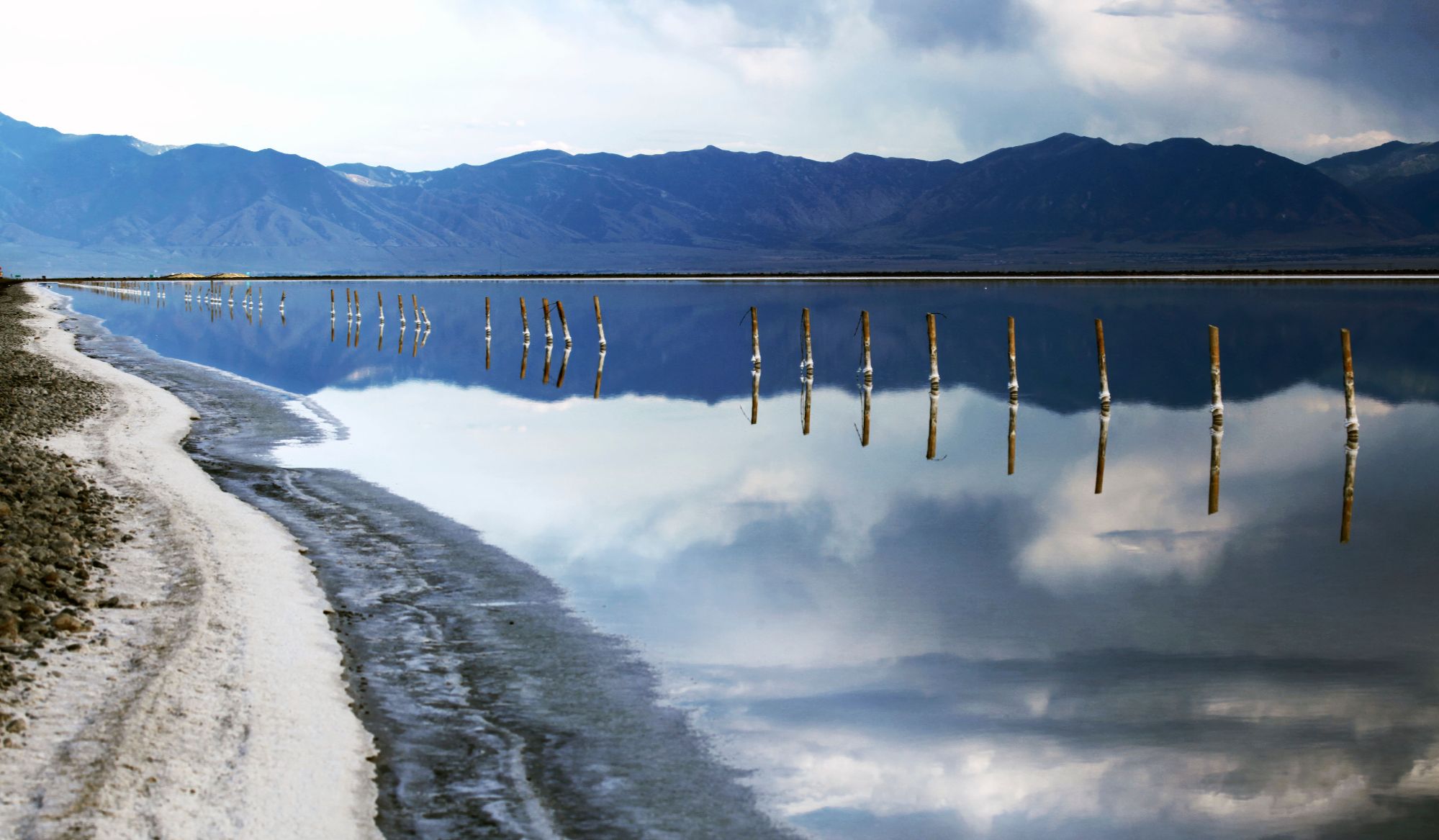
Picture a wall of dust lifting off the dry bed of the Great Salt Lake, rolling across Farmington Bay and the entire Wasatch Front, from Weber and Davis counties in the north, through Salt Lake County, and down into Utah County. A yellow smear of airborne sediment drifting straight over two and a half million people, over neighborhoods, over schools, over the house somebody just bought last week.
And here is the part that should make you sit up: that dust is not just dirt. Researchers at the University of Utah pulled samples off the exposed lake bed and found arsenic, lithium, lead, and heavy metals, with levels of arsenic that exceed the EPA's residential screening limits for the soil under your own feet.
So the question writes itself, and it is the one that lands in my inbox almost every week from people thinking about moving here: if the Great Salt Lake keeps shrinking and the lake bed keeps blowing toxic dust over the most populated strip of the state, does Salt Lake City eventually become a place you cannot even live? I am going to answer that honestly, and I will be straight with you upfront. The honest answer is not the one the scariest headlines are selling. It is worse in one way they rarely mention, and a lot better in a way that should genuinely change how you think about buying a home here.
What "Dying" Actually Means, in Feet
Most people fall into one of two camps. Camp one says the lake is basically fine, it is a desert, lakes go up and down, relax. Camp two reads one viral article and now believes Salt Lake City is the next poisoned dust bowl on a countdown timer. Both are wrong in the same way. They treat a slow, manageable, fixable problem like it is either nothing or the end of the world.
Here is the number that reframes everything. A healthy Great Salt Lake sits at about 4,198 feet of elevation. Below 4,192 feet, scientists say you start triggering serious adverse effects: ecosystem collapse, more exposed lake bed, more dust. In November 2022, the lake bottomed out at an all-time record low of 4,188.5 feet. As of the start of 2026, the South Arm, the ecologically critical part, was sitting around 4,191.6 feet.
Read that again. We came into this year roughly three feet above the worst level ever recorded, and still below the line where the bad effects begin. This spring the lake peaked for the year at about 4,192.6 feet, a foot below the year before and more than five feet short of healthy. The lake normally loses around three feet every summer and fall to evaporation. A dry winter and a hot summer, and we are flirting with a new record low.
So what do you do with this as a buyer? You stop thinking in vibes and start thinking in feet. Check the actual lake elevation, published by the Utah Division of Water Resources and the USGS. A great snow year is a good sign for the lake. A record-low snowpack, like the one heading into 2026, is your cue that the dust and water conversation is about to get louder for a year or two. You do not have to obsess over it. You just have to stop being surprised by it.
The Contrarian Truth About the Toxic Dust
The toxic dust is real, but it is not coming from where you might think. Yes, the exposed lake bed contains arsenic and heavy metals, and University of Utah researchers found that lake bed sediment is more reactive and more bioavailable than dust from other sources, which is a polite way of saying your lungs do not love it. All true. But then they did the harder work of tracing where the dust landing in the city actually originates, and the answer flips the headline.
One study using strontium isotopes, essentially a chemical fingerprint, found the Great Salt Lake playa contributed only about 5 percent of the dust along the southern Wasatch Front. Another analysis found that of the dust deposited up in the Wasatch Mountains, roughly 23 percent came from the lake playa, while a larger share came from other dry lake beds and deserts to the south. And a 2025 University of Utah study on urban dust found that a lot of the most dangerous metals, the arsenic, lead, and zinc, are coming from us: from mining, from industry, and from brake dust off the cars along I-15.
Utah's own Department of Environmental Quality says it plainly: more research is needed to firmly link lake bed metals to Wasatch Front residents' health, and dust events usually spike particulate levels for a few hours during a storm rather than blanketing the valley permanently. Two takeaways for a buyer. First, do not let anyone, doom-poster or salesperson, tell you the lake is the whole air quality story. The bigger, more chronic problem here is winter inversions trapping vehicle and industrial pollution in the valley. Second, geography matters. The communities most exposed to lake bed dust are the ones physically closest to the lake and directly downwind, out by the shore including Farmington Bay. As you move south and east up toward the benches and into Utah County, the lake bed's direct contribution drops off fast. If lake bed dust specifically is your worry, that is a location conversation, not a "the whole region is doomed" conversation.
It Is Not Just Dust: Snow, Water, and Your Bills
Say you do not care about dust at all and you are moving here for the mountains, the powder, and the lifestyle. There is a second consequence of the shrinking lake that hits you right in the thing you came here for, and almost nobody connects these two dots.
The Great Salt Lake is a giant engine for the weather. When cold storms pass over that relatively warm open water in the fall and early winter, they pick up moisture and dump extra snow on the mountains. That is the famous lake effect snow, the greatest snow on Earth, and it comes in great part because of the Great Salt Lake. Shrink the lake and you shrink the surface area feeding that engine. Now connect the dots: that snow is the entire pitch for Park City, the Cottonwood Canyons, and the 2034 Winter Olympics coming back to Utah. And the snowpack is not just recreation. In a desert state, the snow that falls in the mountains is the bank account the whole region lives off all summer. A weaker lake effect engine means a thinner snowpack, a smaller water bank, and more pressure on every faucet along the Wasatch Front.
Here is how I would use this if I were buying right now. Understand that water is now a permanent line item in Utah's future, the way property taxes are a line item elsewhere. That shows up in concrete ways: cities adopting water conservation ordinances, restrictions creeping in on giant non-functional grass lawns in new developments, and water rates that will almost certainly climb over time. If you are looking at new construction with a huge thirsty lawn, understand that is the style of landscaping the entire state is actively moving away from. Xeriscaping and drought-friendly landscaping is not a fringe thing here anymore. It is the direction of policy and the smarter long-term bet for resale.
What This Does to Your Home Value
This is the part that touches everyone, not just people near the shore. You can buy on the east bench, miles from any dust, and still feel the lake's decline through your water bill, your landscaping rules, and maybe a few less epic powder days down the road. It is the quieter, broader cost. It is not apocalyptic, but it is real and it is permanent, and it is the thing that turns "save the lake" from an environmental slogan into a personal finance issue for everyone who lives here. Where you buy, how the property is landscaped, and how close it sits to the shore and the prevailing wind all feed into your long-term value.
The Part the Headlines Skip: Utah Is Fighting Back
Here is the point I held for last, because it changes the whole verdict and almost nobody saw it coming. While everyone has been writing the obituary for the Great Salt Lake, Utah quietly started actually fixing it.
Since 2022, the Utah legislature has appropriated more than $300 million toward Great Salt Lake conservation. That includes $200 million for agricultural water optimization, which matters because agriculture is the single biggest water user in the entire basin, and $40 million to create a dedicated watershed enhancement trust that can literally buy and lease water rights and send that water back to the lake. In 2026 alone, multiple new water bills were signed into law, plus a $60 million federal wetlands settlement. The 2026 session was the fourth straight year of major Great Salt Lake legislation, each year building on the last.
Lawmakers made it easier for farmers to lease water to the lake instead of being forced to buy and dry. They are requiring water-hungry data centers to be transparent about consumption. Two Wasatch Front cities signed a first-of-its-kind deal to send conserved water to the lake. And the explicit deadline driving a lot of the urgency is the 2034 Winter Olympics, because Utah does not want to host the world at a lake that is a dust bowl. That global spotlight is acting as a hard deadline, pulling money and political will forward. After the 2022 record low, when the snow came and the policy kicked in, the lake made real gains. That is the proof of concept: when Utah gets water to the lake, the lake responds. This is not a hopeless decline. It is a managed, funded, deadline-driven recovery effort, and the early results are real. Is it guaranteed? No. The work is not finished and urban water use still has to change. But "underwater with effort" is a completely different investment thesis than "abandoned."
So, Will Salt Lake City Become Unlivable?
Here is my honest verdict: no, not on any trajectory the actual evidence supports. But that "no" comes with conditions, and you should hold both halves of it. The lake is genuinely in trouble, sitting just a few feet above its all-time record low and balanced on a knife's edge year over year. The toxic dust is real, but the data says the lake bed is one source among several, the worst exposed areas are specific and identifiable, and a lot of the scary metals in the air come from traffic and industry. The deeper, quieter cost touches everyone through snow, water, and what it costs to live here. And the piece that flips the story is a funded, deadline-driven, four-years-running recovery effort with the 2034 Olympics forcing the issue. You are not moving into an environmental disaster. You are moving into a place with a real, manageable, actively fought challenge, and now you understand it well enough to buy smart instead of buying scared.
The One Check I Give Every Relocation Client
Before you fall in love with a specific house, pull up the Utah Division of Air Quality's dust and PM10 monitoring data and look at where the actual exceedance events get recorded, and how close that address is to the lake shore and directly downwind of it. Two homes fifteen minutes apart can have a genuinely different relationship to this issue. That one ten-minute check will tell you more about your real exposure than any headline ever will, and almost no buyer even thinks to do it. That is my job.
Watch the Full Breakdown
I walk through all of it, the elevation numbers, the dust sourcing, the water and snow, the money, and the policy, in the full video. You can watch it HERE.
Thinking About Moving to Utah? Let's Talk.
Utah is one of the fastest-growing states in the entire country, and navigating the cultural landscape alongside the real estate market takes genuine local expertise. Whether you're considering Salt Lake County, Utah County, Davis County, or further out — finding the right neighborhood for your lifestyle, budget, and long-term goals makes all the difference.
We work exclusively with buyers and sellers navigating the Utah real estate market. We help you cut through the noise, match the right submarket to your specific lifestyle and priorities, and make sure you're buying from a position of clarity — not FOMO.
Book a call with us HERE — free 30-minute consultation
Check out our relocation guide HERE
Subscribe to our weekly newsletter HERE
Categories
Recent Posts